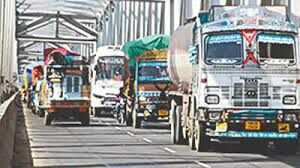
A recent order from the Patna High Court on overloaded vehicles is expected to significantly influence how transport authorities across Bihar enforce cargo-weight rules, particularly on highways already under stress from heavy truck traffic. The case arose after a vehicle owner challenged action taken by authorities for allegedly carrying excess cargo and being forced to offload it on the roadside — an issue that has become increasingly common in the state’s rapidly expanding road network.
Court records show that the dispute centred on whether authorities had followed proper procedure before declaring the vehicle overloaded. The court noted that any claim of excess load must be backed by actual weighment rather than assumptions or visual inspection. In the absence of documented measurement, punitive actions such as suspending vehicle registration or forcing the owner to offload goods cannot stand under the law. The ruling has broader implications because Bihar has witnessed a sharp rise in disputes related to overloaded trucks in recent months. In a separate proceeding earlier this year, the High Court also questioned the National Highways Authority of India about measures to curb heavy trucks carrying sand and construction material beyond permitted limits, observing that such practices are damaging roads and bridges across the state. Transport and infrastructure experts say the legal clarity provided by the latest judgment could change how enforcement is carried out. Instead of ad-hoc roadside penalties, authorities may now have to rely more heavily on weighbridges, digital documentation and transparent procedures.
This is particularly relevant in fast-growing urban corridors where infrastructure projects depend on large volumes of sand, aggregates and construction material being transported daily. The case also highlights a deeper structural challenge. Overloaded vehicles are widely seen as one of the main reasons behind rapid deterioration of highways, especially in states experiencing rapid construction activity. However, enforcement agencies often face pressure to act quickly, which sometimes leads to disputes over due process. Legal observers say the court’s approach attempts to balance both concerns — protecting public infrastructure while ensuring that enforcement actions remain legally valid. Urban planners believe the impact may extend beyond transport rules. If the order results in stricter but more transparent enforcement, it could improve the longevity of roads, reduce maintenance costs and support safer logistics operations in tier-2 cities such as Patna and other fast-growing urban centres in Bihar.
The judgment does not weaken the state’s authority to act against overloading. Instead, it signals that enforcement must be evidence-based and consistent with legal procedure. For a state investing heavily in roads, bridges and urban infrastructure, the ruling could mark an important step toward more accountable and sustainable transport regulation in the years ahead.