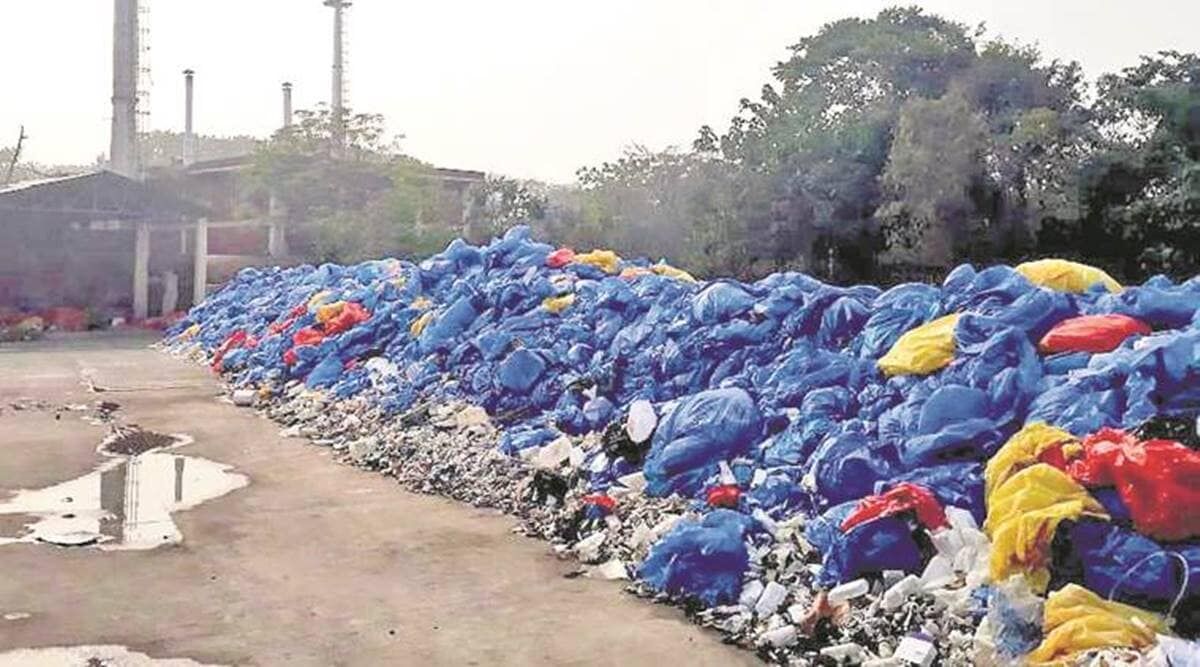
Patna High Court Questions Biomedical Waste Facilities
Environmental governance in Bihar has moved back under judicial scrutiny after the Patna High Court asked the state government to submit an action-taken report on the establishment of biomedical waste treatment plants across the state. The direction, issued during the hearing of an ongoing case, reflects growing concern about whether healthcare infrastructure expansion is being matched by adequate waste-management capacity in rapidly growing urban centres such as Patna.
According to details available from court proceedings, the bench has asked authorities to provide a clear update on existing biomedical waste facilities, their operational status and future plans to create additional treatment infrastructure. The order is significant because biomedical waste — generated by hospitals, clinics and diagnostic centres — requires specialised treatment to prevent contamination of air, water and soil. As healthcare facilities continue to expand in tier-2 cities, the volume of such waste has risen sharply in recent years. The issue has become particularly relevant in Bihar’s urban centres, where both public hospitals and private healthcare providers have increased capacity after the pandemic. Government health portals already publish periodic biomedical waste reports from major public hospitals, indicating that monitoring systems exist but may not yet be supported by sufficient treatment infrastructure. Experts say the High Court’s directive is likely to focus not only on compliance but also on whether current facilities can handle the rising volume of waste safely and efficiently. The matter also highlights a broader structural challenge in urban infrastructure planning. While several cities have invested in new hospitals and expanded bed capacity, the supporting systems — including biomedical waste treatment plants — have often lagged behind.
Central government data and earlier policy statements have repeatedly emphasised the need for decentralised biomedical waste facilities, particularly in smaller cities that lack access to large central treatment plants. Environmental planners note that poorly managed biomedical waste can quickly become a public-health risk, especially in densely populated urban areas where landfill sites are already under pressure. Without proper treatment facilities, hazardous medical waste may end up mixed with municipal waste streams, increasing the risk of contamination and exposing sanitation workers to health hazards. The High Court’s intervention therefore reflects growing judicial concern about the long-term sustainability of urban health systems, not just hospital infrastructure itself. The directive is also consistent with earlier environmental cases in which the court has sought detailed explanations from authorities on pollution and waste-management issues. By asking for an action-taken report rather than a general response, the bench has effectively placed responsibility on the state government to demonstrate measurable progress on biomedical waste infrastructure rather than policy intent alone.
What happens next will depend on the government’s response and whether it includes a clear roadmap for new treatment plants, timelines for implementation and stronger monitoring systems. For cities such as Patna, the outcome could shape how healthcare expansion aligns with environmental sustainability — a crucial balance as urban populations continue to grow and demand for medical services increases.