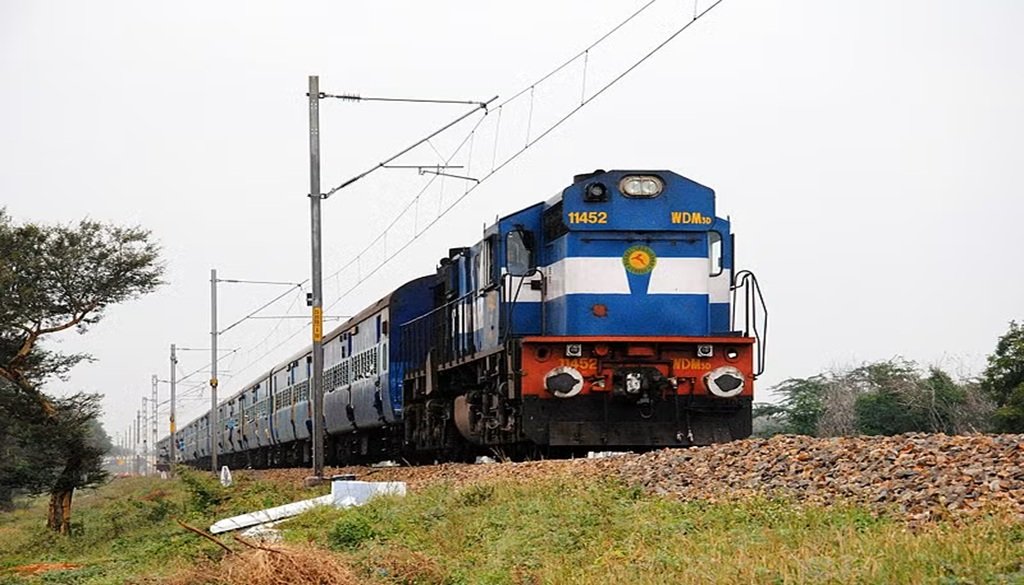
A new Patna Gaya special train has been introduced on one of Bihar’s busiest short-distance rail corridors, a move expected to ease daily commuter pressure and strengthen mobility between two rapidly expanding urban centres. The service connects the state capital with Gaya, a key educational, religious, and regional economic hub, where passenger demand has risen sharply in recent months.
The launch comes at a time when the Patna–Gaya line is witnessing intense daily ridership, driven by students, small-business workers, and short-distance commuters who rely almost entirely on low-cost rail transport. The 92-kilometre corridor has historically functioned as a commuter backbone rather than a long-distance route, linking smaller townships to Patna’s growing urban economy. Officials familiar with the decision say the Patna Gaya special train is part of a broader strategy to manage seasonal crowding and support regional mobility without waiting for major infrastructure expansion. Over the past few weeks, rail authorities have already extended several special services in Bihar to cope with the expected surge in travel during exam periods, religious events, and summer movement. For cities such as Patna and Gaya, the impact goes beyond transport convenience. Improved frequency on short inter-city corridors often directly affects labour mobility, access to education, and small-scale economic activity.
Urban planners note that more frequent rail links reduce dependence on informal road transport while also supporting more inclusive access to city-level opportunities — particularly for students and women commuters who travel daily between the two cities. The new service also reflects a wider shift in India’s tier-2 urban policy, where transport upgrades are increasingly focused on regional connectivity rather than only long-distance flagship projects. The Patna–Gaya corridor is already electrified and operational for over a century, but rising population density and expanding suburban settlements have pushed the route far beyond its original design capacity. In the longer term, urban transport experts argue that repeated introduction of special trains signals a structural issue — the need for permanent high-frequency suburban-style rail services across emerging regional corridors such as Patna–Gaya. With both cities continuing to grow as educational, cultural, and economic centres, predictable and affordable rail connectivity could become a defining factor in how Bihar’s urban network evolves.
For now, the Patna Gaya special train is expected to offer immediate relief to commuters. The next challenge will be ensuring consistency in services, station infrastructure upgrades, and smoother last-mile connectivity — all essential if the corridor is to support inclusive and sustainable urban growth across the region.