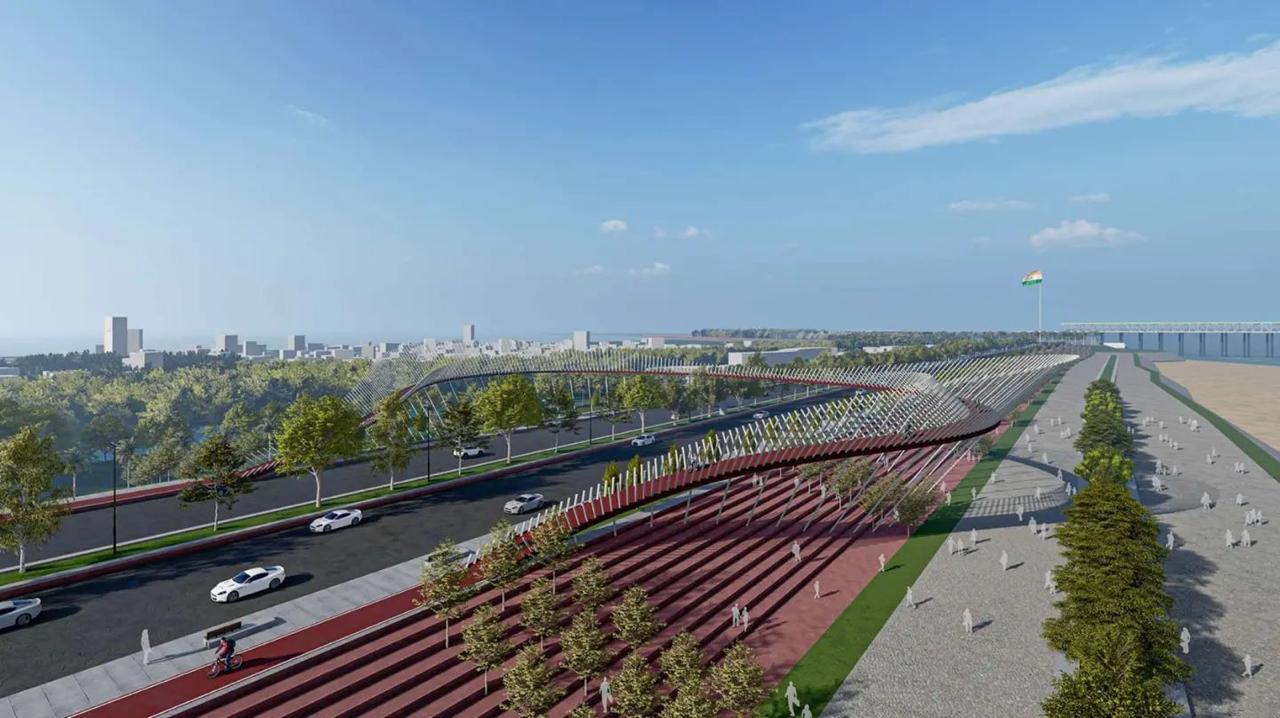
Patna Ganga Path Food Zone Revamp Reshapes Riverfront
Patna’s riverfront development is entering a new phase as authorities plan to redesign the food and vending zones along Ganga Path, a move that could significantly reshape how residents use one of the city’s most popular public spaces.
Recent developments around the riverfront corridor indicate that informal food stalls and temporary shops that once attracted large crowds are being reorganised into a more structured vending zone. Earlier this year, crowds along the JP Ganga Path stretch reduced noticeably after street vendors were shifted as part of ongoing beautification work, with officials indicating that a designated vending area with improved facilities would be created. Urban planners say the current revamp reflects a wider shift in how Indian cities are rethinking public waterfronts. Instead of unregulated commercial activity, city authorities are increasingly trying to balance public access, tourism, and environmental sustainability. In Patna’s case, the Ganga Path corridor is being developed not just as a traffic bypass but as a long-term urban public space that includes walking areas, landscaped zones, and organised food plazas.
The redesign is also linked to earlier decisions to remove temporary fabricated shops and relocate vendors away from the main riverfront stretch. Reports from the past few months suggest that authorities want to maintain clear views of the river while still allowing commercial activity through planned vending zones located slightly away from the main promenade. For the city’s informal economy, the project carries both risks and opportunities. Thousands of visitors used to visit the riverfront in the evenings largely because of food stalls and small cafés that created a vibrant social space. With those stalls temporarily removed, footfall declined in several stretches, highlighting how deeply food culture is linked to the success of public spaces in Indian cities.
However, the proposed revamp could improve long-term sustainability if implemented carefully. Experts say organised vending zones with proper lighting, water supply, waste-management systems, and seating areas tend to attract more visitors than informal setups. In addition, structured food plazas can reduce littering and improve safety, especially for families and women who use riverfront spaces after sunset. The Ganga Path project itself is part of a much larger plan to transform Patna’s riverfront into a major urban attraction, combining green spaces, recreational areas, and public-facing infrastructure along the Ganga. Once food cafés and vending zones are redesigned, the corridor could function not only as a transport route but also as a people-centred public space — something that many tier-two cities are now trying to build to improve liveability.
The next challenge for the city will be balancing aesthetics with livelihood protection. If the new vending zones are implemented with clear rules and inclusive design, the revamp could become a model for how rapidly growing cities can modernise public spaces without excluding the informal economy that depends on them.