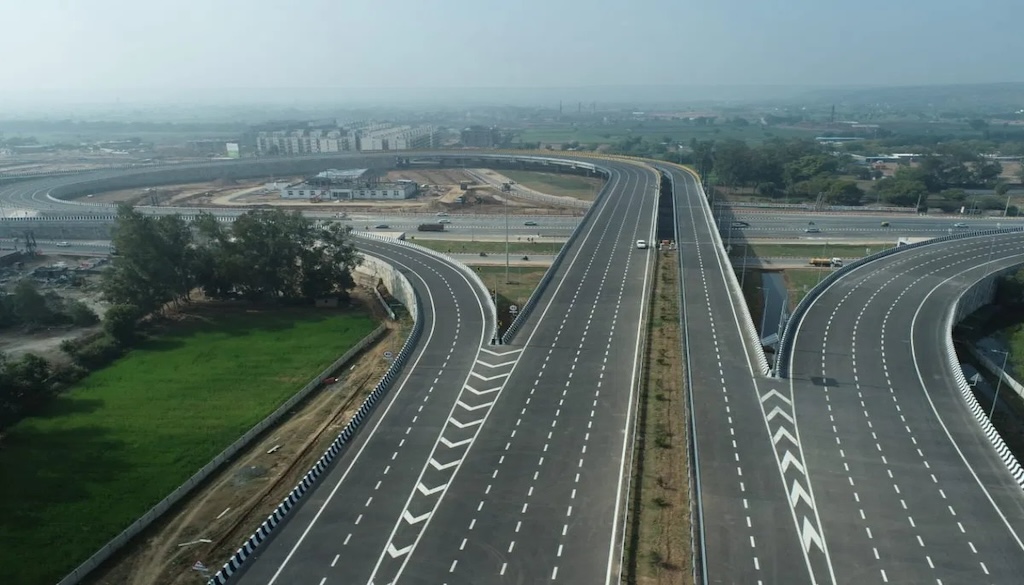
Nagpur Ratnagiri Highway Not Being Widened To Eight Lanes
Patna’s role as a logistics and connectivity hub is set to strengthen as Bihar’s road authorities have instructed officials to expedite land acquisition for four major highway corridors — a move that may redefine regional mobility and catalyse economic linkages across eastern India.
The push to clear land acquisition bottlenecks reflects rising urgency to complete critical infrastructure before project timelines slip further, affecting commerce and citizen mobility. The targeted infrastructure includes strategic segments such as the Mokama–Munger expressway and other national highway extensions that are pivotal in improving freight and passenger movement into and out of Patna. These projects, overseen by the state’s road construction department in coordination with district administrations, are expected to unlock stranded capital investments and support industrial growth in Bihar’s hinterlands. Land acquisition delays have long dogged highway expansion across Bihar, slowing the rollout of multi-lane corridors that are central to reducing travel times and boosting economic competitiveness.
Urban planners and transport economists highlight that in fast-growing urban regions such as Patna, seamless connectivity to secondary cities and export gateways underpins supply chains, labour mobility and real estate markets. With land acquisition advancing, detailed project reports (DPRs) can be submitted sooner for central government approvals, clearing the path for funding and construction contracts. For Patnaites, improved highways will do more than shave minutes off travel. Congestion on radial highways leading into the capital has long affected logistics costs and quality of life, with goods vehicles and intercity traffic competing for limited urban road space. Delivering robust corridor links is essential not just for economic throughput but also for reducing urban carbon emissions by cutting idling times and supporting a modal shift to more efficient freight routes. Public health and environmental advocates emphasise that resilient transport infrastructure must complement climate-forward urban planning in fast-expanding cities like Patna, where population growth is testing existing networks.
The state’s renewed push also comes amid a broader national infrastructure agenda that places connectivity at the heart of economic transformation. Bihar’s share of national highway expansions has grown in recent years, whether through upgrades to four-lane corridors, expressway linkages or elevated roads. These initiatives promise to distribute industrial activity more evenly across regions, alleviating pressure on core urban centres while spurring growth in peri-urban and rural districts. Nevertheless, accelerated land acquisition must balance efficiency with fairness. Experts caution that equitable compensation and community engagement are essential to sustainable infrastructure delivery. In the rush to meet deadlines, ensuring that affected households and farmers receive timely redress and resettlement assistance will be crucial in maintaining social licence for such large-scale projects.
Looking ahead, the success of this land acquisition push will hinge on administrative coordination, transparent valuation practices and forward-looking planning that anticipates future mobility demands. For Patna and the broader Bihar region, the coming quarters could mark a turning point where infrastructural momentum matches the state’s economic aspirations, facilitating inclusive growth and more resilient urban connectivity.