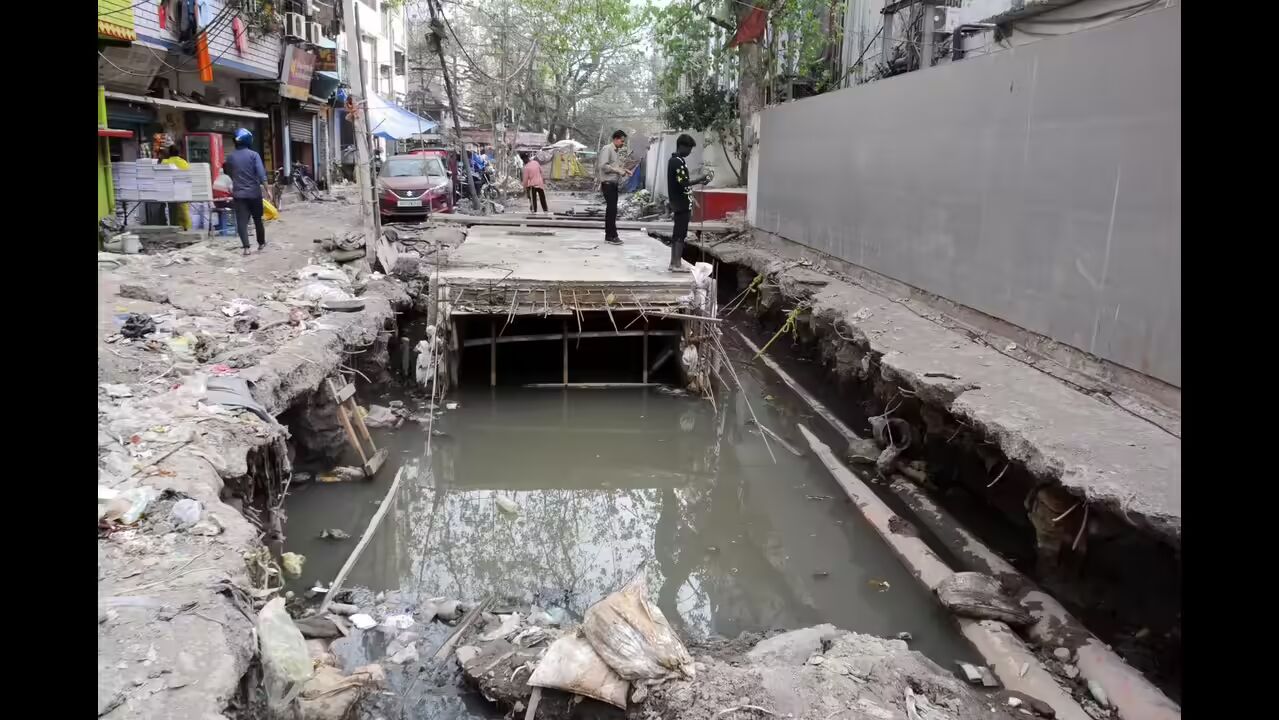
Patna’s long-standing monsoon flooding challenge has come back into focus as the state government presses for faster completion of several critical drainage corridors across the city before the rainy season arrives. Senior officials were recently directed to accelerate construction timelines on key Patna drainage projects, which urban planners say are central to reducing waterlogging in several densely populated neighbourhoods.
The review covered multiple underground and surface drainage corridors currently under construction in parts of the capital, including areas around Rajendra Nagar, Saidpur and Bakarganj. These networks carry runoff from a large portion of central Patna and connect to pumping stations that discharge excess water during heavy rainfall events. Authorities have stressed that incomplete works could worsen urban flooding during peak monsoon months, when drainage capacity is frequently stretched. The push reflects a broader effort to modernise the city’s ageing stormwater system, much of which was designed decades ago for a far smaller population and lower levels of built-up area. Rapid urban expansion, shrinking open spaces and clogged channels have made waterlogging a recurring urban risk. Past episodes of extreme rainfall have demonstrated how vulnerable the capital remains when drainage infrastructure fails to keep pace with urban growth.
Among the largest interventions under way are covered box-drain projects that combine flood management with road infrastructure. In some corridors, new roads are being built over reinforced drains to improve traffic flow while protecting stormwater channels from encroachment. The Anandpuri drainage upgrade, for instance, involves a multi-kilometre covered system that will eventually link several residential wards to a major pumping station responsible for moving excess rainwater out of the city. Urban infrastructure specialists say such integrated designs are increasingly common in land-constrained cities where drainage upgrades must coexist with transport improvements. By combining underground drains with road corridors, cities can expand stormwater capacity without acquiring large new parcels of land.
For Patna, the success of the Patna drainage projects could determine whether the city can gradually move away from seasonal flooding that disrupts neighbourhood mobility, business activity and public health. Waterlogged streets during heavy rain not only damage infrastructure but also delay emergency services and increase the risk of water-borne disease outbreaks in low-lying settlements. Officials overseeing the works have been instructed to remove construction bottlenecks, coordinate between departments and ensure quality standards so that new systems remain functional for decades. Monitoring mechanisms are also expected to be strengthened as projects move closer to completion.
Urban planners note that while engineering solutions are vital, drainage resilience ultimately depends on sustained maintenance, solid-waste management and land-use discipline around natural channels. If executed effectively, the current phase of infrastructure upgrades could mark a turning point in how the city manages stormwater in an era of more intense and unpredictable rainfall.