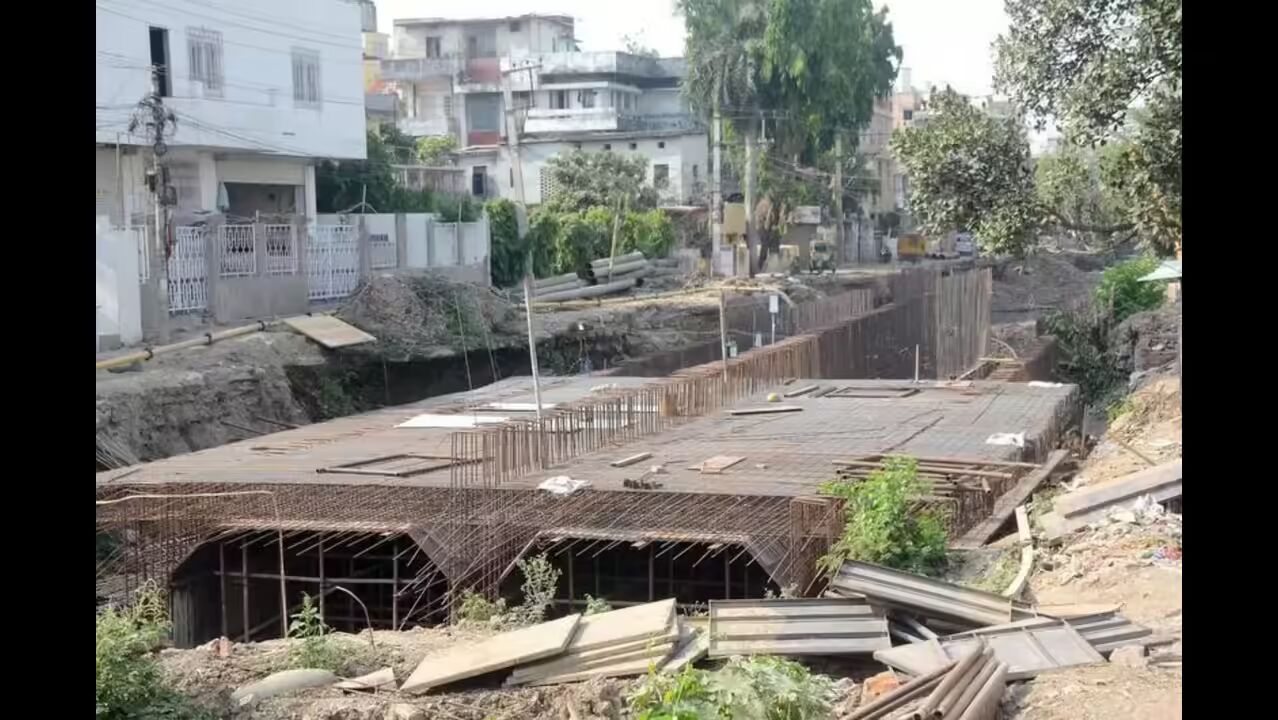
A major drainage and road infrastructure project along the Patna Mandiri Nala project corridor is approaching completion, potentially reshaping connectivity and flood management in central parts of the Bihar capital.
The redevelopment combines a new two-lane road, improved stormwater drainage infrastructure and supporting urban utilities along a key stretch linking Bailey Road to the Ganga riverfront. Urban planners say the project could ease traffic pressure while addressing persistent waterlogging issues in several densely populated neighbourhoods. The corridor includes a roughly 1.28-kilometre link road that will connect the Income Tax roundabout on Nehru Path, commonly known as Bailey Road, with Bans Ghat along the Danapur–Bankipur route. Once operational, the alignment is expected to function as an additional east-west traffic channel through the city’s central zone, improving access between key civic and residential districts.
Alongside the road construction, engineers have installed a reinforced box drain beneath the corridor, designed to carry stormwater efficiently towards the Ganga. The system includes desilting chambers, ramps and maintenance access points intended to improve long-term drainage management and reduce the accumulation of waste or sediment that often disrupts urban drains. Urban infrastructure specialists note that the Patna Mandiri Nala project is part of a broader effort to modernise the city’s ageing drainage network. The Mandiri Nala itself functions as a primary drainage channel that collects runoff from multiple municipal wards before discharging into the river. Over decades, rapid urbanisation and encroachment around the drain have reduced its carrying capacity, contributing to seasonal flooding and sanitation challenges.
By covering sections of the drain and integrating a road above it, authorities aim to reclaim underutilised urban land while strengthening stormwater management. The corridor will also include service roads, pedestrian pathways and utility ducts that can accommodate underground infrastructure such as power and telecom lines. These features are intended to create a more organised urban streetscape compared with the informal development that historically emerged along the drain’s edges. City planners say the improved corridor could benefit neighbourhoods such as Mithapur, Gardanibagh, Babu Bazar and areas around Eco Park by providing a more direct route to the riverfront and nearby commercial districts. Reduced travel times and improved access may also ease pressure on heavily trafficked arterial roads in the surrounding areas. Infrastructure economists highlight that drainage projects are increasingly being integrated with mobility upgrades in Indian cities.
Instead of treating stormwater management and road planning as separate investments, combined corridors allow municipalities to improve both flood resilience and urban mobility through a single project footprint. As Patna continues to expand, experts say the success of the Patna Mandiri Nala project could offer a model for other cities facing similar challenges of ageing drainage networks, rising traffic demand and constrained urban land. Ensuring regular maintenance of the drainage system and preventing future encroachments, however, will remain essential to sustaining the long-term benefits of the redevelopment.