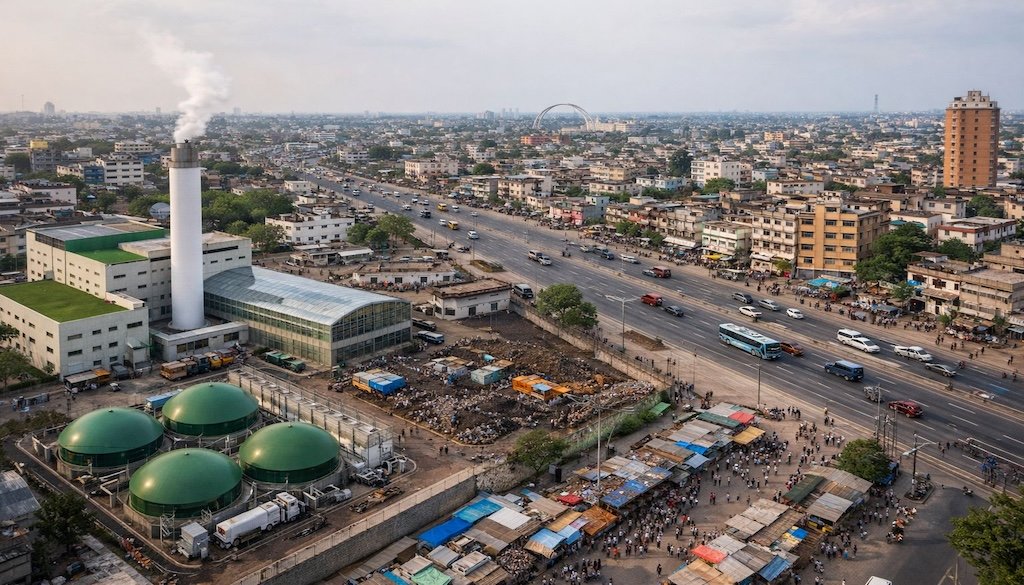
Patna Budget 2026 Focuses On Waste And Smart Streets
Patna’s civic administration has approved a ₹3,000-crore municipal budget for 2026–27 that places waste management, smart streets and market redevelopment at the centre of the city’s next phase of urban growth. The financial plan signals a shift from short-term civic spending to long-term infrastructure investment as the Bihar capital continues to expand rapidly in both population and built-up area.
The new Patna budget 2026 allocates a large share of funds to modern solid waste management systems, including a proposed waste-to-energy facility and expansion of door-to-door collection infrastructure. Officials involved in the planning process said the city is prioritising scientific waste processing as daily waste volumes rise with growing housing and commercial development. Experts say this reflects a broader trend across India’s tier-two cities, where waste management has become one of the most urgent urban challenges. Another major component of the Patna budget 2026 is the creation of so-called “smart streets” and the redevelopment of traditional market areas. These projects are expected to include improved pedestrian pathways, modern lighting, drainage upgrades and better traffic management in high-footfall zones. Urban planners note that such interventions are increasingly important in cities where commercial activity continues to grow but public space infrastructure has struggled to keep pace. The civic budget also reflects growing pressure on the Patna Municipal Corporation to improve urban liveability while strengthening its financial base.
As the city’s population continues to expand, the corporation has been expected to balance sanitation, mobility, public health and market infrastructure with limited local revenue sources. Analysts say municipal budgets in fast-growing state capitals are now shifting toward long-term infrastructure investments rather than routine maintenance spending. For residents, the emphasis on market upgrades could have a particularly visible impact. Many older commercial zones in the city continue to operate with inadequate drainage, limited parking and narrow pedestrian access. If implemented effectively, the redevelopment plan could improve both safety and economic activity, especially for small traders and informal businesses that depend on high-footfall areas. The inclusion of a waste-to-energy facility in the budget also highlights a gradual shift toward climate-responsive urban planning. By converting a portion of municipal waste into energy and reducing landfill dependence, the city could move closer to a more sustainable urban model. Urban policy experts argue that such projects are no longer optional in rapidly growing cities where environmental pressures are increasing every year.
The real test, however, will be execution. The ₹3,000-crore plan outlines an ambitious transformation for a city where infrastructure development has historically lagged behind population growth. If the proposed waste systems, smart streets and market modernisation projects are implemented on schedule, the Patna budget 2026 could mark a turning point in how the city plans and finances its future growth.