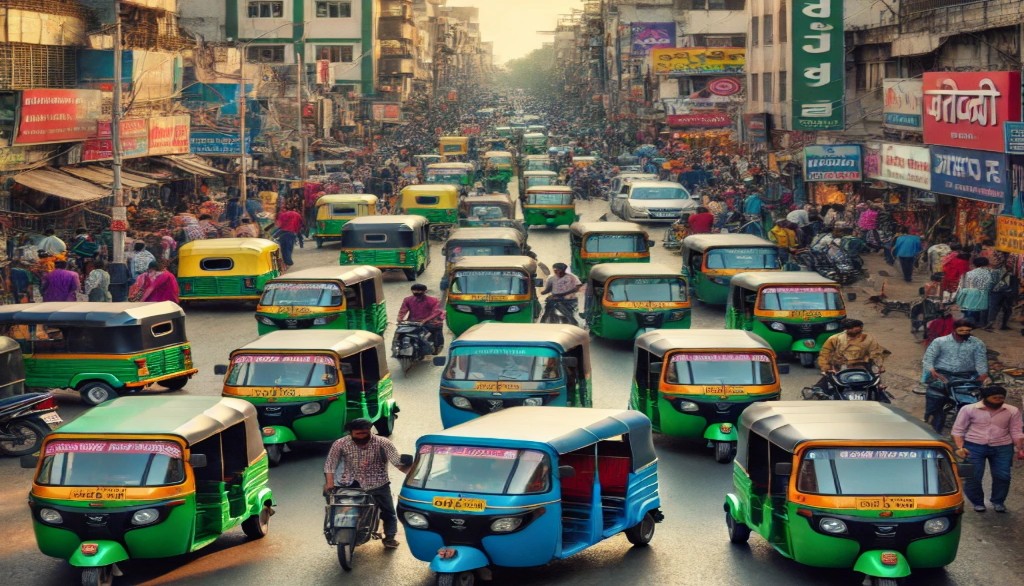
Urban transport authorities in Patna are preparing to introduce a QR Code Transport System alongside a new permit structure for thousands of auto-rickshaws, marking one of the city’s most significant attempts in recent years to regulate informal public transport. The initiative aims to bring greater transparency, route discipline and digital oversight to a sector that carries a large share of daily commuters.
Transport regulators have approved around 22,000 zonal permits for auto-rickshaw operators across the metropolitan area. Officials indicate that the majority of these licences will be issued as regular permits, while a smaller portion will function as reserve capacity to meet fluctuating passenger demand. The move is intended to formalise thousands of drivers who currently operate in a loosely regulated environment. Under the new system, each authorised vehicle will display a scannable QR code linked to a centralised database. When scanned using a smartphone, the code will reveal key operational information such as vehicle identification details and the route zone assigned to the driver. Authorities say the QR Code Transport System will allow enforcement teams to instantly verify whether an auto-rickshaw is operating on its designated corridor, reducing the scope for illegal route diversions.
For a rapidly growing city where informal transport fills critical gaps left by formal bus networks, the reform could reshape everyday mobility. Urban planners note that auto-rickshaws and e-rickshaws together represent a major share of first- and last-mile connectivity, particularly around railway stations, bus terminals and dense residential clusters. However, the absence of clear route allocation has long contributed to traffic congestion and competition for passengers in key commercial areas. The permit policy is expected to be implemented alongside a zonal operating framework that divides the city into designated service areas. Vehicles will be authorised to pick up passengers only within their assigned zones, although certain transport hubs may remain accessible across zones to maintain network connectivity. Such route discipline, officials suggest, could help smooth traffic flows while improving predictability for commuters.
Digitisation is another central element of the plan. The QR Code Transport System effectively converts each auto-rickshaw into a traceable mobility unit, enabling faster checks by traffic personnel and greater accountability for drivers. Passenger groups have long argued that access to verified vehicle and driver information is critical in improving safety in para-transit systems. The initiative also signals a broader shift in how mid-sized Indian cities are modernising urban mobility governance. While megacities have increasingly turned to app-based taxis and electric mobility solutions, cities like Patna are experimenting with digital regulation of existing transport ecosystems instead of replacing them entirely.
Implementation will now depend on coordination between transport departments, traffic enforcement agencies and driver associations. If executed effectively, the system could become a blueprint for regulating informal mobility while preserving the livelihoods of thousands of drivers who remain central to the city’s transport economy.