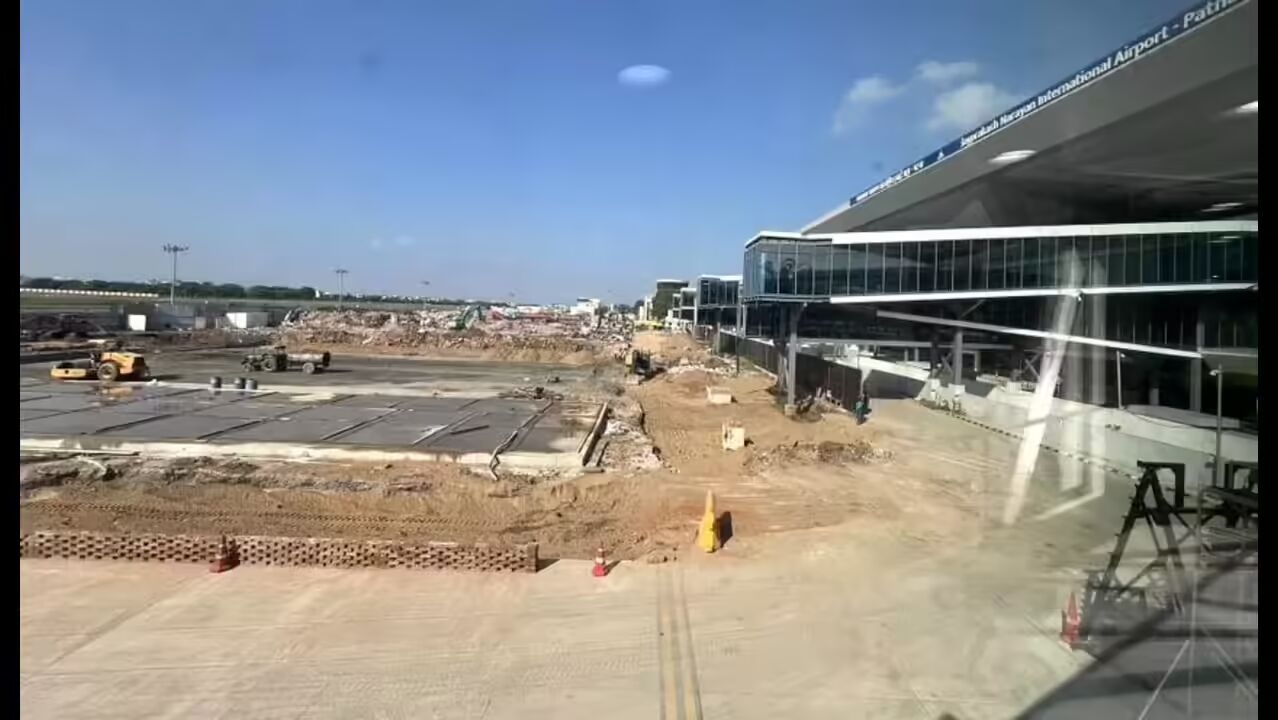
Operational changes at Patna’s airport are beginning to reshape how aircraft are handled on the ground, with parking bays being relocated to support the expansion of aerobridges and improve passenger movement at one of eastern India’s fastest-growing aviation hubs. The changes form part of the wider modernisation of the airport following the launch of a new terminal in 2025, which significantly increased passenger capacity and introduced additional aircraft infrastructure.
Officials familiar with the airport upgrade say the relocation of aircraft parking bays is designed to improve efficiency rather than simply increase capacity. The new terminal has been planned with multiple passenger boarding bridges, and aircraft positioning on the apron needs to align with these gates to reduce turnaround time and improve the flow of passengers during peak hours. With passenger traffic already crossing 3.8 million annually and rising steadily, operational improvements on the ground have become just as important as expanding the terminal itself. The airport has faced persistent congestion for years because of its limited land availability and a single runway, factors that have made incremental expansion the only realistic option. Parliamentary responses released earlier this year confirm that apron capacity has already been expanded from six to eleven aircraft parking bays as part of the latest round of upgrades. Additional passenger boarding bridges are also being brought into operation in phases to handle increasing flight frequencies and reduce crowding at boarding gates.
For urban planners and transport analysts, the relocation of parking bays highlights a broader shift in how mid-sized Indian airports are being upgraded. Instead of building entirely new facilities, authorities are redesigning operational layouts — including taxiways, apron space, and boarding systems — to extract more efficiency from limited land. This approach is particularly relevant in cities like Patna, where the airport is surrounded by dense urban development and environmental constraints that make large-scale expansion difficult. The impact of these changes extends beyond aviation. Better aircraft parking and faster boarding processes directly influence flight punctuality, passenger experience, and airline willingness to increase routes. For cities in eastern India, stronger aviation connectivity can shape real-estate development, tourism flows, and business investment — especially as Patna continues to position itself as a regional economic hub.
However, experts say the real test will be whether operational upgrades can keep pace with rising demand. With passenger numbers growing every year and future aviation projects already being discussed in the wider region, incremental improvements such as relocating parking bays and expanding aerobridge capacity are likely to remain a recurring strategy. If executed effectively, these changes could help the airport function more efficiently while supporting long-term urban and economic growth in Bihar’s capital region.