


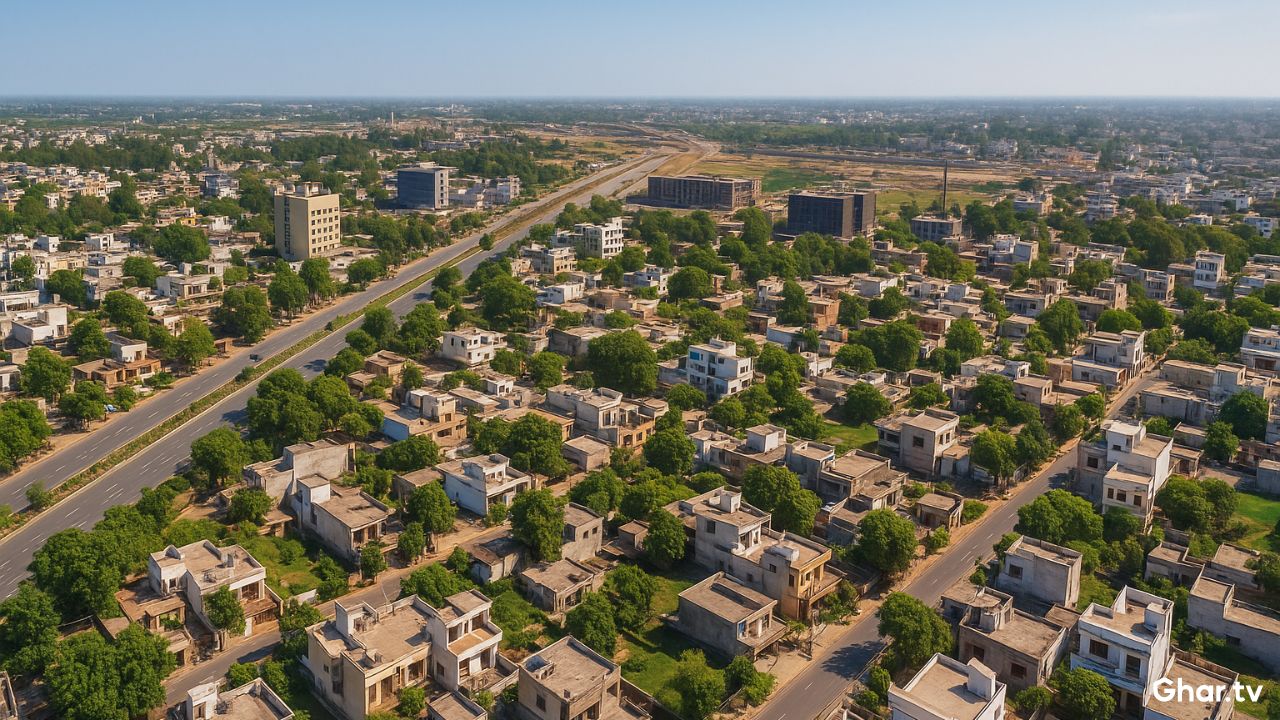
Patiala’s real estate market is entering a decisive growth phase as new transport corridors and planned township developments begin to reshape the city’s urban footprint. Long known for its cultural identity and relatively low-density living, the Punjab city is now witnessing a shift in housing demand and land values, driven by improved regional connectivity and a gradual move towards structured urban expansion. For residents and investors alike, this transition signals changing patterns of where people live, work and invest.
At the core of this transformation is infrastructure. Ongoing and proposed highway projects are reducing travel times to regional economic centres while integrating Patiala more closely with national transport networks. Urban planners note that improved road connectivity is not only enhancing mobility but also unlocking peripheral land parcels for residential and mixed-use development. This is allowing the city to grow outward in a more planned manner, easing pressure on established neighbourhoods. Housing demand is evolving alongside these changes. Buyers are increasingly prioritising accessibility, organised layouts and open spaces over proximity to legacy city cores. Well-planned neighbourhoods with wider roads, reliable utilities and access to green areas are gaining preference, reflecting a broader shift towards people-first urban design. Industry experts say this trend is particularly visible among younger households and professionals seeking a balance between affordability, liveability and long-term value. Established residential districts continue to command steady demand due to their social infrastructure and civic amenities. However, emerging corridors along newly developed road networks are attracting early-stage investment interest. These locations are benefiting from township-style planning, which integrates housing with everyday services, reducing dependence on long commutes and supporting more sustainable patterns of urban living.
Education is also shaping Patiala’s housing market. The presence of major universities and colleges has sustained demand for rental accommodation and smaller housing units. Areas closer to institutional hubs are seeing consistent occupancy levels, making them relevant for investors focused on stable rental income rather than speculative price appreciation alone. Analysts highlight that such demand anchors add resilience to local property markets, even during broader economic slowdowns. From a city planning perspective, Patiala’s expansion presents both opportunity and responsibility. Infrastructure-led growth can improve quality of life if supported by adequate public transport, water management systems and social infrastructure. Conversely, experts caution that unchecked development along highways risks fragmented urban sprawl unless guided by zoning discipline and environmental safeguards. Integrating green buffers, pedestrian infrastructure and climate-responsive design will be critical as new townships come on stream.
Looking ahead, Patiala’s real estate trajectory appears aligned with a broader shift seen across mid-sized Indian cities where growth is no longer driven solely by population increase, but by connectivity, planning quality and long-term urban resilience. If infrastructure investments are matched with inclusive and sustainable development practices, the city could emerge as a model for balanced urban expansion in the region.
Also Read: India Residential Growth Shifts Toward Premium Green Homes
