


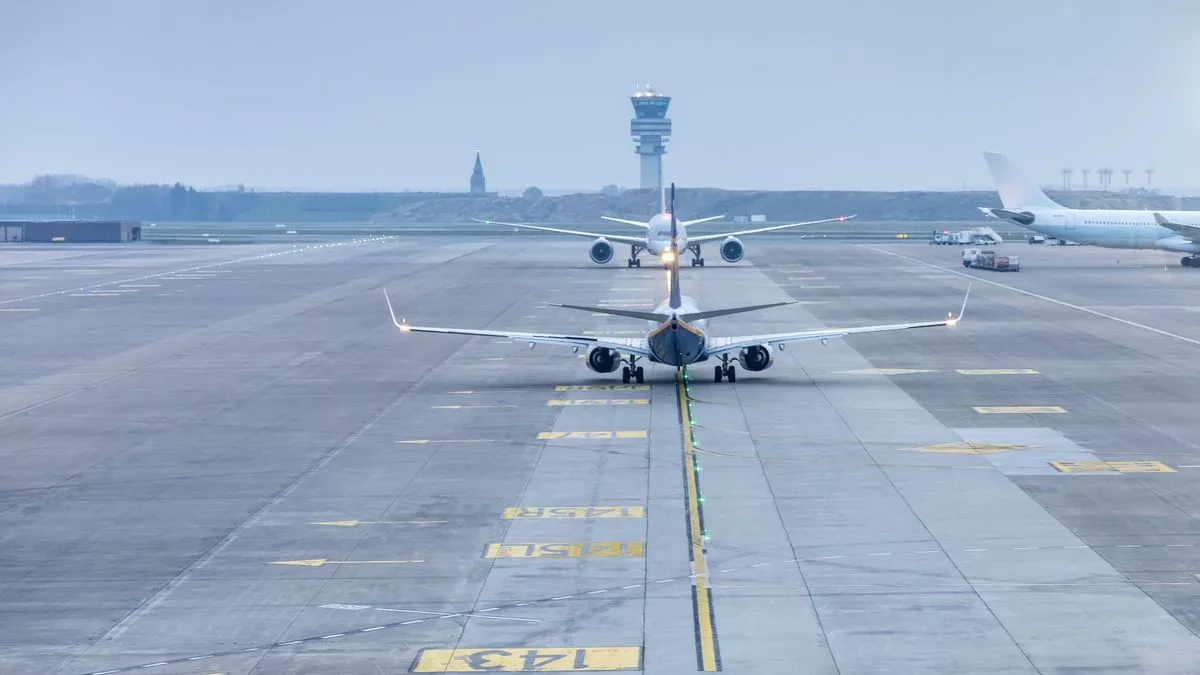
French airports, especially those in Paris, have been thrust into disarray as air traffic controllers prepare for a two-day nationwide strike, forcing airlines to cancel 40 percent of scheduled flights across key hubs on 4 July. The civil aviation authority (DGAC) has issued sweeping directives, significantly impacting operations at Paris Charles de Gaulle, Orly and Beauvais airports, as well as major regional airports in Lyon, Nice, Marseille, Montpellier and Corsica.
On 2 July, the DGAC instructed airlines to slash operations at the Paris airports to mitigate staffing shortages expected during the industrial action. Nice, Bastia, and Calvi airports are expected to cut 50 percent of scheduled services, while Lyon, Marseille, Montpellier, Ajaccio and Figari airports are reducing flights by 30 percent. The aviation authority has also cautioned that even flights not crossing French airspace may experience disruptions, including delays or cancellations, due to reduced controller capacity. The agency noted the possibility of further cancellations, underscoring the evolving and uncertain nature of the situation. The strike has been called by two of France’s key air traffic control unions, UNSA-ICNA and CGT-Contrôle, following the collapse of recent negotiations with the DGAC. Union officials cited longstanding grievances including staff shortages, deteriorating work conditions, and delays in infrastructure upgrades and modernisation efforts. These concerns have gone unresolved, prompting the unions to escalate matters at a time when air travel demand is set to peak during France’s summer holiday season.
Despite the strike announcement, the largest union in the sector—SNCTA, representing nearly 60 percent of France’s air traffic controllers—has opted not to participate in this round of industrial action. This divergence in union engagement indicates that the disruption may not be total, but will nonetheless be highly disruptive to airline schedules and passenger itineraries. The DGAC has publicly acknowledged the persistent staffing crisis and defended its efforts by pointing to a multi-year recruitment strategy aimed at bolstering operational capacity across France’s aviation infrastructure. Nonetheless, officials from the authority expressed regret at the timing of the strike, which coincides with the beginning of the school holiday period in France—a peak travel window.
European Union regulations classify air traffic control strikes as “extraordinary circumstances”, meaning passengers are unlikely to receive financial compensation for delays or cancellations under EC Regulation 261/2004. Airlines are, however, obligated to offer ticket refunds, alternative bookings, and essential services such as meals and accommodation for stranded passengers. The DGAC has urged all passengers flying between 3 and 5 July to check flight statuses with their respective airlines and consider revising travel plans accordingly. The implications of the French air traffic control strike extend well beyond the country’s borders. Airlines operating flights that traverse French airspace—including carriers originating in the United Kingdom, Germany, and Spain—have begun alerting passengers to potential delays or rerouting. Airports such as London Heathrow and Amsterdam Schiphol are actively monitoring the situation. Air France, easyJet, and Ryanair have already pre-emptively cancelled dozens of flights. Ryanair, in particular, had reported nearly 100 flight cancellations during a similar strike earlier this year, impacting thousands of travellers across Europe.
France holds the distinction of having experienced the highest number of air traffic control strike days in Europe since 2005, with nearly 250 days of action recorded. Aviation analysts argue that the recurring disruption reflects deeper systemic issues within the country’s aviation ecosystem—ranging from chronic understaffing to ageing control systems and outdated workforce models. While the DGAC’s recruitment plans are intended to address long-term gaps, short-term remedies remain elusive. Investments in automation and AI-powered digital control platforms are being explored as part of a future roadmap, but their full deployment remains years away due to regulatory and technical constraints. From a sustainability perspective, mass flight cancellations may offer temporary reductions in aviation emissions, aligning with short-term zero-net carbon targets. However, these benefits may be offset by diversion flights, extended holding patterns, and increased use of private transport alternatives. More broadly, the unreliability of air travel during such strikes weakens public confidence in intermodal transport strategies that seek to integrate rail and air for climate-friendly mobility.
However, recurring flight disruptions may serve as a long-term incentive for governments and travellers to accelerate investment in high-speed rail infrastructure—especially on short- and medium-haul corridors. These shifts are essential for advancing equitable, gender-neutral, and environmentally sustainable mobility options across the continent. With strike-related talks expected to resume in the coming days, airlines are continuing to monitor developments and adjust operations accordingly. Passengers planning to travel between 3 and 5 July are advised to stay updated via airline communication channels and explore rescheduling options where possible. While the strike falls under the category of extraordinary circumstances from a legal standpoint, the recurring industrial unrest in French aviation poses critical questions about the resilience and future-readiness of Europe’s air traffic control systems.
For policymakers, the moment demands a renewed commitment to infrastructure, workforce welfare and digital transformation. For passengers, it highlights the necessity of flexible planning and the growing relevance of diversified travel strategies in an increasingly volatile transport landscape.
Also Read : Kolkata Purple Line Clears Kidderpore Route After Court Clears DH Road Land
