


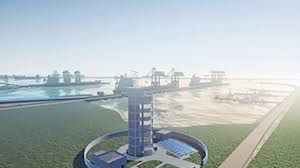
Paradip Port in Odisha is set to introduce an AI vessel traffic system developed by researchers at IIT Madras in partnership with the National Technology Centre for Ports Waterways and Coasts, marking a significant upgrade in India’s maritime navigation infrastructure. The system, currently being installed at a newly constructed signal tower, is designed to enhance real-time monitoring, safety and operational efficiency at one of the country’s key eastern seaboard gateways.
The AI vessel traffic system integrates vessel tracking, traffic coordination, navigational guidance and incident management within a unified digital platform. Once operational, it will support port authorities in managing ship movements across congested channels, particularly during peak cargo handling periods.According to project officials, a central feature of the platform is a three-dimensional visualisation module. This component provides operators with layered situational awareness, mapping vessel positions against tide patterns, channel depth, meteorological conditions and navigational constraints. By simulating marine environments in 3D, the system enables quicker risk assessment and informed decision-making in dynamic coastal settings.
An embedded AI-driven digital assistant further enhances the interface. Drawing data from Internet of Things sensors and port surveillance systems, it generates automated alerts, flags irregular vessel behaviour and predicts channel movement patterns. The system is also configured to detect environmental anomalies such as oil spills, abnormal noise levels or dust dispersion linked to cargo operations. These features aim to reduce operator workload while improving maritime safety standards.Maritime economists note that ports such as Paradip are critical nodes in India’s logistics chain, handling bulk commodities, petroleum products and industrial cargo. Delays or accidents in approach channels can ripple through supply chains, affecting inland transport networks and industrial output. By deploying an AI vessel traffic system, port authorities may reduce turnaround times and enhance berth utilisation rates, strengthening trade competitiveness.
Urban planners also point to environmental implications. Improved traffic coordination can lower idle time for vessels awaiting berthing, reducing fuel burn and associated emissions in harbour zones. For coastal cities facing rising sea levels and extreme weather risks, predictive monitoring tools can contribute to climate-resilient port operations.The project is being positioned as an indigenous technological milestone. Industry analysts suggest that successful implementation could pave the way for replication at other major and non-major ports, particularly those undergoing modernisation under national port-led development programmes.
As India expands its maritime infrastructure to support manufacturing growth and export ambitions, digital systems such as the AI vessel traffic system are emerging as critical enablers. The coming months will determine how effectively the Paradip installation translates advanced research into operational gains on the waterfront.
Also Read:Infrastructure, IT to Drive Bengaluru Realty Till 2030
Paradip Port deploys AI vessel traffic system
