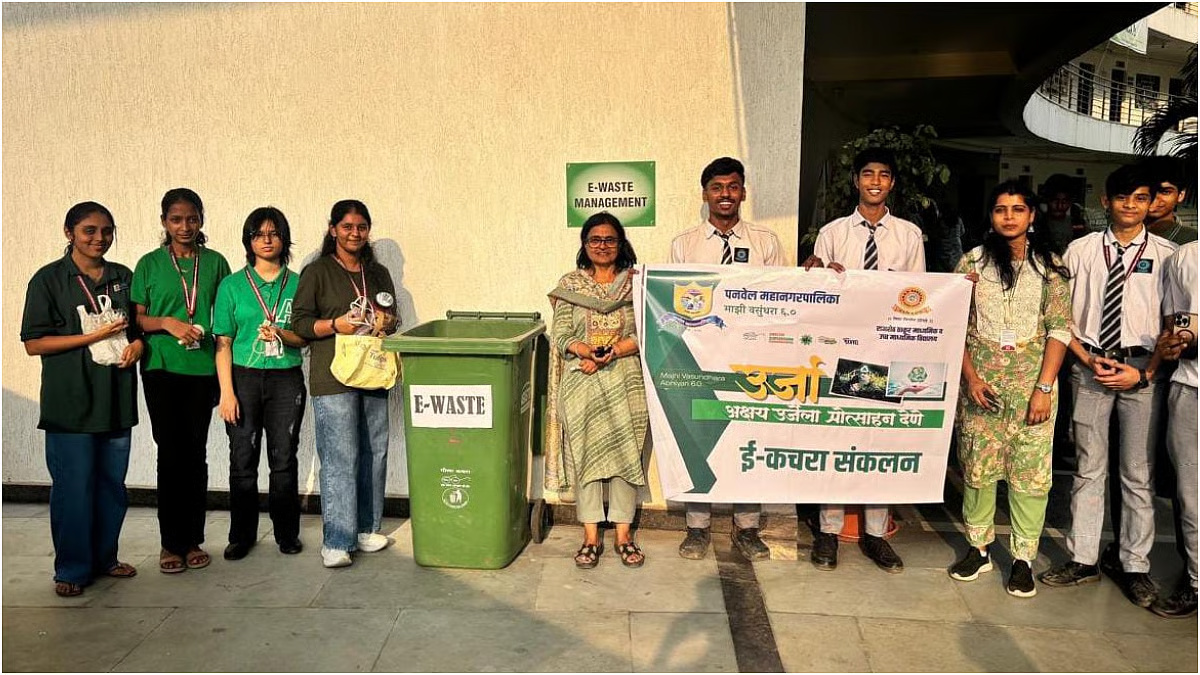
The Panvel Municipal Corporation (PMC) has launched a targeted initiative to promote renewable energy awareness and sustainable practices among students and local citizens under the government’s Majhi Vasundhara Abhiyan 6.0. The programme, inaugurated at Ramsheth Thakur Higher Secondary School, aims to foster energy conservation and environmentally responsible behaviour across the city.
Spanning two days on November 24 and 25, the initiative combines education with interactive engagement. A series of competitions, including essay writing, poster making, elocution, and quizzes, were organised to encourage students to reflect on renewable energy, carbon reduction, and sustainable urban living. Panel discussions and expert talks further provided insights into emerging clean technologies and practical ways to adopt greener lifestyles. In addition to classroom activities, the programme incorporated hands-on civic participation. An e-waste collection campaign allowed students and citizens to safely dispose of electronic waste, while tree plantation drives highlighted the tangible benefits of urban greenery. Short film screenings on climate action reinforced the narrative of environmental responsibility, connecting knowledge to real-world solutions.
An official from the PMC explained, “The objective is to increase the adoption of renewable energy, highlight the significance of green technologies, and encourage collective participation in environmental stewardship. Our message is clear: Save Energy – Save the Environment.” By integrating awareness with participatory action, the initiative aims to create a culture of sustainable living that extends beyond the classroom. The campaign also reached Ramsheth Thakur Marathi Medium School in Owepeth, expanding its footprint within the Panvel region. Students, teachers, and local residents engaged actively, signalling a growing appetite for knowledge on renewable energy and environmental conservation. Local experts emphasised the importance of early engagement, noting that behavioural change in students can have a cascading effect on households and communities, advancing the city’s zero-carbon goals.
By fostering citizen participation and school-level awareness, Panvel is taking steps toward a more sustainable urban ecosystem. The initiative exemplifies how municipal authorities can combine education, policy, and community engagement to promote net-zero practices. While small in scale, these measures are a critical component of broader city planning strategies aimed at inclusive, resilient, and environmentally responsible urban development.
Panvel Municipal Corporation Begins Renewable Energy Drive For Students And Citizens Under Majhi Vasundhara