


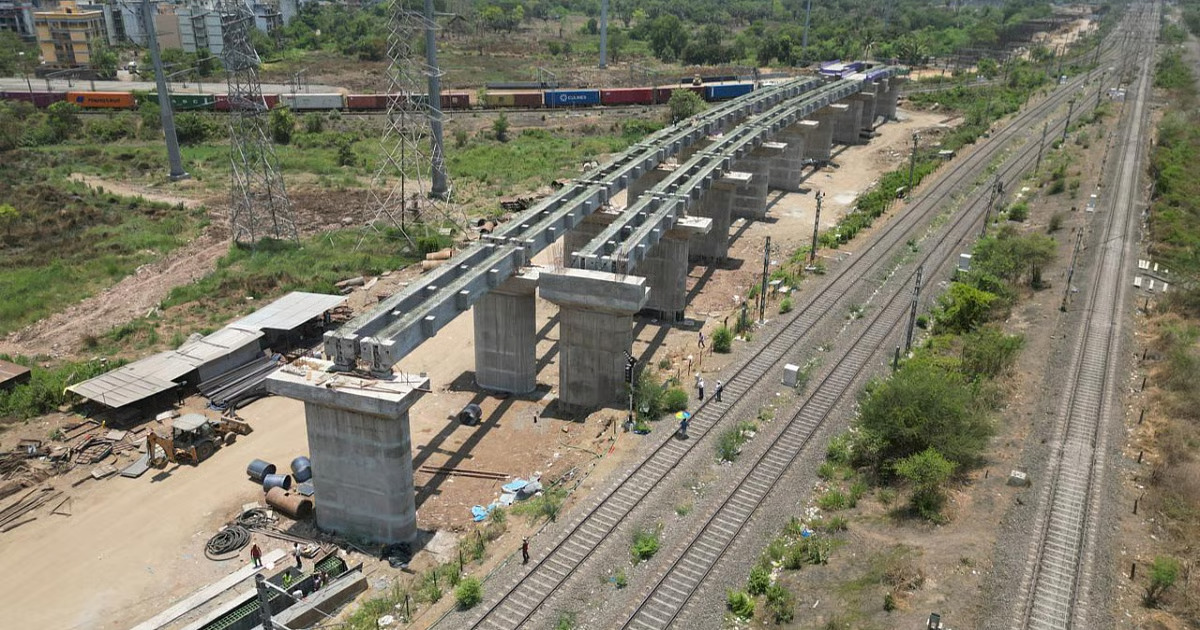
The long-anticipated Panvel–Karjat suburban railway line, a flagship component of the Mumbai Urban Transport Project (MUTP) Phase III, is fast approaching completion and expected to open by March 2026. The ₹2,782 crore project, executed by the Mumbai Railway Vikas Corporation (MRVC), aims to revolutionise daily commuting by easing congestion on the Central Railway network while strengthening connectivity between Navi Mumbai and the rapidly developing Karjat region.
According to senior MRVC officials, nearly 79 per cent of the work has been completed, with critical infrastructure elements — including tunnels, bridges, and station facilities — nearing their final construction stages. The 29.6-kilometre corridor will integrate five major stations: Panvel, Chikhale, Mohape, Chowk, and Karjat, all designed with provisions for future passenger capacity growth and energy-efficient operations. The corridor includes nine major bridges, 35 minor bridges, 15 underpasses, and a rail flyover. Additionally, three tunnels have already been fully excavated, while track-laying work is progressing swiftly. Originally slated for completion by December 2025, the line is now expected to become operational by March 2026 due to additional safety checks and signal system integration.
Officials explained that once operational, the line will reduce travel time between Panvel and Karjat by approximately 30 minutes, offering substantial relief to thousands of commuters travelling daily between the extended suburbs and employment hubs in Mumbai and Navi Mumbai. The corridor will also divert passenger load from the existing Central Railway route, which experiences chronic overcrowding even during off-peak hours. Beyond its transport value, the project holds socio-economic significance. The Panvel–Karjat link is expected to stimulate sustainable urban expansion in the peri-urban zones of Raigad district, providing better access to affordable housing and new employment clusters. Experts have noted that this corridor aligns with Maharashtra’s broader vision for transit-oriented development (TOD), encouraging compact growth around rail nodes to reduce road congestion and emissions.
The MRVC has also emphasised that the project incorporates environmentally conscious design features such as advanced noise barriers, optimised drainage systems for monsoon resilience, and provision for solar energy generation at select stations. Once operational, it will be one of the few suburban stretches in the region designed with long-term sustainability in focus. As Mumbai and its satellite cities continue to expand, the Panvel–Karjat railway line stands as a critical step towards creating equitable, well-connected, and low-carbon urban mobility. For thousands of commuters, it promises not only convenience and reduced travel time but also a greener and more inclusive model of suburban transit for the future.
Also Read : Indian Railways Launches Reservation Free Travel In Unreserved Coaches On Select Routes
