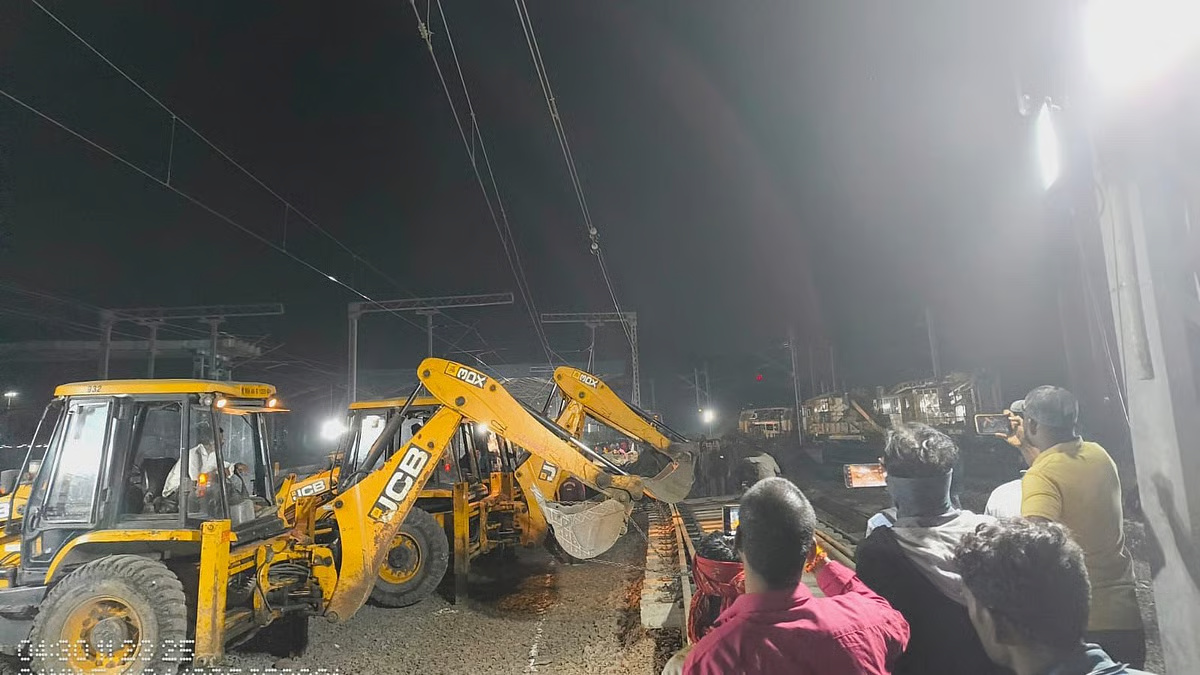
Mumbai’s long-awaited Panvel–Karjat Suburban Corridor has crossed a major development milestone, with more than 80 per cent of construction now completed under the Mumbai Urban Transport Project Phase III. The progress raises expectations of a significant improvement in suburban connectivity across Navi Mumbai and Raigad district, particularly for daily commuters who rely heavily on the Central Railway network.
According to officials associated with the project, recent construction blocks enabled complex layout changes at Panvel station, including the relocation of critical track components to create space for extended platforms. These modifications are essential for accommodating new suburban services planned under the corridor, which aims to provide a dedicated double-line route between Panvel and Karjat. The line is expected to ease pressure on one of the most congested stretches in the Mumbai Metropolitan Region. Initially sanctioned at approximately ₹2,782 crore, the project was targeted for completion in December 2025. Officials now anticipate a revised operational date of March 2026, citing the scale of civil works and integration tasks underway. Urban transport specialists say that while delays are not uncommon in large rail projects, the corridor’s progress signals Mumbai’s larger shift towards more robust and sustainable public transport infrastructure.
Land acquisition for the route—including private, government, and forest parcels—has been fully completed, clearing the way for uninterrupted construction. Major structural elements such as earthwork, bridges and tunnels have reached advanced stages. All three tunnels on the alignment have achieved breakthrough and are currently in the final lining phase, while work on rail flyovers at both Panvel and Karjat is moving ahead with girder launches and deck slab construction. Station infrastructure is also advancing steadily. New station buildings, foot overbridges, booking offices and staff facilities at Panvel, Chikhale, Mohape, Chowk and Karjat are nearing readiness, with several commuter amenities already functional. An official noted that integrating these stations into the wider suburban network forms a key component of Mumbai’s long-term mobility planning, enabling more equitable access to jobs and services across emerging growth centres.
Track linking across multiple sections is progressing alongside ballast formation and rail-panel unloading. Electronic interlocking systems—critical for signalling and safe train operations—have been successfully tested at Mohape and Chowk stations. Transport planners argue that once operational, the corridor will not only shorten travel time but also create a more resilient suburban system capable of accommodating future growth. By offering a cleaner, rail-based alternative to road travel, the new line aligns with broader sustainability goals within the region, supporting low-carbon mobility and providing commuters with an affordable, reliable transport option.
As work enters its final phases, officials emphasise that the Panvel–Karjat corridor will help rebalance Mumbai’s transport load, offering improved mobility to thousands while supporting the development of more inclusive and interconnected urban communities.
Panvel–Karjat Corridor Shows Major Advancement With Over 80 Percent Completion Achieved