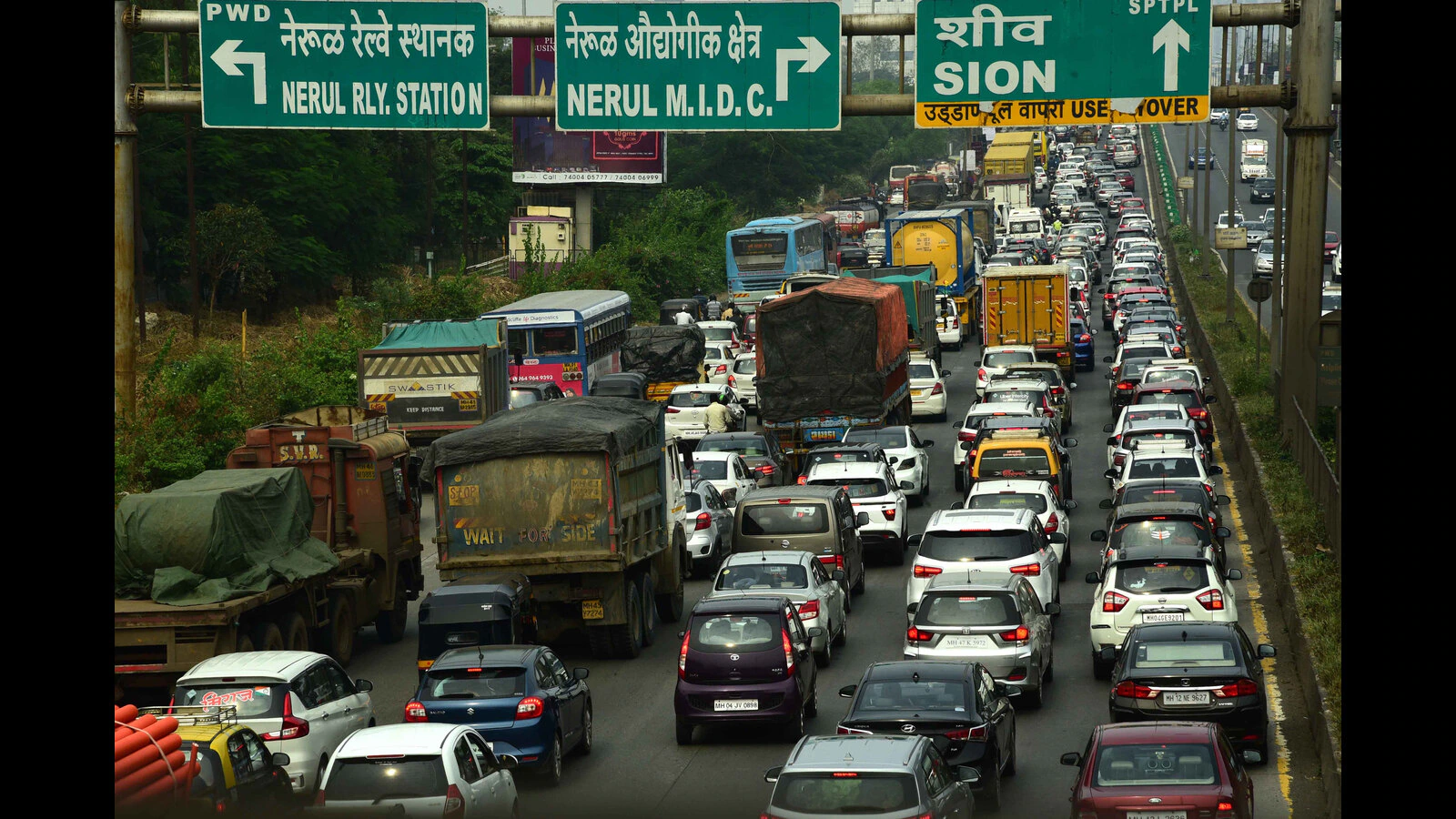
Panvel is set to witness temporary traffic restrictions across key arterial roads over three days in February as authorities prepare for polling, logistics movement, and vote counting linked to the Raigad Zilla Parishad and Panchayat Samiti elections. The measures, announced by traffic authorities, underline the growing coordination required between urban mobility systems and large-scale civic processes in fast-expanding peripheral cities.
Traffic curbs will be enforced from February 6 to February 7 and again on February 9, coinciding with the movement of polling teams, secure storage of election material, and counting procedures. Officials have identified a centrally located secondary school in Panvel as the hub for distribution of election material, strong room operations, and vote counting. To safeguard these activities, multiple roads surrounding the facility will be temporarily closed to public traffic. Between early morning on February 6 and midnight on February 7, several stretches linking Panvel’s residential and commercial zones to the school premises will remain inaccessible to private vehicles. These include routes connecting Amardham, Wadale Lake, New Panvel junctions, and adjoining service roads. Additional closures will be enforced on February 9, the counting day, during extended daytime hours to manage crowd movement and security deployment.
Traffic planners say such restrictions are essential to prevent bottlenecks and ensure uninterrupted movement of election personnel and secured vehicles. Panvel’s road network, which already faces pressure from rising population, logistics traffic, and regional connectivity demands, requires careful regulation during high-security civic events. Poorly managed election-day traffic can disrupt daily economic activity and emergency response times in surrounding neighbourhoods. To minimise commuter inconvenience, traffic authorities have notified alternative routes via internal junctions, court roads, and signalised intersections, allowing vehicles to bypass restricted zones. Traffic personnel will be stationed at major junctions to guide motorists and manage diversions in real time. Emergency services, government vehicles, and transport requisitioned for election duties will be exempt from the restrictions.
Urban governance experts note that election-related traffic planning is increasingly becoming a test of city readiness, particularly in rapidly urbanising nodes like Panvel that function as gateways to the Mumbai Metropolitan Region. Efficient handling of such events reflects institutional capacity, inter-agency coordination, and the adaptability of local infrastructure. From a sustainability perspective, planners point out that advance communication and clearly marked diversions can help reduce unnecessary idling, fuel consumption, and emissions during temporary closures. Encouraging commuters to adjust travel timings or use public transport during restricted hours can further reduce congestion impacts.
Authorities have appealed to residents and commuters to cooperate with traffic arrangements and plan journeys accordingly. As Panvel continues to grow as a residential, logistics, and transit hub, the ability to manage civic events without major disruption will be critical to maintaining public trust and urban efficiency. The coming days will offer a snapshot of how well the city balances democratic processes with everyday mobility needs.
Panvel Announces Traffic Diversions for February 6, 7, 9 For Poll Process