


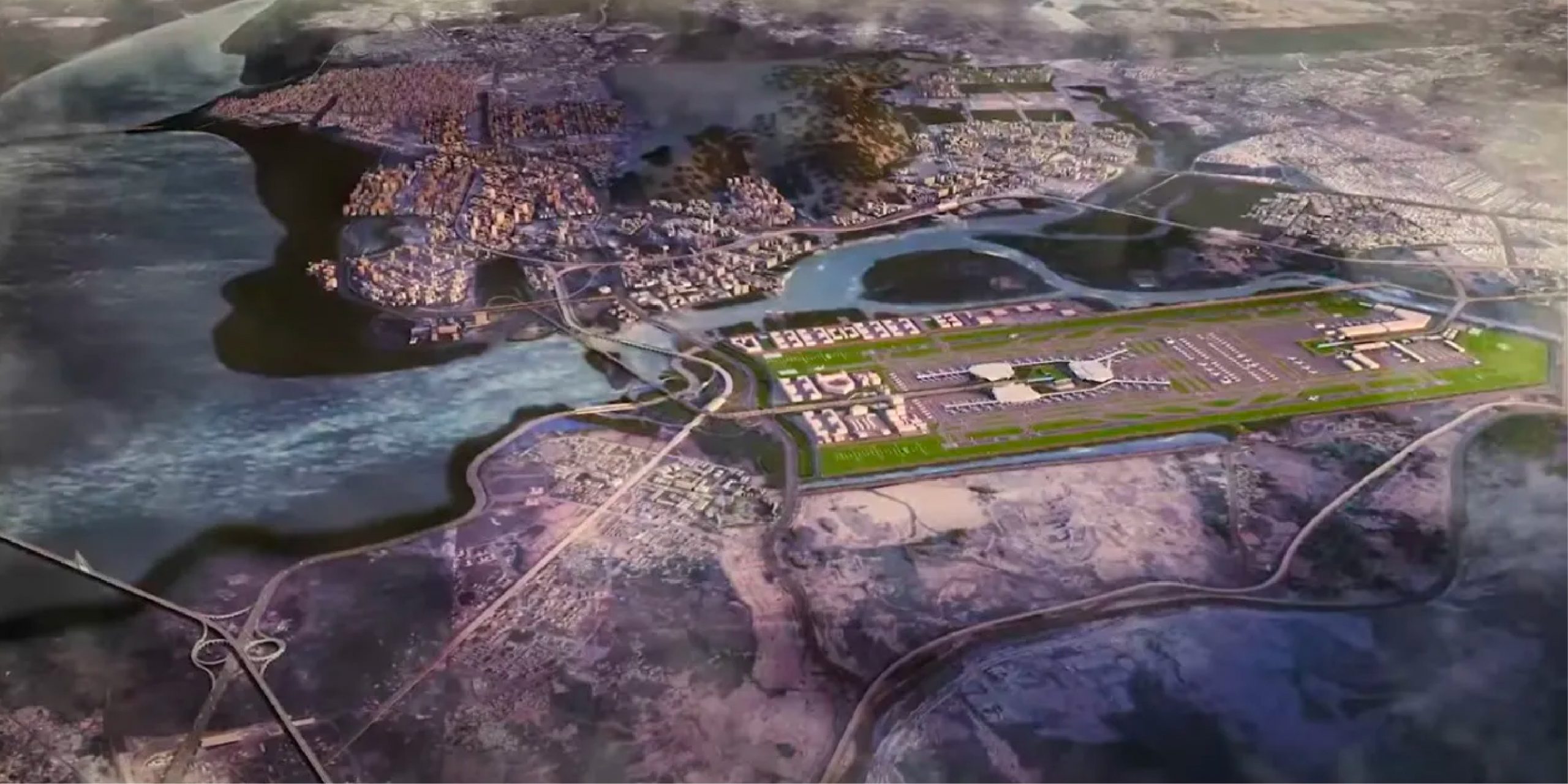
As commercial operations gather pace at the upcoming Navi Mumbai International Airport (NMIA), Panvel is witnessing a measurable shift in housing demand particularly from Non-Resident Indians (NRIs) tracking infrastructure-led growth corridors. Market data and developer disclosures suggest that what was once speculative interest has matured into structured investment activity anchored in connectivity and employment potential.
Located at the heart of the proposed aerotropolis influence zone, Panvel has gained prominence as Mumbai transitions towards a dual-airport metropolitan model. Improved access through the Atal Setu has reduced travel time to South Mumbai, strengthening its appeal among buyers seeking larger homes within commuting range of established business districts. Property consultants estimate that residential values in Panvel have recorded steep appreciation over the past four financial years, with apartments now trading in the Rs 10,000-12,000 per sq ft range in key pockets. Plotted developments have also seen strong price growth, reflecting demand from long-term investors anticipating sustained economic activity around the airport ecosystem. The “airport effect” is a well-documented global phenomenon. From Amsterdam Airport Schiphol to Paris Charles de Gaulle Airport, aviation-led corridors have historically demonstrated stable rental demand and long-term capital appreciation. Urban economists note that such hubs catalyse logistics parks, hospitality clusters, office spaces and supporting social infrastructure, generating diversified employment streams.
In Panvel, early signs of this pattern are visible. Developers report rising rental absorption in projects near the airport corridor, with professionals from logistics, corporate parks and infrastructure firms forming a growing tenant base. Industry executives suggest that nearly half the inventory in certain large townships is currently leased, indicating that the rental market is active even before the airport reaches full capacity. For NRIs, valuation arbitrage remains a central driver. Compared with Mumbai’s established suburbs, Panvel offers larger-format homes including three- and four-bedroom configurations at significantly lower ticket sizes. The prospect of long-term appreciation tied to aviation-linked urbanisation adds another layer of appeal. However, urban planners caution that airport-led growth must be matched with sustainable infrastructure planning. Water supply, stormwater drainage and public transport integration will be critical as population density increases. The success of the aerotropolis model will depend not only on connectivity but also on climate resilience and equitable access to services.
With metro connectivity, logistics zones and proposed commercial districts in the pipeline, Panvel appears poised for structural transformation. Whether it evolves into a balanced urban ecosystem or a speculative hot spot will hinge on execution and governance. For now, NRIs appear to be positioning themselves early in what could become Mumbai’s next major growth node.
Also Read: Mira Bhayandar redevelopment rules set to ease
Panvel aerotropolis draws NRI property interest
