


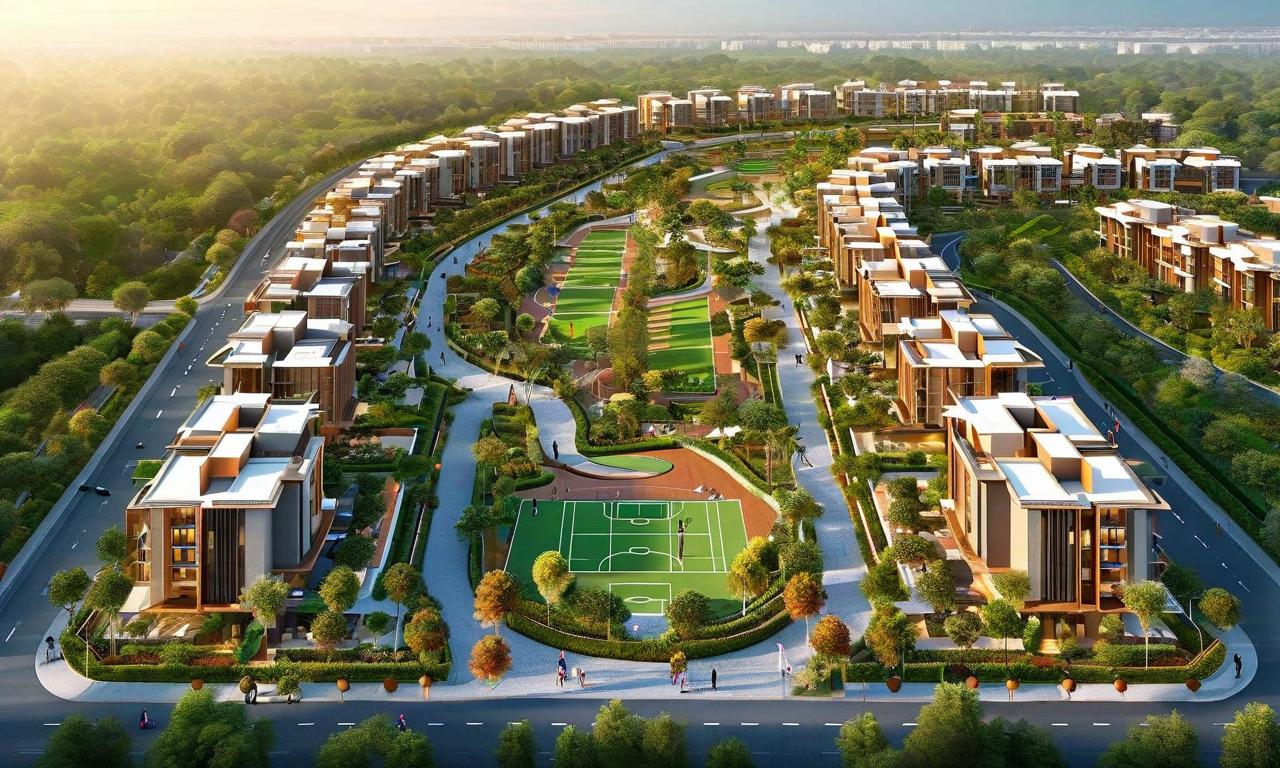
Panipat, one of Haryana’s fastest-urbanising industrial cities, is emerging as a new focal point for planned residential development as developers look beyond saturated metro cores. A large integrated township investment announced this week underscores growing confidence in tier-two cities positioned along major economic and logistics corridors in North India.
The 125-acre project, planned on the outskirts of Panipat, reflects a broader shift in housing demand driven by affordability pressures in Delhi-NCR and rising interest in plotted and low-density living formats. Urban development experts note that towns such as Panipat are increasingly benefiting from improved highway connectivity, decentralised employment clusters and state-level policy support for organised townships. The proposed development will follow an integrated township model, combining residential plots, independent floors, group housing and commercial amenities within a single master-planned layout. Such formats, once concentrated around metro peripheries, are now gaining traction in secondary cities where land availability allows for better infrastructure planning, open spaces and phased growth. Panipat’s appeal lies in its dual character. Traditionally known for its textile and manufacturing base, the city has seen gradual diversification of employment and services while retaining relatively lower land costs. Urban planners point out that this combination makes it attractive for middle-income households seeking ownership-driven housing options, particularly plotted developments that offer flexibility and long-term asset value. In the initial phase, the township will release several hundred residential plots, a move aligned with current buyer preferences.
Post-pandemic housing demand across northern India has shown a clear tilt towards ground-oriented living, lower density neighbourhoods and communities with internal infrastructure rather than standalone projects. Industry analysts also view such large township investments as a test of execution capability. Integrated developments require coordinated delivery of roads, utilities, drainage, green spaces and social infrastructure, placing greater responsibility on developers to align with municipal planning norms and environmental safeguards. When executed well, these projects can reduce pressure on existing city cores and support more balanced urban expansion. From a sustainability perspective, planners emphasise that new townships in emerging cities must prioritise water management, energy efficiency and walkable layouts to avoid replicating the sprawl challenges seen around larger metros. Haryana’s policy framework for group housing and plotted colonies increasingly encourages internal infrastructure provisioning, which can help improve long-term liveability if enforced effectively.
As housing affordability tightens across Delhi, Gurugram and Noida, cities like Panipat are expected to absorb incremental residential demand over the next decade. Whether such projects translate into resilient, inclusive urban neighbourhoods will depend on planning discipline, infrastructure integration and how closely development aligns with the region’s economic realities.
Also Read: PropertyPistol Funding Signals Cross Border Realty Shift
