Nalco Expands Beyond Aluminium Into Rare Earth Mining
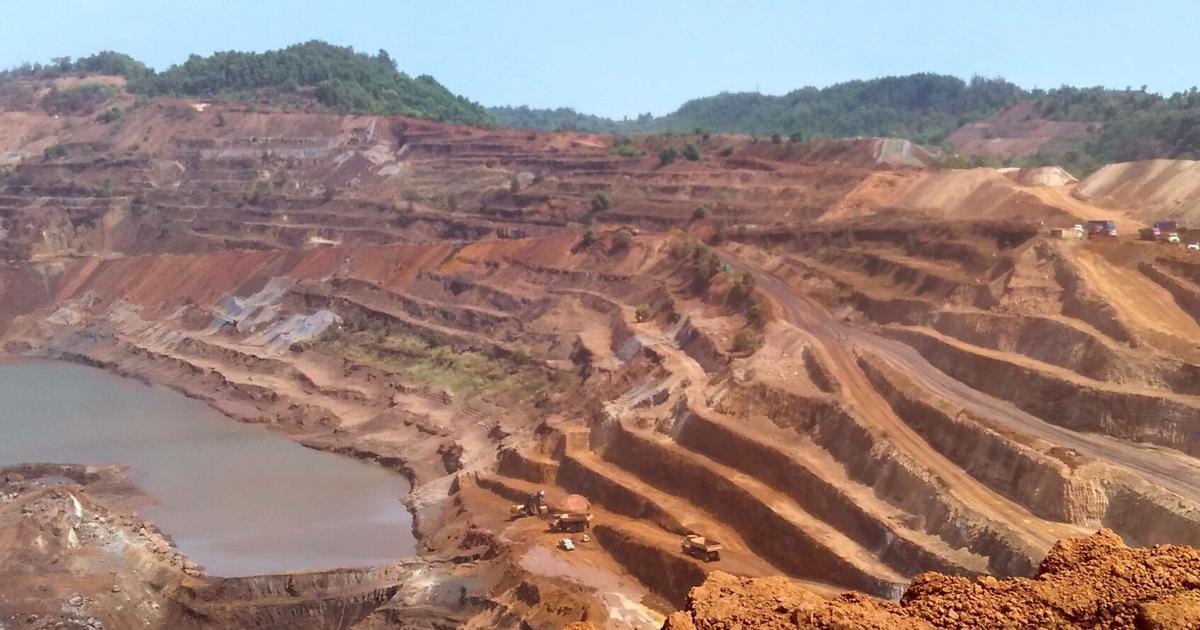
Panaji’s state government has amended its dump mining e-auction policy to make employment for local residents a mandatory requirement for bidders. The new directive, approved by the state cabinet on Monday, aims to balance economic revival with regional equity in Goa’s iron ore sector. The policy empowers the Directorate of Mines and Geology (DMG) to re-auction iron ore dumps and blacklist companies that fail to begin dump handling within 180 days. It also introduces stricter norms for project planning and environmental compliance through pre-auction submissions.
The revised policy comes in the wake of prolonged debates on the ecological and economic consequences of low-grade iron ore dump handling. Under the updated terms, bidders must now submit a detailed project report (DPR) outlining waste quantity, drainage patterns, reclamation plans, and disposal mechanisms. Additionally, they must provide bank guarantees equivalent to the estimated waste handling cost and may be required to make upfront payments. This shift signals a firm move towards increased accountability, ensuring mining operations are not only commercially viable but also socially and environmentally responsible. Officials noted that the decision aligns with the Supreme Court’s directions, which allowed dump mining only under expert committee supervision. The amended policy incorporates key recommendations from that report, specifically enhancing transparency in the auction process and setting clear obligations for bidders.
The DMG has also been granted the authority to cancel previous e-auctions and restart the process if compliance is found lacking. By doing so, the government aims to prevent hoarding of auctioned sites and promote timely reclamation and operationalisation. The inclusion of local employment clauses marks a significant milestone for Goa’s mining-affected communities, many of whom have long awaited direct economic benefits from mining resumption. The policy embeds social equity within the core of extractive industry governance, reinforcing the idea that economic gain must be inclusive. The need for a comprehensive plan before auction also ensures that environmental concerns are considered early, potentially curbing land degradation and waste mismanagement at the site level.
This policy shift reflects a broader commitment to sustainable resource management in Goa, one that integrates livelihoods, environmental safeguards, and procedural transparency. As the state reopens its mineral economy, such reforms are essential in rebuilding public trust and strengthening regulatory integrity. If implemented diligently, the revised framework can serve as a model for other mining-intensive states striving to reconcile development with ecological and social accountability.