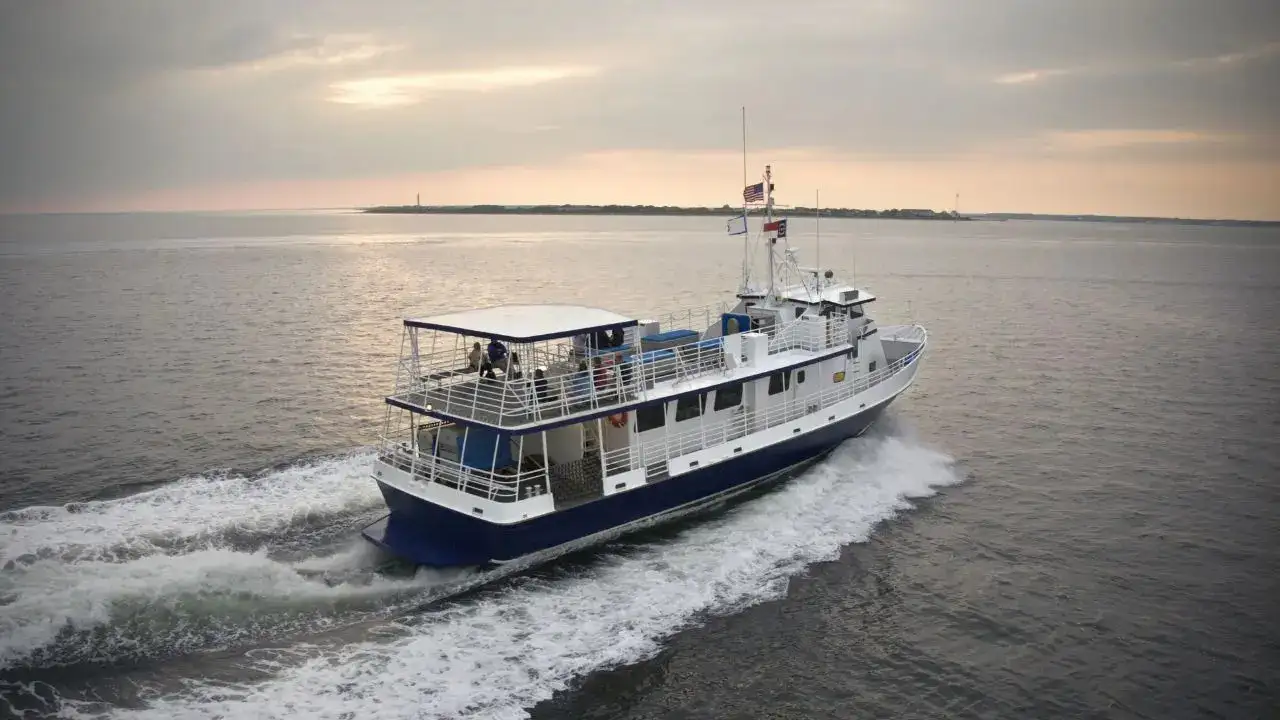
Panaji Launches First RoRo Ferry To Ease Island Commute And Boost Tourism
Goa marked a major milestone in sustainable transport on July 14 with the launch of India’s first Roll-on/Roll-off (RoRo) ferry service on the Mandovi River, linking Chorao Island to Ribandar. Designed to carry both passengers and vehicles, the new high-speed ferries have reduced travel time from 30 minutes to around 12 minutes, offering residents and visitors a faster, safer, and more convenient mode of cross-river mobility. The project is being hailed as a model for green, inclusive transit in India’s coastal regions.
Each of the two ferries deployed under this service can accommodate 100 passengers, 15 cars, and up to 40 two-wheelers, with features like marked lanes, air-conditioned seating, and onboard medical kits enhancing safety and comfort. Operating at speeds of 10 knots—double that of traditional ferries—the service not only saves time but also reduces wait times, congestion, and fuel consumption, making it a more environmentally responsible alternative. Commuters who previously relied on slower boats or lengthy road routes now have access to a streamlined, cost-effective transport link. What sets this initiative apart is its implementation under the Built-Own-Operate-Transfer (BOOT) model, ensuring zero financial burden on the state while leveraging private-sector efficiency. The vessels were locally designed, reflecting both technological innovation and regional maritime expertise.
By tapping into Goa’s vast potential for inland water transport, the RoRo project not only supports daily commuting but also aligns with long-term urban mobility planning and climate goals. Officials have underscored its importance in reducing road traffic and emissions in sensitive ecosystems surrounding Chorao Island. Tourism, a vital part of Goa’s economy, is also expected to benefit. The improved connectivity is likely to encourage more visitors to explore ecologically rich but previously less accessible areas like Chorao, home to the Salim Ali Bird Sanctuary. Faster and more reliable transport could help distribute tourist footfall beyond overburdened hotspots, promoting balanced regional development. Experts also highlight how such projects can support equitable urban growth by integrating marginalised communities into the mainstream transport network without displacing traditional livelihoods.
The RoRo ferry initiative represents a rare convergence of sustainability, innovation, and accessibility. While early feedback has been positive, the project’s long-term success will depend on consistent maintenance, public adoption, and integration with broader transit systems. For other coastal states seeking cleaner, smarter mobility models, Goa’s experiment may offer both inspiration and a practical blueprint.