


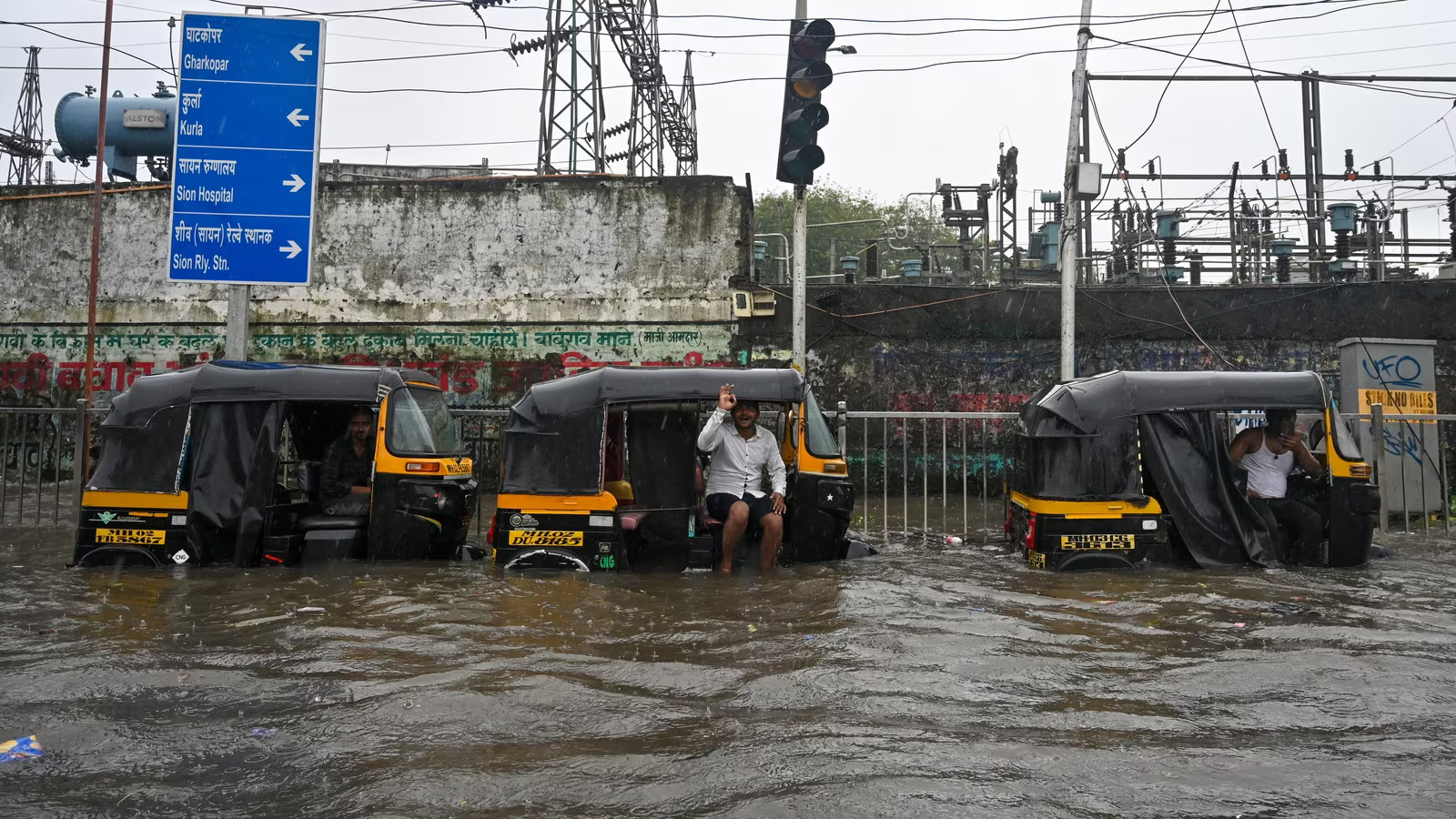
Relentless rainfall battered the Mumbai Metropolitan Region this week, inundating vast stretches of the city and forcing the evacuation of over 17,000 residents from low-lying areas. Officials confirmed that industrial, transport, and civic systems were severely hit as the downpour continued for nearly three days without respite.
The scale of disruption stretched far beyond routine monsoon waterlogging. In the industrial belt of Mahape, factories suspended operations after floodwaters breached compound walls, leaving machinery submerged and output paralysed. Several housing societies across Mira-Bhayandar and Vasai-Virar shut down elevators to avert electrocution risks, while the electricity supply company suspended power in vulnerable zones as a precaution. Transport corridors faced similar turmoil. Local trains on the harbour line were halted between Panvel and Chhatrapati Shivaji Maharaj Terminus, leaving commuters stranded without updates. In Thane district, subsidence and rising river levels triggered evacuations in Kalyan and Murbad, while Ulhasnagar reported one of the highest rainfalls of the season, marooning entire neighbourhoods. On arterial highways, traffic slowed to a crawl as underpasses and link roads vanished beneath floodwaters.
Rescue teams, including disaster response forces, fire brigades and civic authorities, deployed boats and tractors to evacuate residents in Vasai, Virar and Panvel. Over 500 people, including a pregnant woman, were rescued in one coordinated operation. Elsewhere, municipal bodies distributed thousands of food packets and set up shelters in schools and community halls to provide immediate relief. In Navi Mumbai, the situation turned precarious as over 100 mm of rainfall lashed multiple nodes. The Mahape MIDC complex came to a standstill, while the Vashi APMC wholesale market reported heavy financial losses due to flooding. Waterlogging on the Thane-Belapur road paralysed mobility for hours, and traffic police struggled to keep key corridors open. Civic engineers worked overnight with pumping systems and makeshift dams to divert runoff from hills and protect low-lying pockets.
Experts pointed out that much of the crisis stemmed not just from heavy rainfall but from inadequate drainage, poor urban planning, and neglect of flood-control infrastructure. Local residents complained of clogged nullahs and incomplete pre-monsoon desilting drives that allowed rainwater to accumulate rapidly. Conservationists argued that unchecked construction in floodplains and the narrowing of natural waterways have amplified monsoon shocks across the metropolitan belt. The floods highlight the urgent need for climate-resilient planning in Mumbai’s urban landscape. As extreme rainfall events grow more frequent with global warming, experts warn that mitigation efforts cannot be limited to post-disaster responses but must include systemic reforms. Without prioritising sustainable drainage, floodplain conservation, and equitable disaster preparedness, Mumbai risks reliving the cycle of waterlogging, displacement, and infrastructural collapse each monsoon season.
Also Read : Mumbai Citizens Raise Objections To Orange Gate Tunnel Citing Safety Concerns
