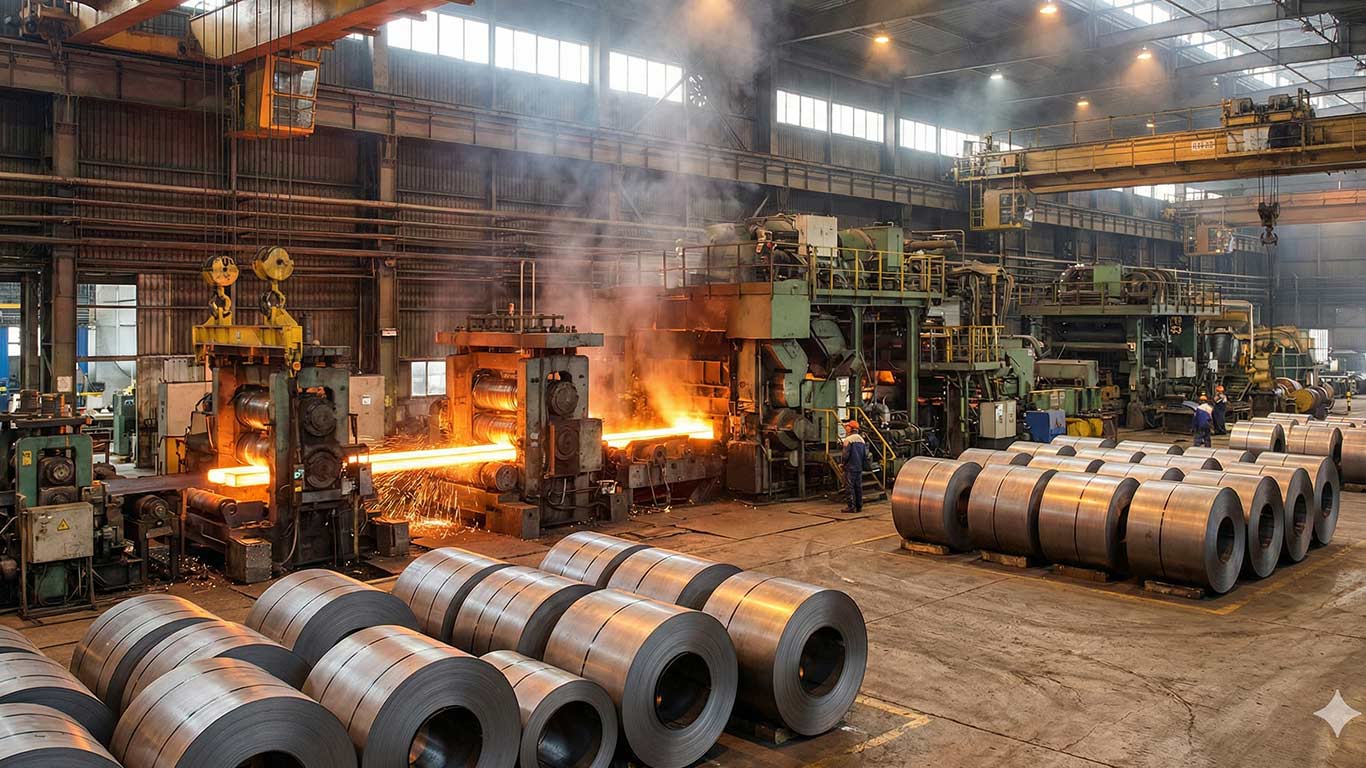
Odisha’s steel industry is set to reach a combined production capacity of 33.78 million tonnes across its integrated plants in FY 2025–26, highlighting the state’s growing role in India’s industrial landscape. Additional steel producers in Odisha contribute another 6.15 million tonnes, reflecting strong domestic supply potential. With policy measures promoting Made-in-India steel and quality standards, the state’s expansion not only meets rising infrastructure demand but also strengthens local manufacturing, value addition, and sustainable industrial growth.
The Ministry of State for Steel, Bhupathiraju Srinivasa Varma, emphasised that steel production in Odisha remains largely market-driven. Decisions on investment, modernisation, and employment are determined by individual companies, with the government primarily providing enabling policies rather than direct intervention. “The focus is on creating a conducive environment for growth while maintaining sector efficiency,” an official noted.National policy initiatives are shaping Odisha’s steel sector trajectory. The Domestically Manufactured Iron and Steel Products Policy mandates the use of Indian steel in government projects, enhancing demand for local producers and encouraging higher-value steel production. Meanwhile, the Steel Import Monitoring System offers real-time data on imports, supporting strategic planning and helping manufacturers align production with market needs.
Quality and standards enforcement remains central to these efforts. Steel Quality Control Orders restrict sub-standard steel production and imports, ensuring downstream sectors—such as construction, automotive, and infrastructure—receive reliable materials. Industry analysts highlight that adherence to quality standards also contributes indirectly to sustainability, reducing material wastage and improving energy efficiency throughout the steel supply chain.Odisha’s rising steel capacity aligns with broader urban and industrial development goals. Expanded production not only strengthens supply chains for domestic infrastructure projects but also creates employment opportunities and supports ancillary industries. “Steel forms the backbone of city-building and industrial hubs,” said an industry expert. “Policies that combine domestic sourcing, market facilitation, and quality control can drive both economic and environmental benefits.”
As India moves towards net-zero emissions targets, integrating sustainable practices in steel manufacturing—such as energy-efficient production technologies and renewable power usage—will become increasingly critical. Odisha’s growing capacity, underpinned by national policy support, positions the state to meet domestic demand while contributing to greener industrialisation, supporting equitable urban development, and strengthening India’s self-reliance in strategic materials.