Nuh roads aid illegal mining as officials bypass border rules and ecology
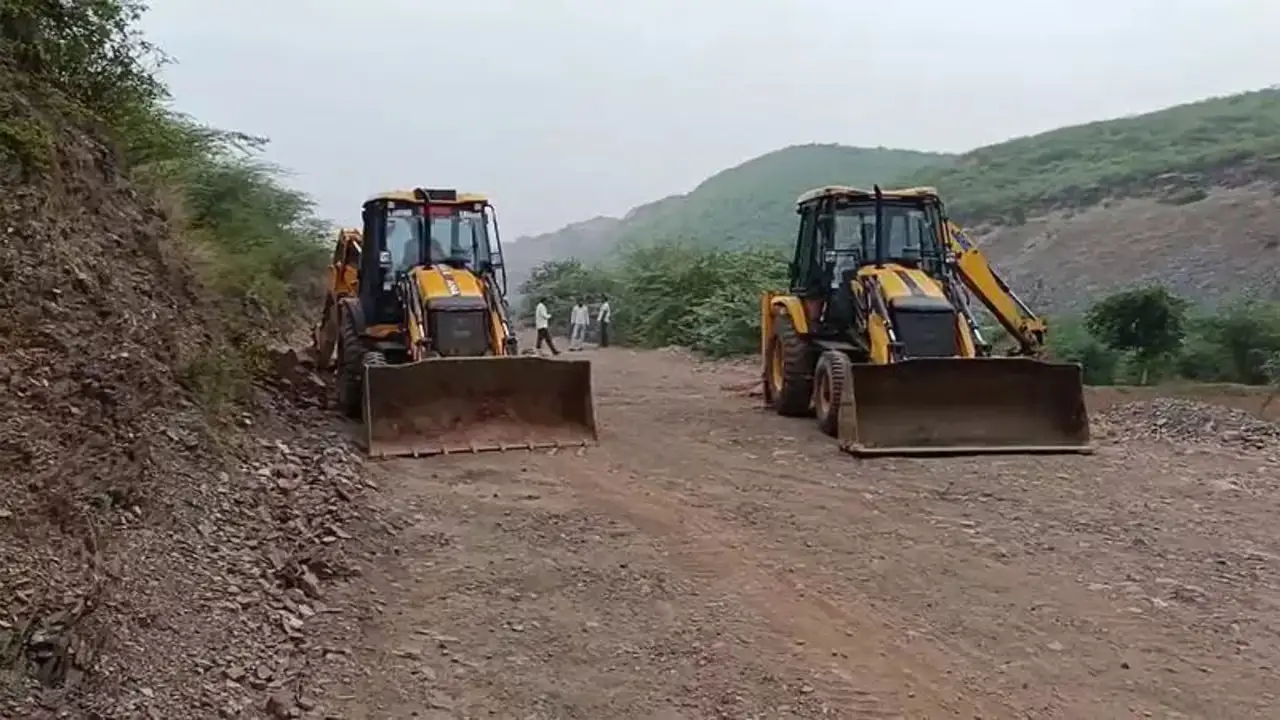
An investigation into illegal mining in Nuh district has revealed that unauthorised roads, carved through forest and farmland, have helped mining operators bypass law enforcement and escape to neighbouring Rajasthan. The two roads — roughly 2 km each — reduced the journey by 25 km, enabling large-scale movement of unlicensed stone material. A recent affidavit submitted to the Supreme Court by Haryana officials points to systemic collusion and administrative failure, exposing how local governance gaps are facilitating irreversible ecological and financial damage.
Drone surveillance data submitted by a special team under the state’s Vigilance and Anti-Corruption Bureau outlined that these roads, illegally built over the past two years, were planned during land consolidation exercises with the support of local representatives and officials. The roads passed through Basai Meo and connected to Rajasthan villages, where mining leases are still permitted. This proximity, combined with murky boundary lines between the two states, created a porous escape route for mining mafia operations, allowing them to extract resources from Haryana while operating under Rajasthan licences. While mining has been banned in southern Haryana, including the Aravalli ranges of Nuh, Faridabad, and Gurugram since 2009, Rajasthan continues to issue mining leases in villages near the state border. The affidavit reveals that Rajasthan-based leaseholders often overstep their legal boundaries, displacing demarcation markers and mining into protected Haryana land.
Haryana’s revenue loss from unauthorised road use and bypassed tolls and royalties is estimated at over ₹13 crore. The government further argues that this inter-state policy discrepancy has worsened exploitation of the ecologically fragile Aravallis. Despite raids, drone patrols, and enforcement actions, illegal mining persists, particularly during nighttime. Officials note that absconding local leaders and unclear territorial demarcations are allowing operations to flourish. The Haryana government has recommended the creation of a 5-km mining-free buffer zone within Rajasthan territory to control unauthorised cross-border activity. They also requested that the Survey of India demarcate boundaries clearly to prevent further ecological encroachments and policy loopholes. The Supreme Court is now monitoring the case for follow-up action.
The erosion of the Aravallis in both states is not merely a legal matter, but an environmental emergency. As state policies clash and local governance falters, fragile ecosystems pay the price. Without urgent coordination between Haryana and Rajasthan — including a halt to boundary-blurring leases and stricter local oversight — illegal mining will continue to extract more than just minerals. It will compromise biodiversity, water recharge, and the region’s long-term sustainability.