

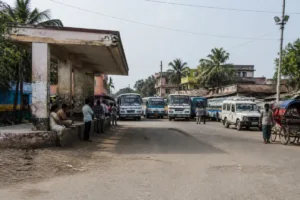
The North Dinajpur bus strike disrupted public transport across the district on Wednesday after the North Dinajpur Bus and Minibus Owners’ Welfare Association and the Raiganj Auto and Trekker Owners’ Association began a three-day stoppage over fare revision, highway regulation and unpaid election-duty bills.
The strike was supported by bus owners’ associations in Malda and South Dinajpur. Buses operating on routes linking North Dinajpur with Balurghat, Siliguri and Malda also stopped running.
Around 105 buses were taken off the roads, along with about 200 trekkers and autos, according to the report. The disruption affected office-goers, daily commuters and other passengers across the district.
The operators said bus fares had last been revised in 2018, when diesel cost about ₹64 a litre. Diesel now costs around ₹100 a litre, while engine oil, tyres, spare parts and insurance expenses have risen by nearly 40 per cent, said Plaban Pramanik, general secretary of the minibus owners’ welfare association. He also cited higher toll charges on vehicles using national highways.
The associations demanded a fare increase and restrictions on what they described as the indiscriminate movement of passenger-carrying e-rickshaws on state and national highways. They also raised concerns about auto-rickshaws allegedly operating without permits, particularly in rural and remote areas.
A further demand relates to payments for buses, minibuses, trekkers and auto-rickshaws used for election-related duties during the 2023 panchayat elections, the 2024 Lok Sabha elections and the 2026 Assembly elections. Pramanik said those payments remained pending.
The stoppage left some passengers dependent on alternative services. Rozina Khatun, a resident of Samaspur in Hemtabad, told the newspaper that she hired an e-rickshaw for ₹250 to take her child to a doctor in Raiganj, about 10km away. She said the amount was nine or 10 times the usual fare.
Some commuters also complained that e-rickshaw operators were charging unusually high fares during the strike. Pramanik acknowledged the inconvenience but said private operators were facing serious financial losses. He warned that bus services across the state could gradually come to a complete halt if the associations’ demands were not addressed.
The report did not provide details of any government response or negotiations with the transport associations.