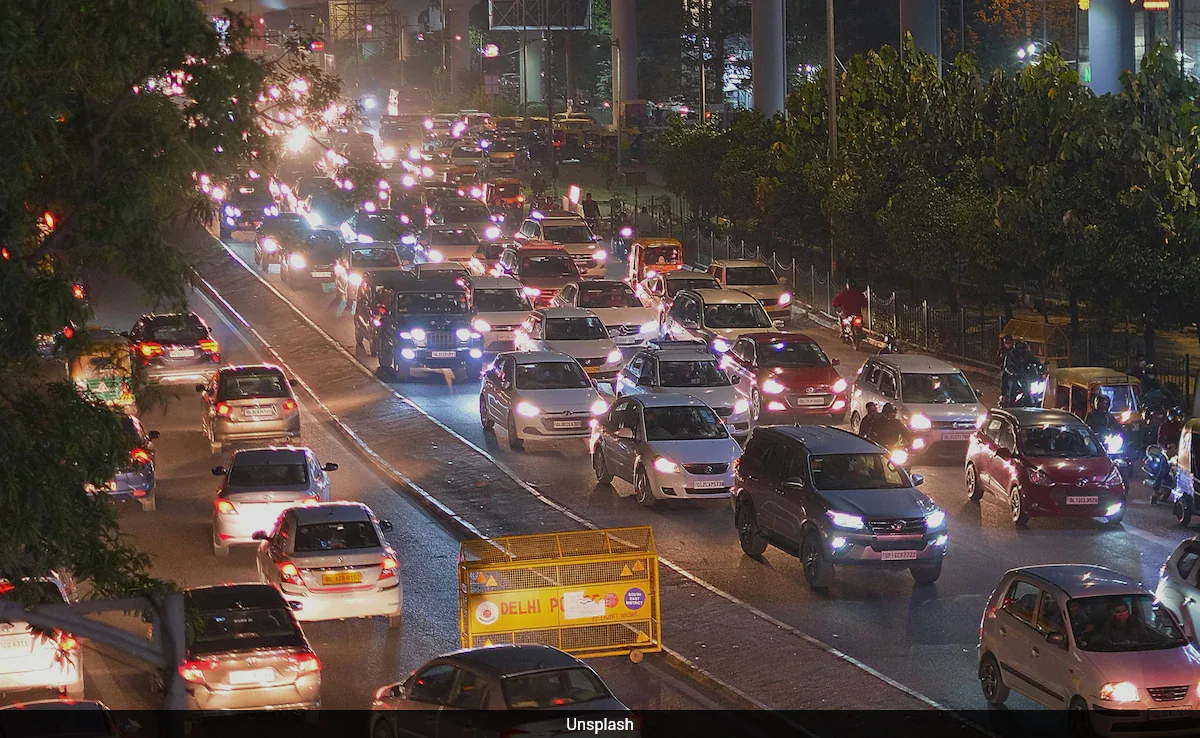
A focused traffic enforcement exercise across key corridors in north Delhi has thrown fresh light on the growing mismatch between road capacity and urban activity, with authorities issuing more than 2,300 challans in a single day, largely for improper parking. The operation, conducted along high-congestion stretches between Shalimar Bagh and Ambedkar Road, underscores how unmanaged kerbside use is undermining mobility in dense residential and commercial neighbourhoods.
Traffic officials say the drive was triggered by persistent bottlenecks reported by commuters and public transport operators, particularly during peak hours. Additional personnel were deployed to regulate movement, while vehicle diversions were introduced to prevent heavy commercial traffic from entering market-facing roads not designed to handle large volumes. The result was a sharp spike in enforcement action, with illegal parking emerging as the dominant violation. Urban transport planners note that such enforcement data offers a window into deeper structural challenges. Many parts of north Delhi have seen incremental commercialisation of residential streets, without parallel upgrades in parking infrastructure or pedestrian space. As a result, vehicles spill onto carriageways, reducing effective road width and forcing risky manoeuvres such as wrong-side driving and abrupt U-turns.
The situation was especially acute along Ambedkar Road, where authorities found stretches of the carriageway effectively rendered unusable due to parked vehicles and informal vending. This not only slowed traffic but also compromised pedestrian safety, particularly for women, elderly residents, and children navigating crowded footpaths. A coordinated clearance operation restored through-movement, temporarily easing congestion and improving walkability. From an economic perspective, repeated traffic disruptions impose hidden costs on local businesses and households. Delays affect delivery schedules, public transport reliability, and access to neighbourhood markets. A senior official involved in the operation said sustained enforcement was necessary to signal that road space is a shared public resource, not an extension of private property or informal commercial use.
However, experts caution that enforcement alone cannot deliver lasting results. Without designated parking zones, priced kerbside management, and improved last-mile public transport, violations are likely to recur once patrols are withdrawn. Cities globally have found that combining strict regulation with demand-based parking policies and better street design yields more durable outcomes. Authorities have indicated that similar drives will be extended to other congestion-prone junctions in north Delhi, including major market roads and arterial links.
Urban planners argue this presents an opportunity to pair enforcement with pilot interventions such as marked loading zones, timed vending areas, and pedestrian-first street layouts. As Delhi grapples with rising vehicle ownership and limited road space, the latest enforcement push highlights a central lesson for climate-resilient urban growth: managing how streets are used is as critical as building new infrastructure. The effectiveness of future drives will depend on whether they evolve into long-term, people-first street management strategies rather than episodic crackdowns.
North Delhi streets See Traffic Enforcement Surge