


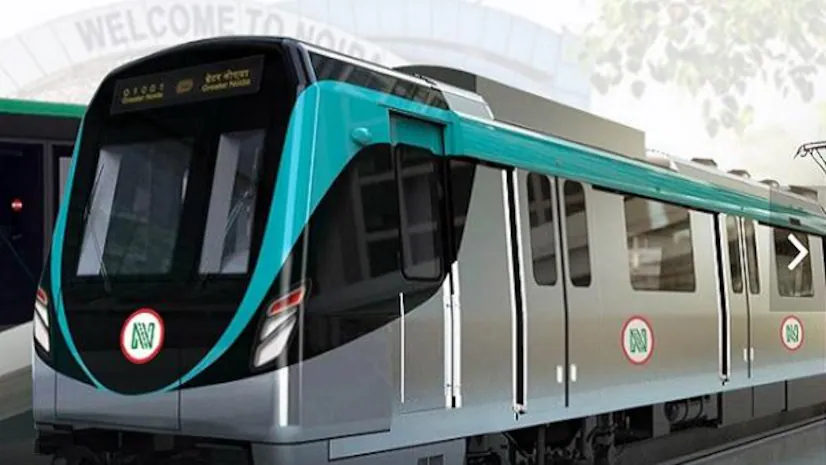
After six months of deliberation, the Noida Metro Rail Corporation Limited (NMRC) Board’s approval of the detailed project report (DPR) for the Aqua Line Metro extension from Sector-142 to Botanical Garden has received a green signal from the state cabinet. However, the approval comes with a significant caveat—the Uttar Pradesh state government has opted not to provide funding for the project.
Estimated at Rs 2,254.35 crore, the Aqua Line extension is expected to be financed through contributions from the Ministry of Housing and Urban Affairs (MoHUA) and the New Okhla Industrial Development Authority (NOIDA). The extension spans 11.56 km and will incorporate eight new stations, including key stops such as Botanical Garden, Noida Sector – 44, and Noida Sector – 97, facilitating enhanced connectivity across the region. One of the pivotal aspects of the project is its emphasis on multimodal integration. The Aqua Line extension aims to seamlessly integrate with the Botanical Garden bus stand, facilitating easy transfers between metro services and intra-city or inter-city buses. This integration is projected to enhance commuter convenience and reduce travel times for passengers navigating through Noida and Greater Noida. Furthermore, the extended corridor promises direct connectivity to vital transportation hubs like Indira Gandhi International Airport (Terminal- T1) via the Magenta Line of the Delhi Metro. Additionally, it will offer hassle-free access to major Indian Railways stations such as New Delhi and Anand Vihar through the Blue Line of the Delhi Metro network.
“This corridor is poised to transform commuter experiences, particularly for those traveling between Noida, Greater Noida, and Delhi. Initial ridership estimates suggest around 80,000 passengers, with Botanical Garden Station emerging as a key interchange point,” highlighted an official involved in the project. While the project’s approval marks a significant milestone in Noida’s transportation infrastructure development, the lack of state funding poses a critical challenge. The reliance on central and local authorities for financial backing underscores the project’s dependency on external funding sources amidst evolving economic dynamics. As the Aqua Line Metro extension progresses, stakeholders anticipate further developments regarding funding arrangements, aiming to streamline financial commitments and ensure timely execution to meet the region’s growing transportation demands. This initiative aligns with broader efforts to enhance urban mobility, promote sustainable transport solutions, and bolster regional connectivity across the National Capital Region (NCR).
