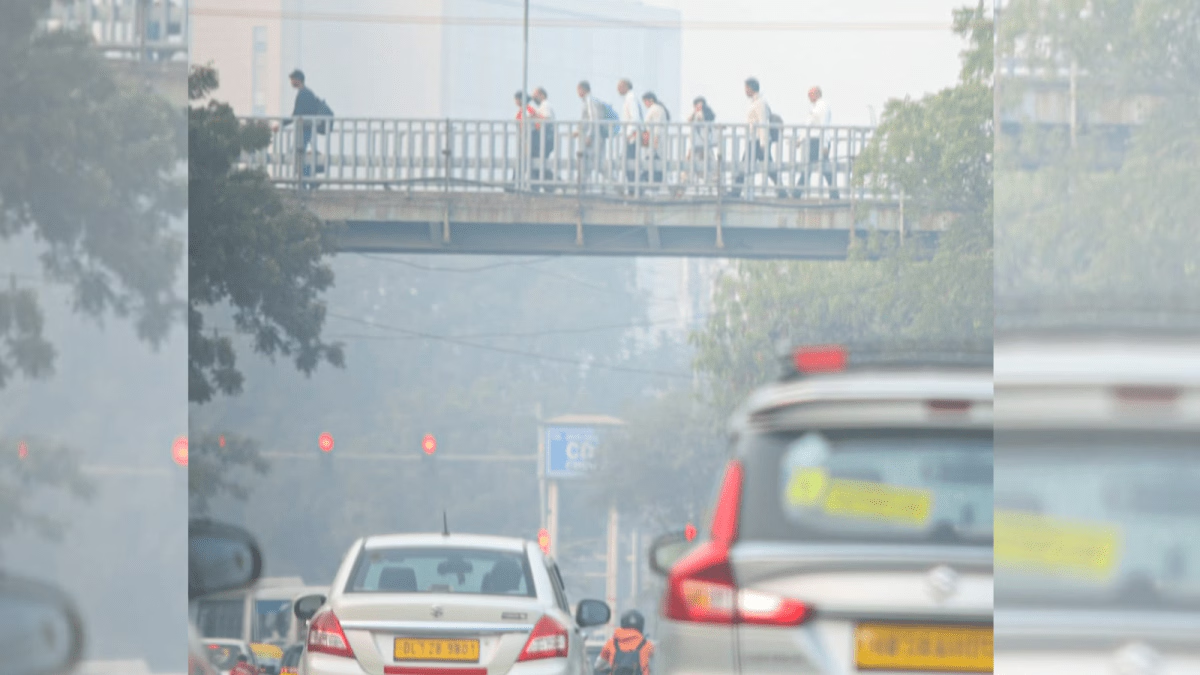
Noida has emerged as one of the weakest performers among major National Capital Region cities in responding to citizen-led pollution complaints, raising fresh concerns over environmental governance in one of India’s fastest-growing urban centres. Official records accessed through transparency mechanisms show that a significant share of air pollution grievances raised by residents over the past year remain unresolved, despite mounting public health and climate risks.
Between early 2025 and late January 2026, Noida’s civic authority closed fewer than six out of every ten pollution complaints submitted through official digital channels. These complaints, logged via the national Sameer platform and monitored social media feeds, covered recurring issues such as construction dust, uncovered trenches, vehicular smoke, and industrial emissions. Compared to neighbouring cities within NCR, Noida’s response rate placed it near the bottom of the regional performance table. By contrast, several peer cities demonstrated stronger administrative follow-through.
Municipal agencies in Greater Noida and Ghaziabad cleared a large majority of registered complaints, while Delhi’s civic bodies resolved more than four-fifths of grievances despite handling the highest overall volume. Urban governance experts note that complaint volume alone does not explain the disparity. “The real issue is institutional capacity and accountability,” said an environmental policy specialist tracking NCR air-quality enforcement. “Cities with clearer internal coordination tend to close cases faster and more credibly.”
The Noida pollution complaints resolution gap is not merely a statistical concern. For residents, unresolved grievances translate into prolonged exposure to dust, smoke, and particulate pollution conditions linked to respiratory illness, reduced productivity, and rising healthcare costs. For a city positioning itself as a hub for technology parks, housing investment, and commercial development, weak environmental responsiveness also affects investor confidence and liveability rankings. Questions have also been raised about the quality of redressal. Civil society observers argue that some cases are being marked as resolved administratively without visible on-ground improvements. Construction activity, road repairs, and utility works common sources of dust pollution often resume without adequate mitigation, undermining public trust in grievance platforms designed to empower citizens.
Compounding the issue is Noida’s limited utilisation of central funding earmarked for air quality improvement. Public records indicate that only a fraction of the clean air grants allocated to the city over recent years has been deployed. Urban economists point out that under-spending weakens the link between policy intent and outcomes, especially in high-growth regions where construction intensity is rising rapidly.
As NCR cities grapple with worsening air quality and climate stress, digital grievance systems are increasingly seen as frontline governance tools. Their effectiveness, however, depends on timely action, transparent reporting, and sustained investment. Addressing the Noida pollution complaints resolution deficit will require not just faster closures, but verifiable remediation and better coordination between planning, enforcement, and infrastructure agencies.
For Noida, the challenge ahead is clear: translate citizen feedback into credible environmental action, ensuring that urban growth does not come at the cost of breathable air and public health.
Noida Lags NCR In Pollution Grievance Resolution