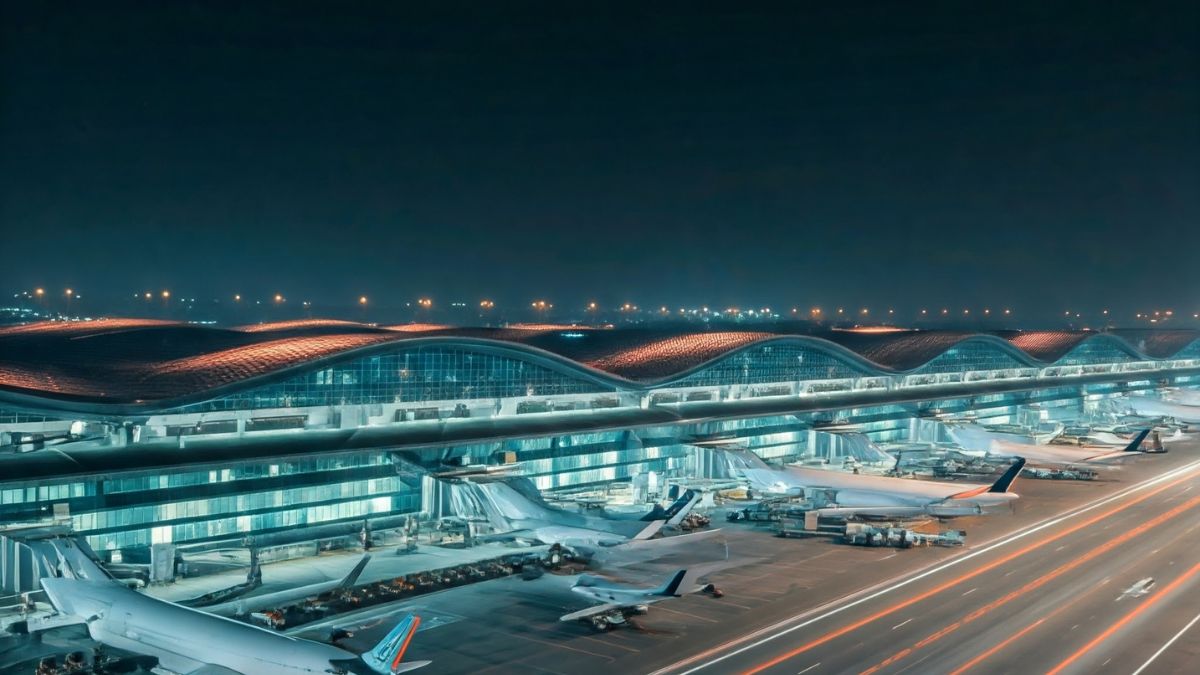
Noida International Airport Set to Redefine North Indias Air Travel
Noida, a rapidly developing urban centre, is on the cusp of a transformative aviation milestone with the imminent opening of Noida International Airport (NIA), poised to become Asia’s largest airport. This ambitious $3.46-billion facility, targeting an impressive 70 million passenger capacity upon full development, is now in its final construction phase, with over 80% of the work completed. NIA is designed to alleviate pressure on Delhi’s heavily congested Indira Gandhi International Airport and emerge as a vital aviation hub for Northern India, promising enhanced connectivity, economic growth, and a significant boost to regional tourism while prioritising eco-smart and culturally-inspired design principles.
Spanning an expansive 3,296 acres (1,334 hectares), NIA is projected to surpass all other airports in Asia in terms of sheer size once all planned phases are fully operational. Its initial phase is slated to cater to 12 million passengers annually, equipped with one runway and a state-of-the-art terminal building. This phased development, with a total investment nearing ₹29,650 crore, aims for incremental expansion, with the fourth phase, anticipated around 2040, dramatically scaling up the airport’s capacity to 70 million passengers per year. This ambitious projection places NIA among the world’s largest airports by both area and passenger capacity, signalling India’s growing prominence in the global aviation landscape.
The journey to this significant milestone has, however, faced its share of challenges. The airport’s opening has seen multiple postponements, shifting from an initial target of September 29, 2024, to April 25, 2025, then to June 30, 2025, and now a revised timeline of November 2025. These delays have been attributed to a combination of factors, including construction setbacks, ongoing terminal building works, and the critical need for multi-agency approvals. The global Covid-19 pandemic also contributed to a delayed start and a slower construction pace in the initial phases. Crucial clearances from the Directorate General of Civil Aviation (DGCA) and the Bureau of Civil Aviation Security (BCAS) are still pending, which are essential for NIA to commence commercial operations.
Despite these hurdles, the project’s physical progress remains substantial. The runway and airside infrastructure have reportedly surpassed 90% completion, demonstrating significant advancement in core operational areas. The construction of the terminal building is also progressing steadily, with roofing and interior work currently underway. The project’s concessionaire, Yamuna International Airport Pvt Ltd (YIAPL), is facing a daily fine of ₹10 lakh from January 1, 2025, for every missed deadline, underscoring the pressure to meet the revised operational target.
NIA’s strategic location, approximately 75 km from Delhi’s Indira Gandhi International Airport, positions it as a key gateway for the National Capital Region (NCR) and surrounding cities like Noida, Agra, and Dadri. Its development is poised to significantly alleviate the burgeoning air traffic congestion at Delhi’s existing airport, thereby enhancing overall air connectivity in Northern India. The airport’s design integrates a state-of-the-art ground transportation centre, facilitating seamless access via metro, bus, taxi, and private vehicles. A planned high-speed rail link connecting Delhi and Varanasi is envisioned to reduce travel time to the airport to a mere 21 minutes, further boosting its accessibility and appeal.
Beyond passenger services, NIA is also developing into a significant cargo hub, a crucial element for regional economic growth. In partnership with Air India SATS, the cargo facility is designed to handle over 100,000 tonnes of cargo annually at launch, with robust plans for future expansion. This focus on cargo operations will cater to diverse industries and businesses in the NCR and Uttar Pradesh, improving supply chain efficiency and enhancing India’s competitiveness in global trade.
Environmental considerations have been integral to NIA’s development philosophy. The project includes the meticulous relocation of over 580 mature trees and the establishment of an eight-acre forest buffer zone within the airport premises, ensuring no net loss of biodiversity. The terminal’s architecture is meticulously designed to reflect North Indian cultural heritage, incorporating features that maximise natural light and energy efficiency. Passive measures such as natural ventilation and glare protection aim to reduce the carbon footprint and energy consumption. Furthermore, the airport is committed to a net-zero emissions philosophy, incorporating renewable energy sources, rainwater harvesting, onsite waste management, sewage treatment plants, and the use of electric ground support equipment. This commitment to sustainability positions NIA as a model for greenfield airport development.
The unwavering commitment of the state government to accelerate the project’s execution has instilled renewed momentum. Once fully operational, Noida International Airport is expected to not only transform air travel in Northern India but also serve as a powerful catalyst for regional economic growth, tourism, and overall infrastructure development. Its completion will mark a major advancement in India’s aviation infrastructure, solidifying its position as a key aviation hub in Asia.