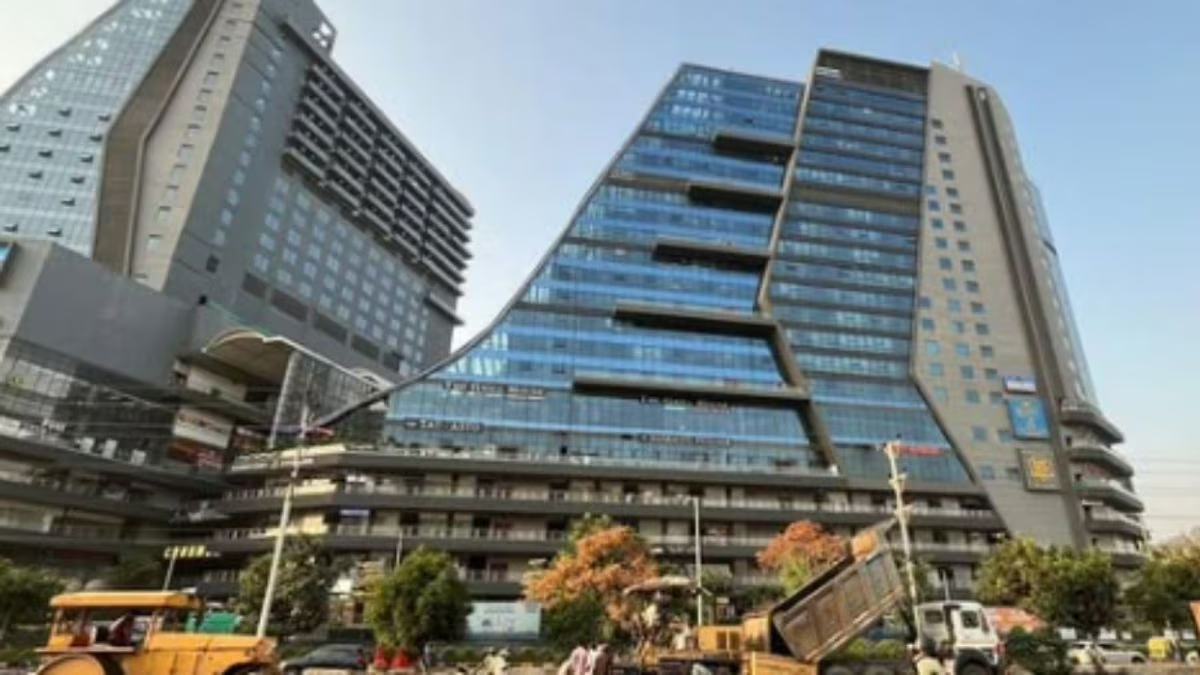
Regulatory scrutiny over real estate development in Noida and Greater Noida has intensified after the National Green Tribunal sought updated compliance reports on multiple construction projects accused of operating without mandatory environmental approvals. The case has brought renewed attention to how fast-growing urban corridors manage development pressure while safeguarding environmental and civic infrastructure.
In recent proceedings, the tribunal directed authorities to clarify the status of projects alleged to be continuing construction despite earlier closure directions. The matter centres on whether several residential and commercial developments fall below or exceed regulatory thresholds that determine the need for prior environmental clearance a distinction with significant implications for urban planning and environmental oversight in India’s largest suburban growth belt.
As part of its response, the state pollution regulator informed the tribunal that inspections were conducted across a set of identified construction sites in Noida and Greater Noida. Based on initial observations, the regulator categorised these projects as small-scale developments, citing built-up areas below 5,000 square metres. Such projects are typically placed in a lower-impact regulatory category, which does not automatically trigger full environmental clearance requirements.
However, officials acknowledged that this classification is provisional. Verification of the actual built-up area has been sought from the Greater Noida development authority, indicating that regulatory action remains contingent on accurate land-use and construction data. Interim measures have already been taken against a handful of projects, including power supply disconnections and stop-work directions, while other sites remain under review.
Urban planners say the case highlights a recurring challenge in peri-urban India: fragmented oversight across agencies responsible for land allocation, pollution control, utilities and registrations. When approvals are unclear or delayed, projects can progress in regulatory grey zones, creating risks for homebuyers, local infrastructure and environmental resources such as groundwater. The proceedings stem from allegations that construction activity has continued across several villages in the twin cities without statutory permissions under pollution control laws. Claims include the absence of approved layout plans, inadequate sewage treatment arrangements and unauthorised extraction of groundwater issues that directly affect long-term liveability and resilience in rapidly densifying urban areas.
Of particular concern to market analysts is the allegation that property registrations and utility connections have been extended to developments later questioned for legality. Such situations expose buyers to legal and financial uncertainty, while also undermining confidence in planned urban expansion.
The tribunal has now given the Greater Noida authority time to submit a detailed response, with the next hearing scheduled in April 2026. No specific direction has yet been issued to the Noida authority in this round of proceedings, keeping the focus on data verification and inter-agency coordination. As Noida and Greater Noida continue to attract investment and population inflows, the case underscores the need for transparent approval systems, digital land records and coordinated environmental governance. For cities aspiring to sustainable growth, ensuring that construction aligns with environmental capacity and infrastructure planning will be critical to balancing economic momentum with long-term urban resilience.
Noida Construction Scrutiny Widens Under Tribunal Lens