


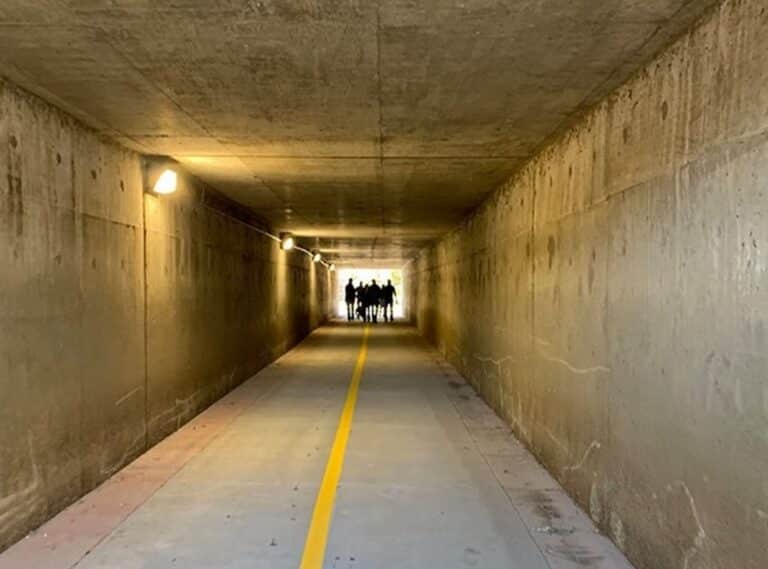
The Noida Authority has received 15 competitive bids from construction firms to build two strategic underpasses on the Noida–Greater Noida Expressway. Valued at ₹80 crore and ₹100 crore respectively, the 700-metre structures—located near Sultanpur and Jhatta villages—aim to significantly ease mounting traffic pressure within the next 18 months.
The first underpass, by Sultanpur village adjacent to Jaypee Wish Town (Sector 128), is estimated at ₹80 crore. It is intended to serve more than 100,000 residents, along with employees commuting to nearby IT offices, schools, and hospitals. Local voices emphasise the need for dual-vehicle carriageways that can withstand morning and evening peaks. The second underpass, priced at ₹100 crore near Jhatta village, will accommodate traffic from Sectors 145/146 towards Sectors 155/159 and Greater Noida—an area home to several business parks and IT hubs. Its construction is expected to remedy persistent bottlenecks on the expressway.
Both underpasses will feature diaphragm wall construction—an advanced technique allowing deeper foundation work in urban settings, but also requiring significant traffic diversions during construction. The civil department plans to award the contract within two months. Currently, Noida Expressway has a mix of four smaller underpasses (Sector 97, Sultanpur, Advant, and Jhatta) and five larger ones (Hajipur, Sector 96, Panchsheel Inter College, Advant, Sector 148). Nonetheless, surging commuter volumes have put strain on these existing links.
Deputy General Manager of Civil Works outlined that the Sultanpur underpass will enhance access to Sectors 105 and 108, and improve connectivity for Sultanpur and surrounding communities . A resident from Jaypee Wish Town noted: “Thousands travel here daily; the current underpasses choke during peak hours. We need wide passages permitting bidirectional flow”. Urban planners argue these projects align with Noida’s broader vision of a decongested, sustainable transport network. The diaphragm wall method, while complex, enables future-proofing and minimises ecological disruption if executed carefully. Successful execution will also open avenues for non-motorised commuting infrastructure, supporting greener, inclusive mobility .
However, short-term traffic rerouting may inconvenience commuters, and diligent stakeholder outreach will be critical to maintain trust. Authorities are expected to issue detailed announcements once firms are selected.
Also Read : Kerala roads PMGSY plan advances with full block coverage
