


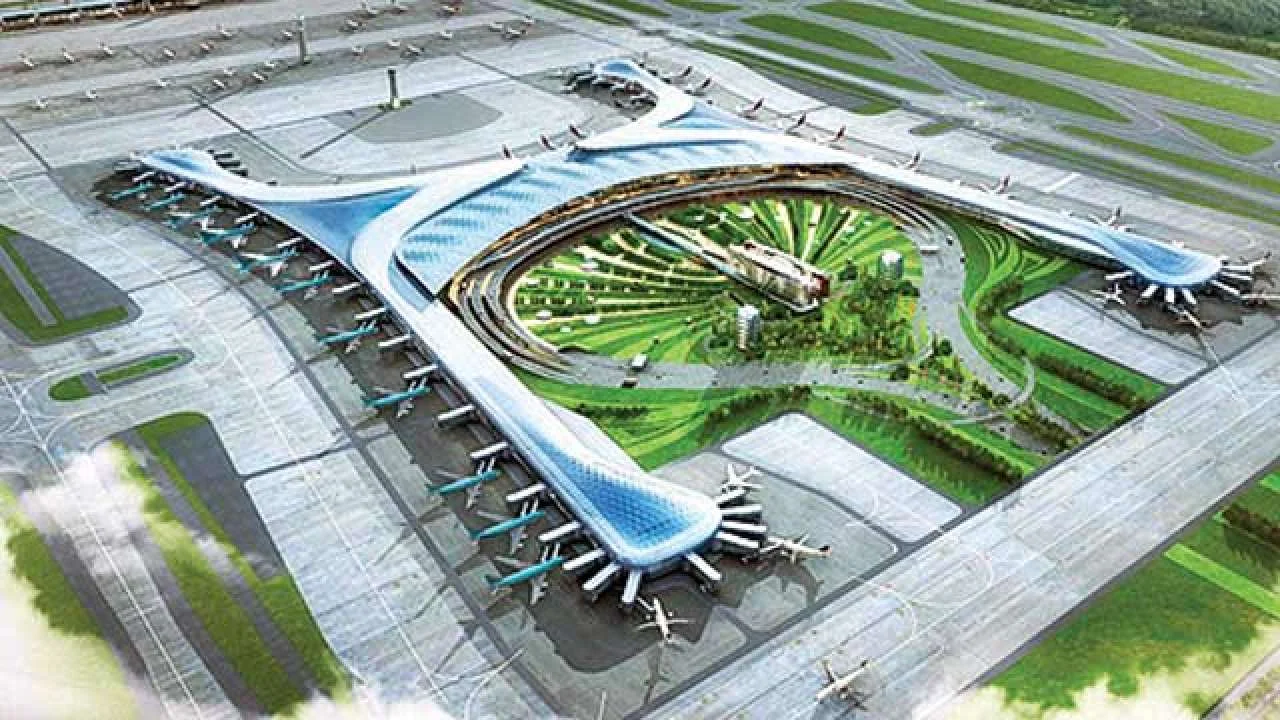
As 2025 draws to a close, Noida stands at the threshold of a transformative infrastructure phase, anchored by the long-awaited operationalisation of the Noida International Airport at Jewar. Beyond aviation, the project is reshaping land use, industrial investment and real estate recovery across the Yamuna Expressway corridor, positioning the region as a new economic growth node in north India.
Officials overseeing the airport project confirmed that construction has been completed and regulatory approvals are now in progress. In its first phase, the airport will operate with a single runway and a passenger handling capacity of roughly 12 million annually. Over time, the site is planned to expand across more than 11,000 acres, adding multiple runways and scaling capacity to levels comparable with the world’s largest aviation hubs. Urban planners see the project as a long-term catalyst rather than a standalone transport asset. For now, the airport remains surrounded by farmland and village settlements, but development pressure is already visible along approach roads from Noida and Greater Noida. Authorities are preparing to extend regional rapid rail and metro connectivity to the airport zone, improving access for workers and residents while reducing future reliance on private vehicles a key consideration for managing emissions in a fast-growing corridor. The Yamuna Expressway Industrial Development Authority is steering growth towards manufacturing and clean technology clusters, with dozens of industrial units cleared to begin construction. These include firms producing garments, electronics, electric vehicle components, solar equipment and agricultural machinery. Officials estimate that most approved factories will become operational by 2026, generating large-scale employment and diversifying Noida’s economic base beyond services.
Electronics and semiconductor manufacturing has emerged as a priority, reflecting national policy shifts aimed at reducing import dependence. Industry experts note that proximity to an international airport, combined with planned logistics infrastructure, could make the region competitive for export-oriented manufacturing, provided environmental safeguards are enforced from the outset. On the urban front, basic civic amenities in Jewar remain limited, but public infrastructure is beginning to catch up. A multi-speciality hospital and trauma centre is under construction, while land has been earmarked for a medical college, signalling gradual investment in social infrastructure alongside industrial growth. Real estate activity, subdued through much of 2025 due to insolvency proceedings and delayed handovers, is expected to revive in the coming year. Legal and industry professionals point to multiple residential and commercial projects nearing completion in Noida and Greater Noida, alongside court-monitored revival of stalled developments. Metro network expansions, planned to commence in 2026, are expected to further support housing demand while improving urban mobility.
The challenge ahead lies in managing growth responsibly. Experts caution that rapid industrialisation and construction must be matched with climate-resilient planning, affordable housing provision and protection of local communities. If executed thoughtfully, Noida’s airport-led expansion could serve as a model for inclusive, low-carbon urban development in India’s next generation of cities.
Also Read: Mumbai Pollution Curbs Strain Infrastructure Works
Noida Airport Sparks Manufacturing Real Estate Revival
