


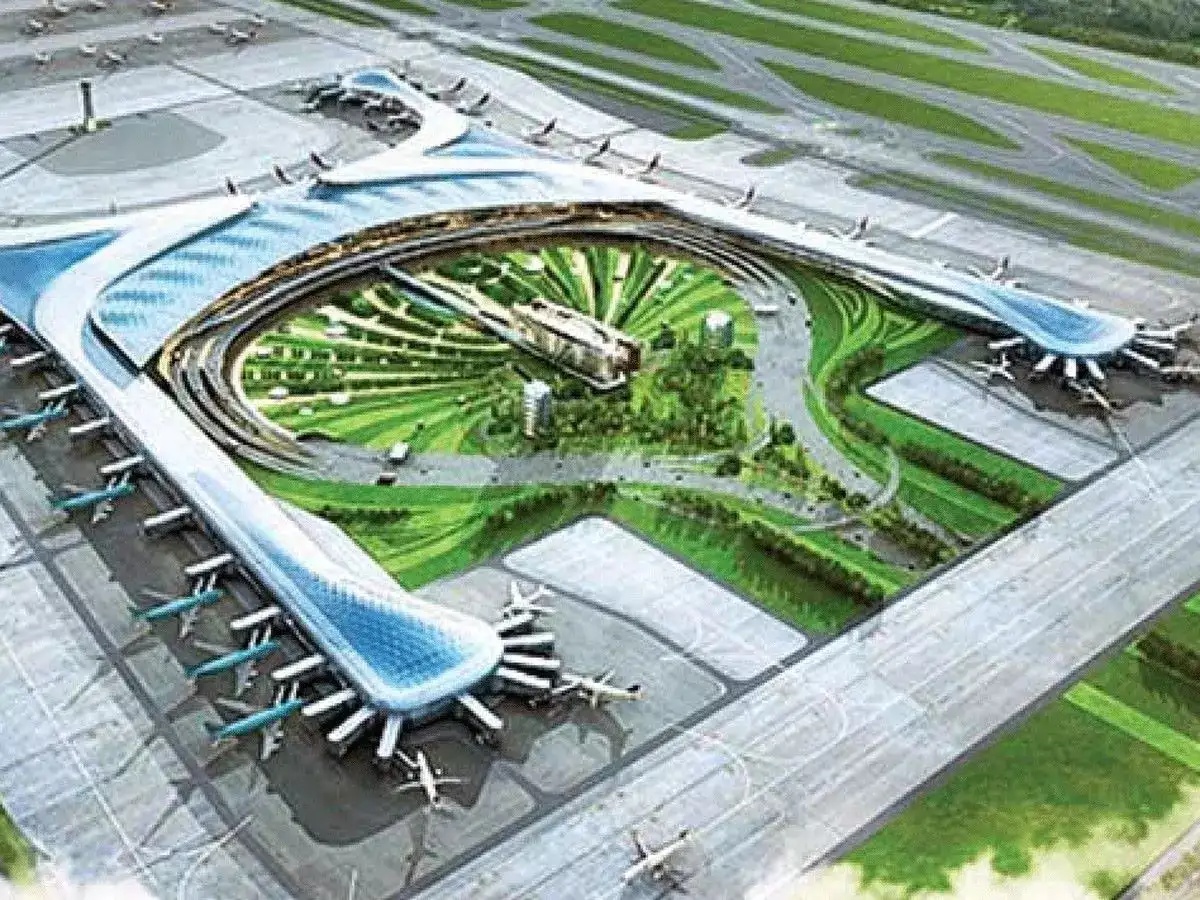
Noida’s evolving ground transport network is entering a crucial phase as construction advances on a 27-kilometre dedicated busway linking the city with the upcoming Noida International Airport in Jewar, while plans for an adjoining 22-lane road corridor are on track for completion by year-end.
This integrated roadmap reflects a broader shift in how urban mobility infrastructure is being planned to support fast-growing mega-nodes on the fringes of the National Capital Region (NCR), with significant implications for congestion relief, sustainable transit use and equitable regional access. The busway — a central spine designed exclusively for high-capacity, scheduled bus services — has already seen 17 km of progress, with work continuing across remaining segments. Once operational, it is expected to offer a reliable, rapid transit alternative to private vehicles, particularly for travellers moving between residential districts and the airport precinct. The accompanying multi-lane arterial road is being configured to support mixed traffic and logistics flows, further enhancing the resilience of the regional transport system.
For urban mobility planners, dedicated busways serve dual roles: they strengthen mass transit infrastructure while helping to decarbonise surface transport by pulling commuters out of private cars. In a region where road traffic — and associated particulate emissions — have routinely strained air quality, scalable public transport corridors are increasingly considered foundational to climate-aligned development approaches. A senior transport analyst noted that connecting peripheral sectors with mass transit infrastructure ahead of the airport’s operational launch could help alleviate peak congestion on the Yamuna Expressway and adjacent highways, where travel times have surged as residential density and commercial activity expand. Without premium transit options, commuters are likely to rely on personal vehicles, amplifying emissions and eroding local air quality gains.
The 22-lane access road underpinning the busway’s utility is being designed to accommodate freight movement too — a key consideration given projected cargo flows tied to airport operations. Freight-oriented infrastructure, when integrated with passenger transit solutions, can streamline supply chains for perishable goods, e-commerce and express logistics, positioning the airport corridor as a strategic economic node. Economic development experts see this as a possible catalyst for industrial parks, warehousing clusters and last-mile distribution hubs in the broader Noida–Greater Noida belt. Residents and small business owners along the corridor have expressed cautious optimism. A multi-sector resident association highlighted that improved transport corridors could reduce journey times to work and expand employment catchment areas, particularly for low- and middle-income workers commuting across the NCR. At the same time, community advocates emphasise that pedestrian accessibility, first- and last-mile integration and safety features must be prioritised to ensure the infrastructure serves all demographic segments equitably.
Implementation timing will be critical. With the airport’s first phase nearing operational readiness, synchronising the busway and multi-lane road completion with airport launch activities will determine how effectively the region captures economic and mobility benefits. Civic planners also note that dedicated monitoring of transport usage patterns and air quality metrics will be crucial to gauge outcomes and adjust operations to maximise sustainability and resilience in one of India’s fastest-growing urban corridors.
Also Read: Noida Health Infrastructure Gaps Prompt District Review
Noida Airport Busway Nears Completion and Expansion
