Civic authorities in Navi Mumbai have intensified enforcement against construction-related air pollution, ordering the suspension of work at multiple project sites and initiating compliance action across the city. The move follows a sharp seasonal deterioration in air quality levels, underscoring the growing challenge of balancing rapid urban development with public health and environmental safeguards in one of the Mumbai Metropolitan Region’s fastest-expanding cities.
During inspections conducted across December, ward-level enforcement teams identified widespread breaches of dust and emission control norms at active construction locations. Based on these findings, work was halted at nearly twenty sites where pollution thresholds crossed critical limits, while several dozen other developers were formally directed to rectify deficiencies within stipulated timelines. Officials said the actions were triggered in line with emergency response protocols applicable when air quality indicators move into unhealthy ranges. Urban environment specialists point out that winter conditions often exacerbate pollution in coastal cities like Navi Mumbai. Reduced wind movement, higher moisture levels, and temperature inversions prevent pollutants from dispersing, allowing construction dust and vehicular emissions to accumulate near ground level. This seasonal pattern has increasingly brought construction activity under scrutiny, particularly as large-scale infrastructure and real estate projects continue simultaneously across multiple nodes.
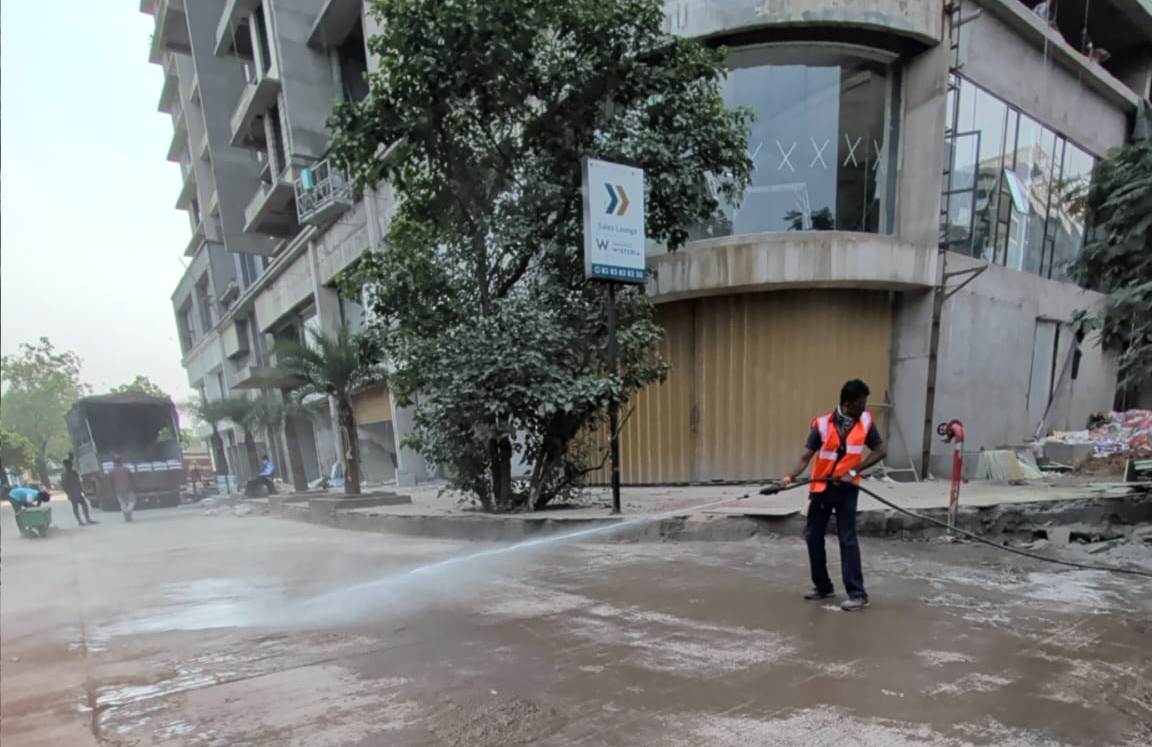
To address these risks, the civic body has been implementing a comprehensive air-quality management framework introduced last year. The framework mandates detailed standard operating procedures at construction sites, including barricading, water spraying, covered material transport, and on-site air quality monitoring. While several projects have already installed monitoring devices, officials confirmed that compliance gaps remain at a number of locations, prompting stepped-up enforcement. Beyond construction sites, municipal teams have also expanded citywide dust-mitigation efforts. Mechanical sweeping of arterial roads, washing of surfaces using treated water, and frequent spraying through pollution-control vehicles have been intensified, particularly in high-traffic and high-development zones. Urban planners note that such measures are essential interim responses but must be complemented by long-term planning that integrates low-dust construction technologies and stricter sequencing of works.
The civic administration has also moved to counter public confusion over air quality readings circulating on social media and non-official platforms. Officials clarified that some alarmingly high pollution figures reported recently were based on unverified sensors or modelling tools that do not align with national calibration standards. Residents have been advised to rely on officially validated digital platforms for accurate and consistent air quality information. From a governance perspective, the latest enforcement drive reflects a broader shift towards accountability-driven urban management. As Navi Mumbai continues to attract investment and population growth, experts stress that regulatory discipline will be crucial to ensuring development remains both economically productive and environmentally responsible.
Looking ahead, sustained compliance, transparent data reporting, and closer coordination between developers and civic authorities will determine whether Navi Mumbai can maintain construction momentum while protecting air quality. The current actions signal that environmental performance is becoming a non-negotiable component of urban growth in the metropolitan region.
NMMC Steps Up Construction Oversight Amid Air Quality Concerns