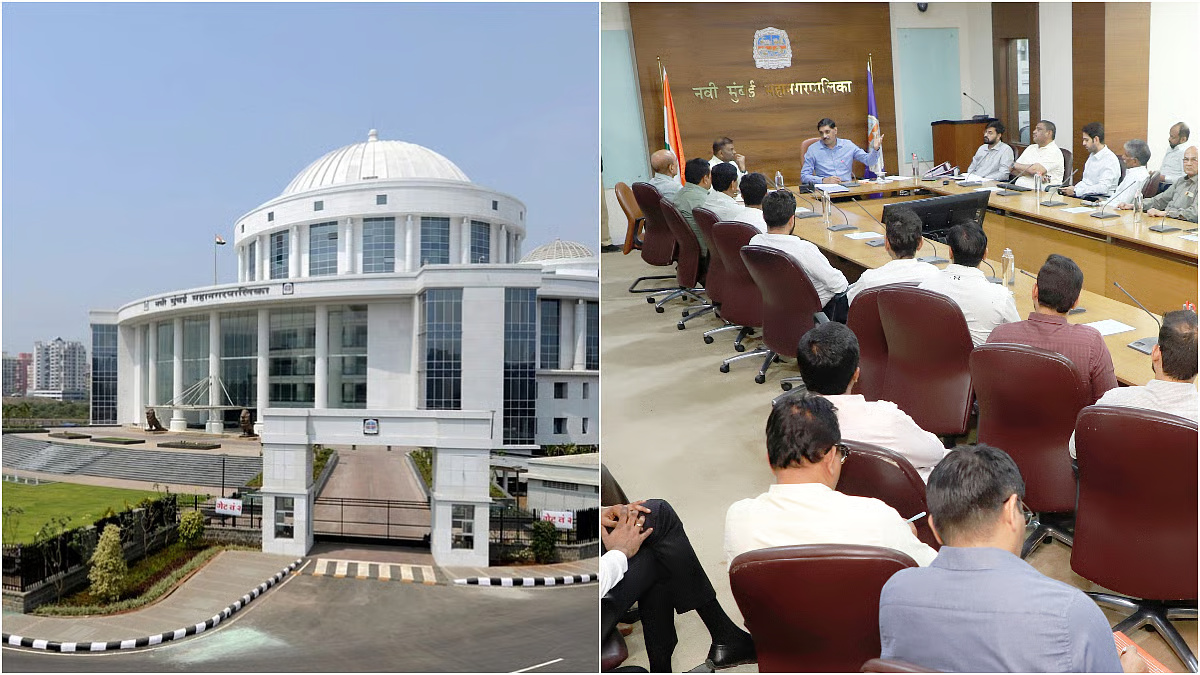
Navi Mumbai’s civic administration has issued firm directions to real estate developers and architects to strengthen air pollution control practices at construction sites, signalling a tougher enforcement phase as the city balances rapid urban growth with environmental accountability. The move comes amid rising concerns over construction-related dust, noise pollution and their impact on public health across expanding residential and commercial zones.
At a special coordination meeting convened by the municipal administration, over 70 developers, consultants and architects were instructed to strictly follow the civic body’s standard operating procedures for air and noise pollution mitigation. Officials said compliance would be monitored closely, with penalties ranging from work stoppages to withdrawal of construction permissions in cases of repeated violations. According to a senior civic official, the focus is shifting from advisory guidelines to measurable, on-ground enforcement. “Construction activity cannot come at the cost of breathable air. Departments have been directed to ensure that pollution control norms are followed consistently, not selectively,” the official said.
The renewed push follows judicial scrutiny of urban air quality management. In recent years, the Mumbai High Court has issued directions mandating stronger pollution control measures at construction sites, prompting civic authorities to issue detailed circulars outlining mandatory safeguards. Navi Mumbai’s latest initiative seeks to translate these directives into daily operational discipline across sites of varying scale. Key interventions include the mandatory installation of CCTV cameras and digital air quality display boards at construction locations, allowing real-time visibility of dust levels. Data from site-level monitoring systems will be integrated into a centralised civic dashboard, enabling automated alerts when pollution thresholds are breached. The city is also expanding its air quality monitoring network, with multiple monitoring stations planned across residential, commercial and transit corridors.
Developers have been instructed to implement strict dust suppression measures during excavation, ensure timely removal of construction debris and prevent spillage on public roads. Instead of fogging, road washing has been prioritised on major arteries to reduce suspended particulate matter. Civic teams will also monitor illegal dumping of construction and demolition waste, particularly under flyovers and along service roads. Urban planning experts say such measures are essential for cities aiming to become climate-resilient while continuing to attract investment. “Cleaner construction practices improve not just air quality but also worker safety, neighbourhood liveability and long-term urban sustainability,” an environmental planning expert noted.
From a broader perspective, Navi Mumbai’s approach reflects an emerging shift in Indian cities towards accountable urbanisation—where infrastructure growth is aligned with public health, environmental equity and data-driven governance. As construction remains a key economic driver, officials emphasised that compliance, not slowdown, is the goal. For residents, the coming months will test whether stricter monitoring translates into visibly cleaner air. For the city, it marks another step towards embedding sustainability into everyday urban development rather than treating it as an afterthought.
NMMC Directs Seventy Developers To Enforce Air Pollution Controls Citywide