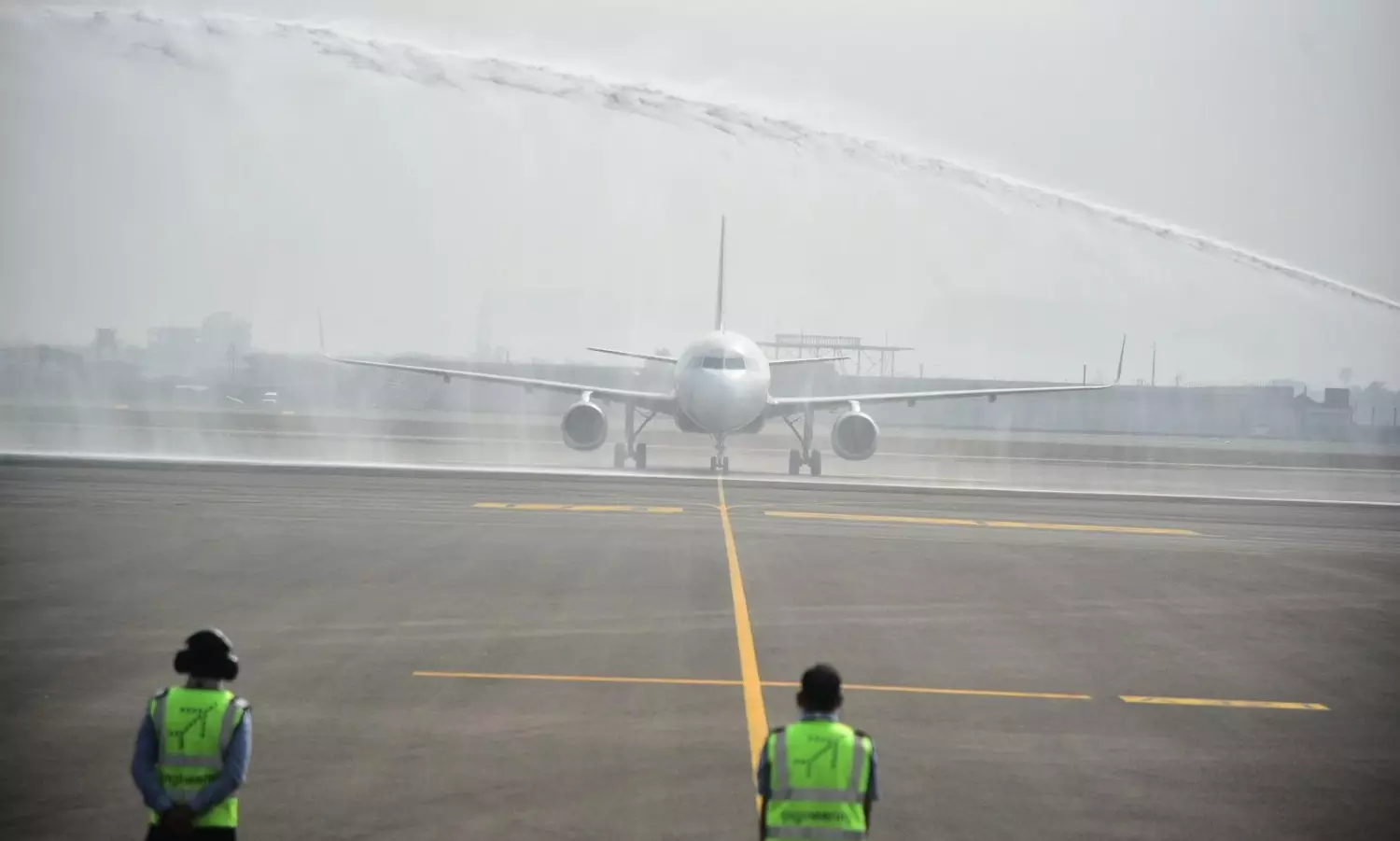
Navi Mumbai International Airport is preparing to enter the global aviation network, with international passenger and cargo operations expected to begin by the end of March. The development marks a critical step in easing congestion at Mumbai’s primary airport while reshaping the region’s long-term urban and economic geography.
Senior officials overseeing the airport’s development said the rollout of overseas services will coincide with the launch of international cargo handling, positioning the new facility as a dual passenger and logistics hub from its early operational phase. The airport has been planned as a greenfield project, designed to support future growth while integrating modern environmental and operational standards. One of the immediate policy challenges under consideration is airfare parity between the new airport and Mumbai’s existing international gateway. Officials explained that fare levels at greenfield airports typically begin higher due to initial capital costs. To prevent passenger hesitation and ensure smooth traffic redistribution, airport operators have proposed a unified fare structure across both airports. The proposal has already received in-principle clearance from the Union government and is now awaiting state-level approval before being placed before the national tariff regulator.
Aviation analysts believe fare parity will be essential to encouraging airlines and passengers to adopt the new airport quickly. “Without competitive pricing, traffic migration tends to be slow. Regulatory clarity at this stage will be crucial for NMIA’s early success,” an industry expert said. Cargo operations are expected to play an equally strategic role. In its initial phase, the airport will be capable of handling close to one million metric tonnes of cargo annually. This capacity is planned to quadruple over time, aligning with Navi Mumbai’s emergence as a logistics, warehousing and manufacturing corridor linked to western India’s ports and industrial clusters.
Passenger handling capacity will also expand in phases. Terminal 1 has been designed to manage around ten million passengers annually, with long-term projections estimating nearly ninety million passengers per year once all planned terminals and infrastructure are operational. This scale places the airport among the largest aviation hubs in South Asia. Looking ahead, authorities have initiated a feasibility study for a potential third runway, which could significantly increase aircraft movements and passenger capacity if approved. Officials said both financial viability and technical constraints would be evaluated before any decision is taken.
Equally critical is surface connectivity. The airport is being integrated with major transport projects, including the Mumbai Trans Harbour Link, newly developed access roads and an under-construction coastal corridor. Urban planners say such multimodal connectivity is vital to reducing road congestion, travel time and emissions associated with airport access. As Navi Mumbai International Airport moves closer to full-scale operations, it is increasingly seen not just as an aviation project, but as a catalyst for more balanced regional growth. By decentralising air traffic, logistics and employment opportunities, the airport is expected to support a more efficient, inclusive and environmentally responsive metropolitan future.
NMIA Launch International Passenger Cargo Flights By March End Expected