


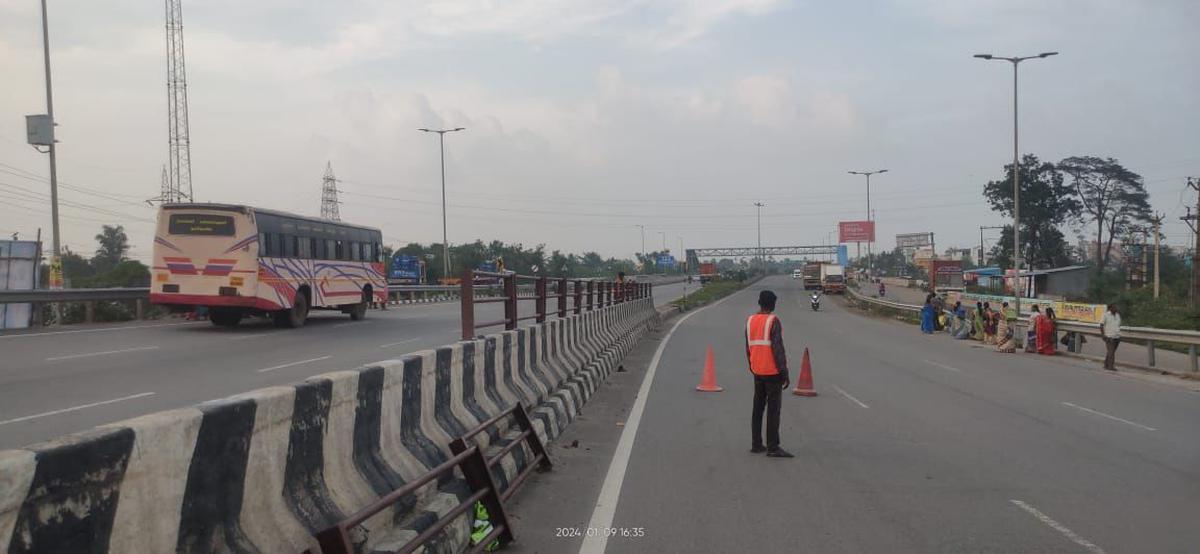
National Highways Authority of India (NHAI) has completed rectification work at 16 out of 22 accident-prone locations, or ‘black spots’, on national highways in the Pune division. These sites had been flagged for frequent and severe traffic accidents, prompting urgent intervention under the Ministry of Road Transport and Highways.
According to senior NHAI officials, the mitigation drive has focused on three key highways – the Pune-Satara NH-48 corridor, the Nashik Phata-Khed route, and the NH-965 Palkhi Marg. Each stretch serves a high volume of passenger and freight traffic, making these safety upgrades not just vital, but overdue. Among the high-risk zones addressed were areas such as Navale Bridge, Warje Junction, and Katraj Tunnel, where design flaws and bottlenecks had historically caused frequent crashes. Rectification involved engineering redesigns such as realignment of curves, junction upgrades, addition of crash barriers, improved signage, and lighting enhancements. Officials claim these upgrades have significantly lowered accident rates at these nodes.
On NH-965 Palkhi Marg, which serves a rural and religious corridor, black spots near villages like Jejuri, Walhe, and Lonand were targeted. These locations witnessed frequent pedestrian conflicts. As a result, NHAI implemented speed calming measures, reflective road markings, and street lighting to improve visibility and response times for both drivers and pedestrians. In contrast, the Nashik Phata-Khed section continues to pose challenges, with multiple black spots still pending due to unresolved land acquisition and utility relocation issues. Despite the work being in progress, officials insist that long-term solutions are underway, including expansion of turning radii, better traffic segregation, and new pedestrian infrastructure.
However, public sentiment remains mixed. Local citizen groups argue that while NHAI’s efforts are notable, some interventions feel more temporary than transformative. Several black spots still exhibit core geometric flaws, which can’t be fixed with signage or paint. Stakeholders emphasise that sustained safety outcomes require engineering-led, structural modifications rather than superficial fixes. Road safety experts note that the Pune division, which intersects urban, peri-urban, and industrial zones, needs an integrated black spot management strategy. This includes smart traffic controls, consistent maintenance, and better coordination between NHAI, local municipalities, and enforcement agencies.
Though progress has been made, the remaining six black spots continue to await technical clearances and tendering. With an uptick in vehicle population and growing intercity freight movement, Pune’s national highways demand not just reactive rectification but proactive, data-driven infrastructure planning.
Also Read : Maharashtra Approves 55-Km Uttan-Virar Sea Link Connecting Thane, Palghar
