


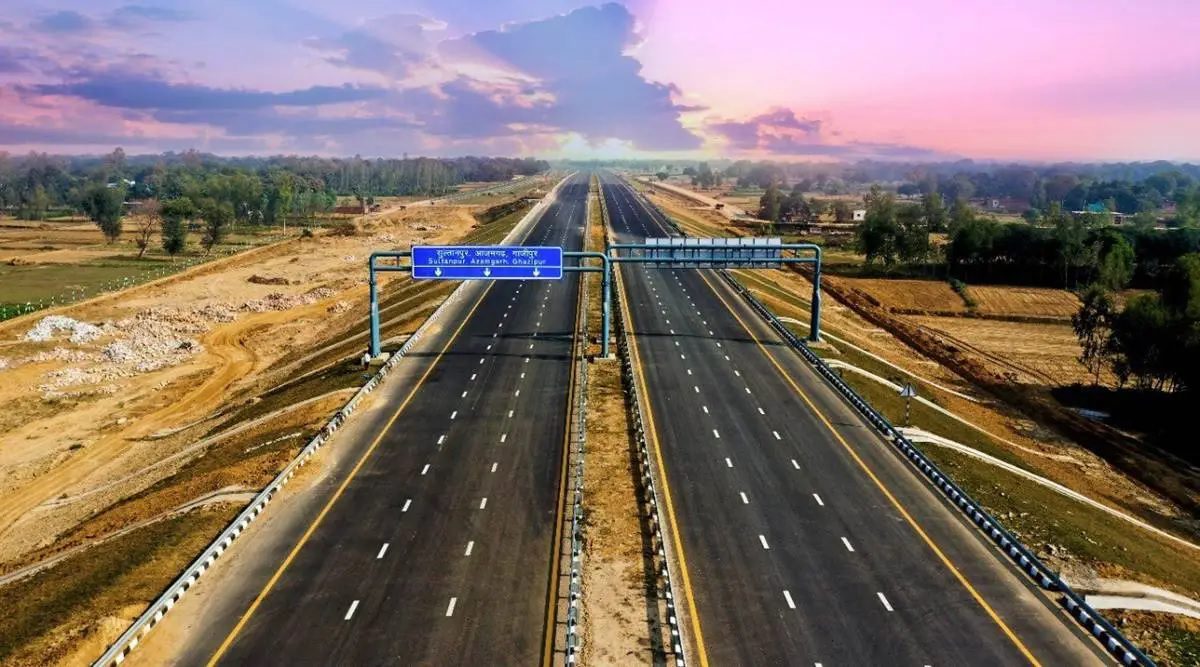
The Lucknow–Kanpur urban corridor is entering a decisive phase as the National Highways Authority of India (NHAI) accelerates construction on the Lucknow Kanpur Expressway, targeting operational readiness by March 2026. The project, one of Uttar Pradesh’s most consequential transport links, is expected to significantly shorten travel time between the state capital and its industrial hub, with implications for regional productivity, logistics efficiency, and urban expansion.
Senior officials overseeing the project indicate that construction schedules have been tightened, with daily targets and enhanced on-site supervision introduced to avoid further delays. While a large portion of the 63-kilometre greenfield alignment was completed earlier, the more complex urban stretch—passing through densely populated zones—has proven challenging. Land-use constraints, utility relocation, and coordination with local communities have slowed progress in these sections, underscoring the difficulties of building high-speed infrastructure through lived-in cityscapes. A critical bottleneck has been the relocation of high-voltage transmission infrastructure along the elevated corridor. Engineering teams have now begun laying reinforced slabs and structural mesh in preparation for girder placement, allowing multiple workstreams to proceed simultaneously. Officials say this parallel execution is intended to recover lost time and reduce idle periods, a common risk in linear infrastructure projects.
Urban planners view the expressway as more than a mobility upgrade. By reducing travel time between Lucknow and Kanpur to under an hour, the corridor is expected to support polycentric urban growth, easing development pressure on city cores while opening up new zones for housing, logistics parks, and light manufacturing. Real estate analysts note that peripheral areas along the route are already witnessing increased interest, raising questions around zoning discipline, infrastructure provisioning, and environmental safeguards. The project has also seen administrative recalibration. Oversight has been strengthened following changes in project leadership, and coordination between contractors and authorities has reportedly improved. Industry experts say such mid-course corrections are increasingly common in large public works, particularly where early-stage execution fails to account for local complexities.
From a sustainability perspective, the expressway’s design is being closely watched. Transport economists argue that while high-speed road infrastructure can induce additional traffic, careful integration with public transport nodes and freight rationalisation could help offset emissions over time. The challenge lies in aligning road-led growth with climate-resilient urban planning—ensuring that new development along the corridor is compact, serviced, and energy-efficient.
As March 2026 approaches, the focus has shifted from milestones to outcomes. For commuters, the Lucknow Kanpur Expressway promises safer and faster travel. For cities, it presents an opportunity—and a test—of whether infrastructure delivery can translate into inclusive, well-managed urban growth rather than unchecked sprawl.
Also Read: Sangli Hyderabad Highway Exposes Infrastructure Gaps
