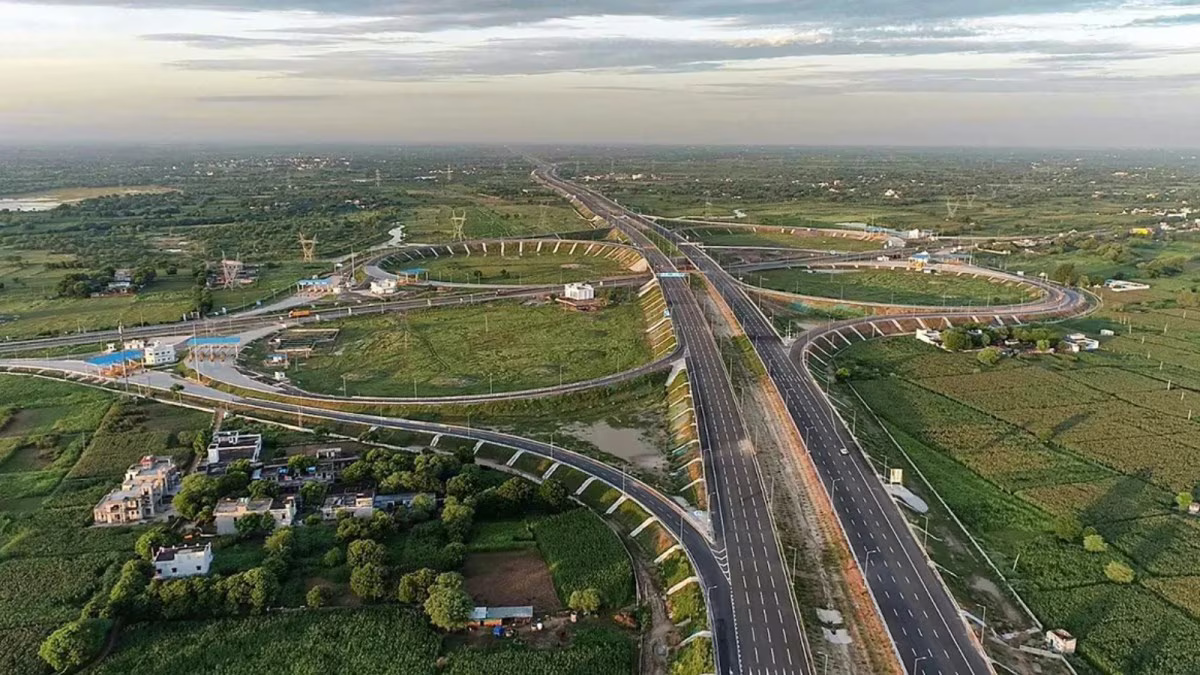
The National Highways Authority of India (NHAI) has issued an intent-to-terminate notice to Pune-based contractor Roadway Solutions India Infra Ltd (RSIIL) after minimal financial progress on the 35-kilometre Jujuwa-Gandeva section of the Delhi–Mumbai Expressway in Gujarat. The development threatens to derail the timely completion of the 1,386-kilometre expressway, a flagship infrastructure project spanning six states.
Officials noted that despite repeated interventions and support from NHAI, the contractor has managed only 4.5 per cent financial progress over the 16 months since being reappointed in August 2024. Under the terms of the 18-month contract, the expectation was that 70 per cent of work would have been completed by this stage. NHAI stated that essential preparatory tasks, including shifting utilities and mobilising machinery, remain largely unfulfilled. The Jujuwa-Gandeva stretch is part of a larger 87-kilometre corridor in Gujarat that includes three packages on the Vadodara–Virar section. This corridor had previously been delayed, with NHAI scrapping earlier contracts in March 2023. RSIIL later secured the same packages through a re-tendering process in November 2023, submitting the lowest bid.
The NHAI has provided RSIIL 15 days to respond to the notice, emphasising that three supplementary agreements had been signed to resolve project issues. “Despite multiple revisions of project milestones and continuous oversight, the contractor failed to demonstrate any meaningful improvement,” an official said. NHAI added that expiry of the notice would entitle the authority to formally terminate the contract. RSIIL, however, maintains that the delays are attributable to NHAI’s failure to provide adequate land for construction. “There was no default on the part of the contractor,” said a company representative. “We secured the project again through re-bidding because the previous delays were outside our control.”
Infrastructure analysts note that delays in such strategic expressway sections can have broader economic consequences. The Delhi–Mumbai Expressway is designed to reduce travel times significantly between the national capital region and key industrial and commercial centres in Maharashtra and Gujarat. Any disruption in construction schedules could affect regional logistics, freight movement, and urban connectivity. The situation highlights a growing challenge in large-scale infrastructure projects: aligning contractor performance with project timelines while ensuring accountability. Experts suggest that stricter enforcement of contractual obligations and proactive risk mitigation, including early land acquisition and real-time monitoring of construction progress, are essential to prevent bottlenecks.
With less than 20 per cent of the three-package stretch completed, the urgency to resolve the impasse is critical. Officials say that NHAI remains committed to maintaining momentum on the expressway while balancing fairness to contractors and safeguarding public investment. The coming weeks will determine whether the termination notice triggers a new phase of project acceleration or a prolonged dispute.
NHAI Issues Termination Notice As Contractor Shows Negligible Progress On Expressway Work