


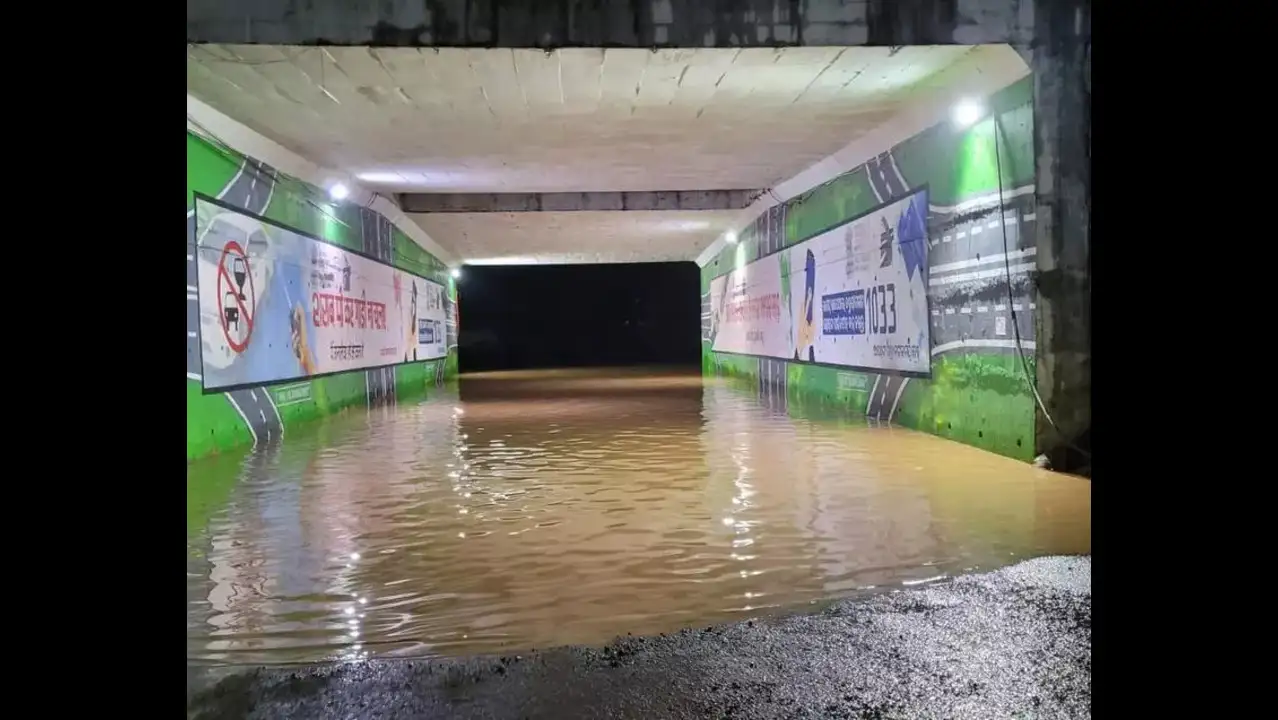
Rasulgarh and Baramunda residents are grappling with unexpected flooding after the National Highways Authority of India (NHAI) removed road kerbs on NH‑16 to improve highway drainage. Though well-intended, the intervention has redirected rainwater into low-lying urban pockets, prompting severe inconvenience and growing public alarm. Kerbs typically serve as a boundary between highways and city streets, channel rainwater into designed drains. However, demolition of these crucial barriers disrupted natural runoff patterns. As a result, stormwater cascades directly into adjacent localities, bypassing municipal drainage systems.
A shop owner in Rasulgarh’s industrial estate highlighted the sudden exacerbation: “The water coming straight from the upper side of the highway is resulting in the flooding of our area. Earlier, we were not witnessing such a situation.” Similar distress was reported at the Rasulgarh flyover’s underpass near Satsang Vihar, where inundation has led to traffic delays and commuter anxiety. Further complicating matters, residents from Nayapalli pointed out that a newly built culvert near ISKCON temple failed to manage diverted flow. A constituency resident explained: “To prevent waterlogging on the highway, the authorities are diverting the water towards our locality.”
In response to mounting complaints, the city mayor assured urgent corrective action. Civic officials are reportedly examining options, which may include reinstating kerbs, widening drains, or installing additional catch basins to absorb redirected flow. Their priority is restoring balanced drainage without compromising highway functionality. Urban planners stress an integrated design approach: drainage modifications on highways must be matched with downstream municipal systems to prevent spill-over. Experts warn that piecemeal interventions can inadvertently create new hazards, particularly in areas lacking resilient infrastructure. The incident raises important questions about inter-agency coordination between national highway authorities and city planners. When urban infrastructure intersects with strategic road networks, holistic planning is crucial to avoid unintended consequences.
As monsoon intensifies, swift action is essential to avert health risks and further disruption. Authorities must transparently communicate updates, involve local communities in mitigation solutions, and ensure sustainable urban water management. Ultimately, adapting highway drainage without safeguarding adjacent neighbourhoods undermines both civil engineering goals and equitable civic living. Restoring kerbs or enhancing city drains must now take precedence—both to protect vulnerable zones and to sustain integrated urban resilience.
Also Read : Govt Cuts Toll by 50 Percent for Roads with Tunnels and Flyovers
