


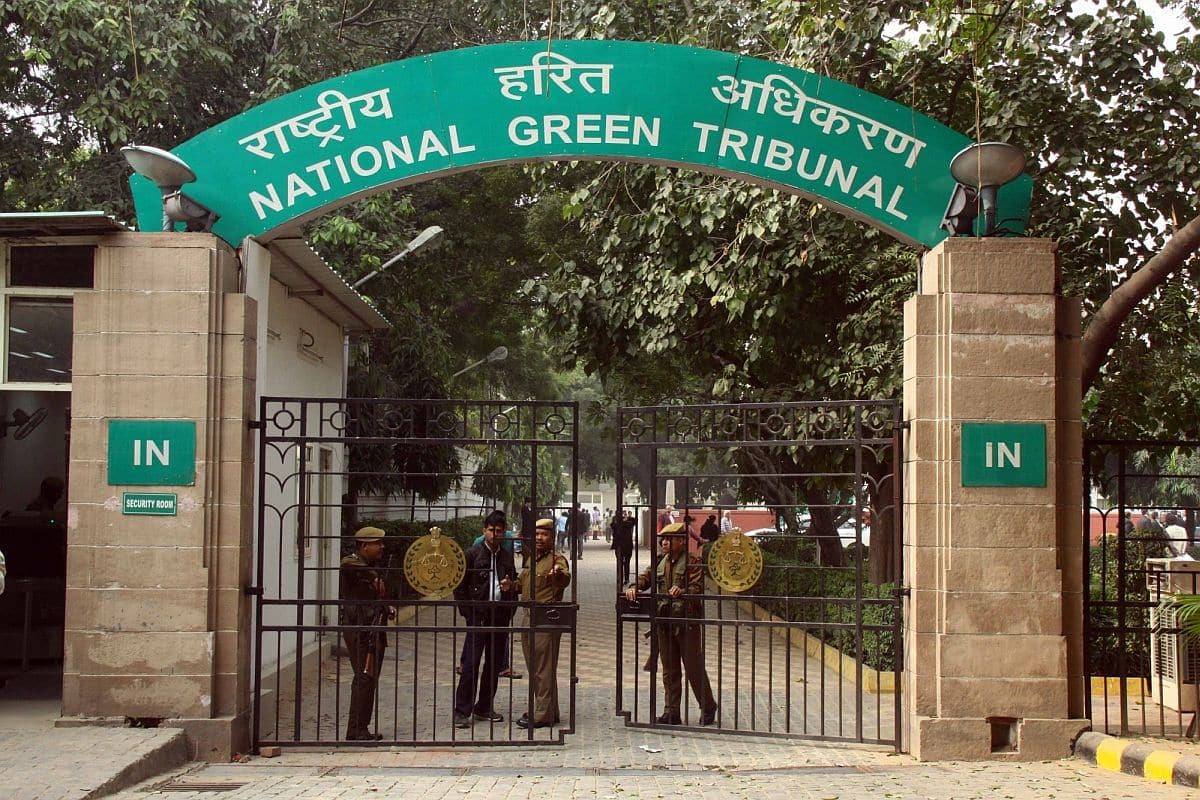
The National Green Tribunal (NGT) has sought a categorical clarification from the Delhi Development Authority (DDA) over allegations of encroachment on a designated waterbody in Najafgarh, where the Delhi Transport Corporation (DTC) has constructed a terminal and a commercial complex. The case underscores mounting concerns over the shrinking urban wetlands in the capital and their importance for sustainable, climate-resilient city planning.
At the centre of the dispute is a 30-bigha parcel of land, recorded in revenue documents as a waterbody under gram sabha ownership. Petitioners allege that DTC’s infrastructure has illegally taken over this ecologically sensitive site. The NGT, in its latest order, directed the DDA to state unequivocally whether any part of this waterbody was ever legally transferred to DTC and asked for an affidavit within four weeks. The matter is complicated by differing accounts from multiple government agencies. According to DDA’s records, the Najafgarh land was declared urbanised in 1963, handed over to its Horticulture Department in 1981, and eventually transferred to the Municipal Corporation of Delhi (MCD) in 2016 for maintenance. DTC, on the other hand, has maintained that the land was allotted to it by DDA in 1998 for transport infrastructure. The conflicting positions have raised critical questions about accountability and the protection of natural assets within city limits.
Officials from the district administration of southwest Delhi have confirmed that the land is indeed a waterbody and that no formal clearance was granted for construction activity. This assertion has been pivotal in NGT’s continuing intervention. The tribunal has already ordered DTC to halt further construction at the site, highlighting that such activities contravene the Wetlands (Conservation and Management) Rules, 2017, which prohibit construction, land reclamation, or conversion of wetlands into alternative uses. Urban planners argue that safeguarding waterbodies such as the Najafgarh johar is critical for Delhi’s ecological balance. Wetlands act as natural reservoirs, help mitigate urban flooding, and recharge groundwater. Encroachments and land conversions not only disrupt these ecological services but also aggravate heat island effects, air pollution, and water scarcity—issues that Delhi continues to battle on a daily basis.
Sustainability experts point out that unchecked urbanisation, combined with gaps in governance, has resulted in the disappearance of many of Delhi’s traditional ponds, johars, and wetlands. The current dispute offers an opportunity to establish stronger inter-agency coordination and to reinforce that public infrastructure development cannot come at the cost of ecological assets. For now, the NGT’s order places the onus squarely on DDA to clarify the historical chain of land ownership and allocation. As the matter unfolds, its outcome may set a precedent for how Indian cities reconcile infrastructure expansion with the urgent need to protect vital natural resources.
Also Read : Gurugram Metro Secures HSVP Land For Casting Yard, Project Work Accelerates Rapidly
