


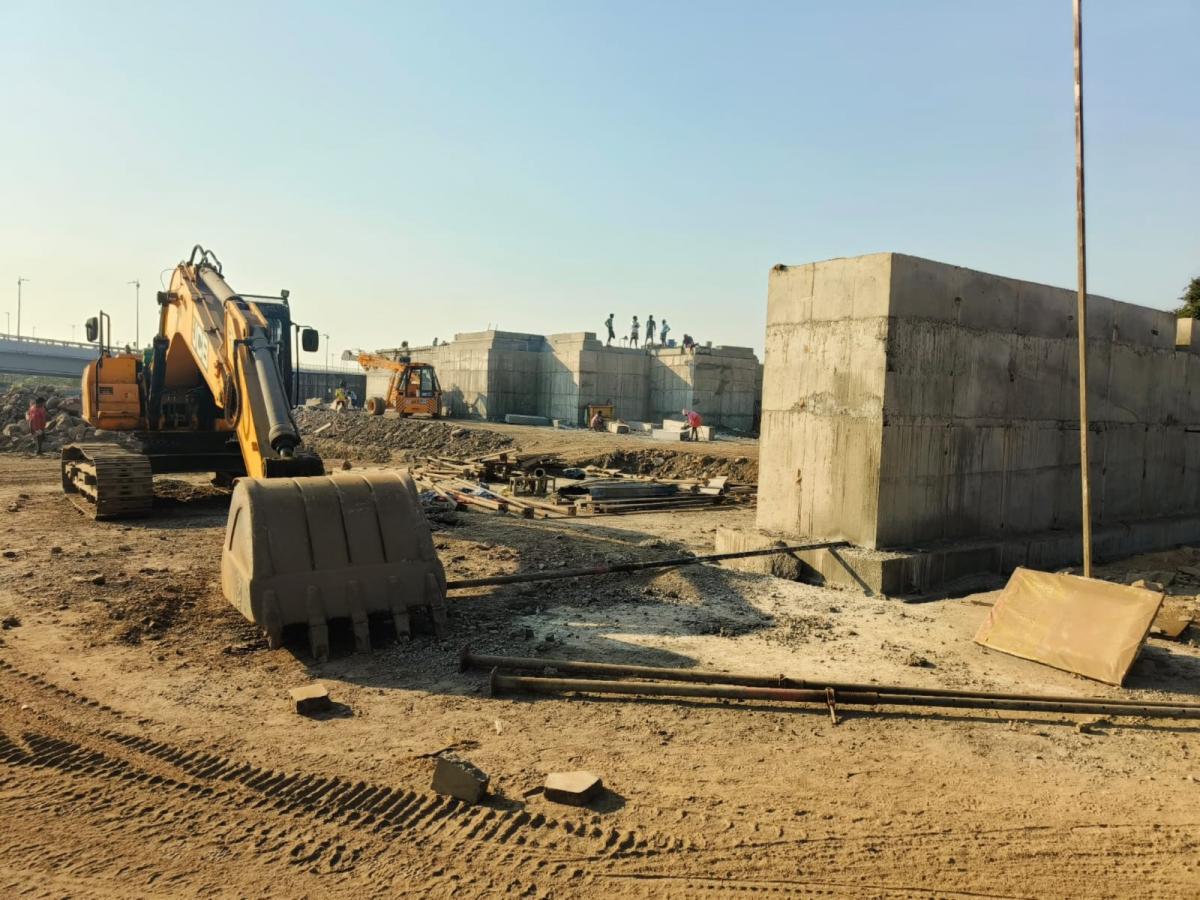
The National Green Tribunal (NGT) has given its clearance for the continuation of the Tirumala Tirupati Devasthanams’ (TTD) temple construction in Ulwe, Navi Mumbai, following assurances that the project will not encroach upon any Coastal Regulation Zone (CRZ) or mangrove buffer zone. However, environmental experts warn that the risk of flooding in the surrounding areas remains unmitigated.
The clearance follows a detailed hearing in which the temple trust reaffirmed its commitment to keep all construction strictly outside restricted CRZ territories. The tribunal was informed that any work in CRZ zones, if undertaken, would be preceded by mandatory approvals from the concerned authorities. This assurance was crucial in securing the tribunal’s go-ahead, which effectively ends a legal challenge over alleged CRZ violations. The petition, filed by an environmental advocacy group, had raised objections to the original land allotment of the 40,000 square metre plot by the city’s development authority. The group argued that parts of the allotted land were within CRZ limits and in close proximity to mangrove habitats, making it ecologically sensitive and legally restricted for large-scale construction.
Adding to the environmental concerns, in late 2023, the Maharashtra Coastal Zone Management Authority (MCZMA) granted permission for the temple trust to construct a boundary wall and undertake landscaping within the mangrove buffer zone. While legally sanctioned, the move drew criticism from environmental representatives who argued that such approvals could set precedents for gradual encroachment into ecologically fragile areas. While the NGT accepted the trust’s written undertakings and dismissed the petition, experts point out that the site remains flagged as a flood-prone zone in official development records. Although the temple complex is being built on an elevated plinth, the lower-lying areas surrounding it are at continued risk of waterlogging and flooding during heavy rainfall or high tides.
Environmental specialists have emphasised that their opposition is not to the religious or cultural aspects of the project but to its location. They argue that large-scale public infrastructure—particularly projects expected to attract thousands of visitors—should be situated in zones that are not only legally compliant but also resilient to climate-related threats. The debate also underscores a larger urban planning challenge for Navi Mumbai and other fast-growing cities along India’s western coast: balancing development with ecological preservation. Urban expansion in coastal belts often pushes into zones that double as natural flood buffers, such as mangroves, marshlands, and tidal flats, increasing the risk of disaster during extreme weather events.
With the legal hurdle now cleared, construction of the Ulwe temple is expected to continue at full pace. However, environmental groups have vowed to maintain close watch over the project’s compliance with all environmental regulations, warning that the long-term risks of flooding cannot be ignored in the name of development.
Also Read : BMC Sets August 27 Deadline For Tardeo Willington View Residents Eviction
