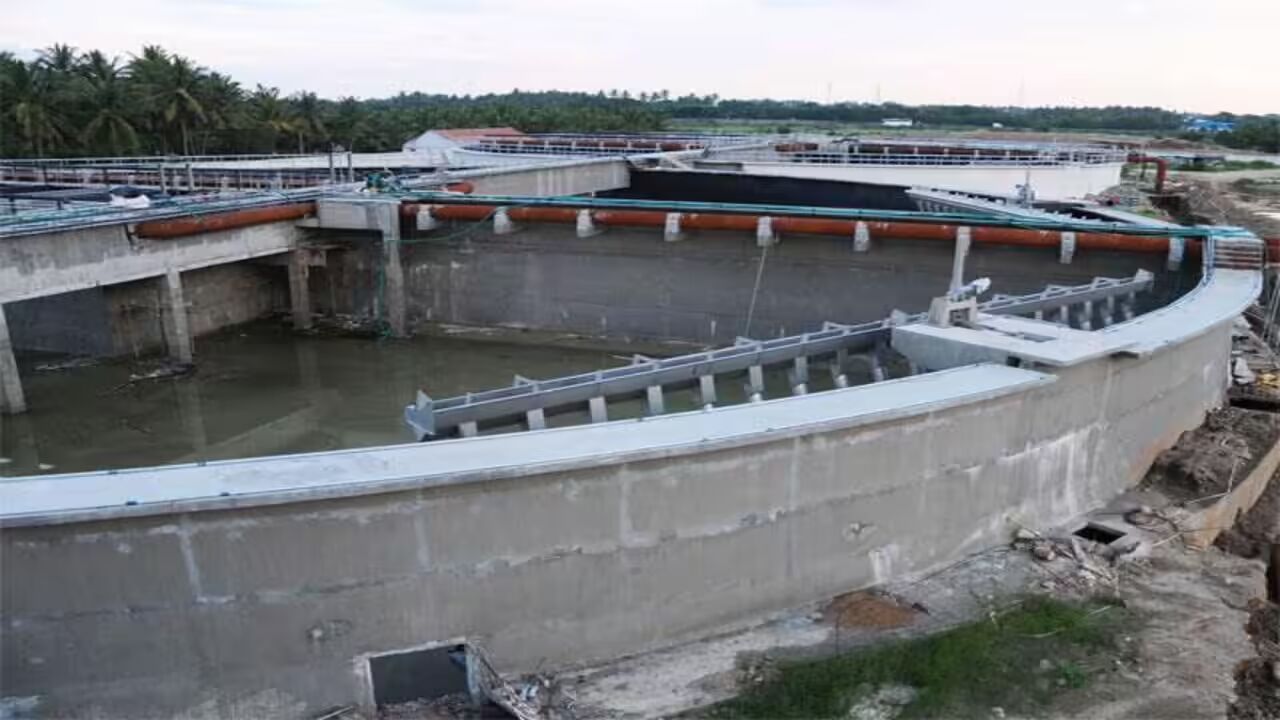
New Sewage Treatment Project To Protect Ganga Water In Patna
Patna city authorities have announced plans to construct a large-scale Sewage Treatment Plant (STP) aimed at preventing untreated wastewater from entering the Ganga, reinforcing urban water management and environmental protection in the rapidly expanding capital region of Bihar.
The proposed facility is expected to significantly upgrade the treatment capacity of the city’s wastewater infrastructure, reduce environmental stress on the Ganga river, and align with broader goals of sustainable urban sanitation. Under the project blueprint, the new STP will be designed to process a substantial portion of Patna’s sewage load, including effluent from residential zones, commercial clusters and public institutions. Officials say that untreated or partially treated sewage has long been a source of pollution in the Ganga stretch flowing through the city, contributing to degraded water quality, public health concerns and ecological imbalance. By intercepting and treating wastewater before discharge, the project aims to dramatically reduce biological and chemical pollutants reaching the river.
Urban planners and environmental engineers highlight that STPs are critical infrastructure in fast-growing cities, particularly those located along major river basins. Effective wastewater treatment not only safeguards aquatic ecosystems but also supports public health, improves liveability and enhances the appeal of riverfront spaces. For Patna — where rapid population growth has outpaced historical sanitation capacity — the new STP represents a strategic shift toward modern, climate-aligned utility management. The project is being framed as a public-good investment, with authorities emphasising its alignment with national and state priorities on river rejuvenation and sustainable urbanisation. In recent years, programmes such as the Namami Gange initiative have underscored the importance of curbing pollution loads across major tributaries and urban drains feeding the Ganga. A large-capacity STP in Patna can play a direct role in these efforts by processing wastewater at source and reducing flows of untreated effluent into the river.
Key technical features of the planned facility include multi-stage biological and tertiary treatment systems designed to remove organic matter, nutrients and suspended solids from raw sewage. After treatment, reclaimed water may be safely returned to the Ganga or reused for non-potable purposes such as industrial cooling, landscaping and road cleaning, reducing freshwater demand and enhancing water reuse potential within the city. Civil engineers involved in the planning stress that site selection, hydraulic design and integration with existing sewer networks will be central to the project’s success. Patna’s urban drainage patterns — influenced by low-lying topography and seasonal monsoon rains — require careful planning to ensure that the STP can handle peak inflows without compromising performance or public safety. Robust conveyance systems, equalisation tanks and automated monitoring platforms are expected to be part of the final design.
Budget and timeline details are still being finalised, with authorities indicating that funding may involve a mix of state capital allocations, central grants and potential multilateral support focused on sustainable infrastructure. Municipal officials have also underscored the need for stakeholder engagement — including community consultations and public awareness initiatives — to ensure that the project meets performance expectations and gains broad civic support. Environmental advocates have welcomed the announcement, noting that enhanced wastewater treatment infrastructure is essential not only for river health but also for achieving resilient urban sanitation systems. However, they caution that construction of the STP must be paired with better enforcement against illegal sewage discharges, proactive maintenance of sewer networks and pollution monitoring to prevent backsliding once the facility comes online.
The planned mega STP in Patna represents a significant step toward modernising the city’s wastewater management capability, addressing a core environmental challenge and contributing to the larger ambition of a cleaner, healthier Ganga river corridor. Its effective execution will be a test of engineering foresight, institutional coordination and sustained investment in urban infrastructure resilience.