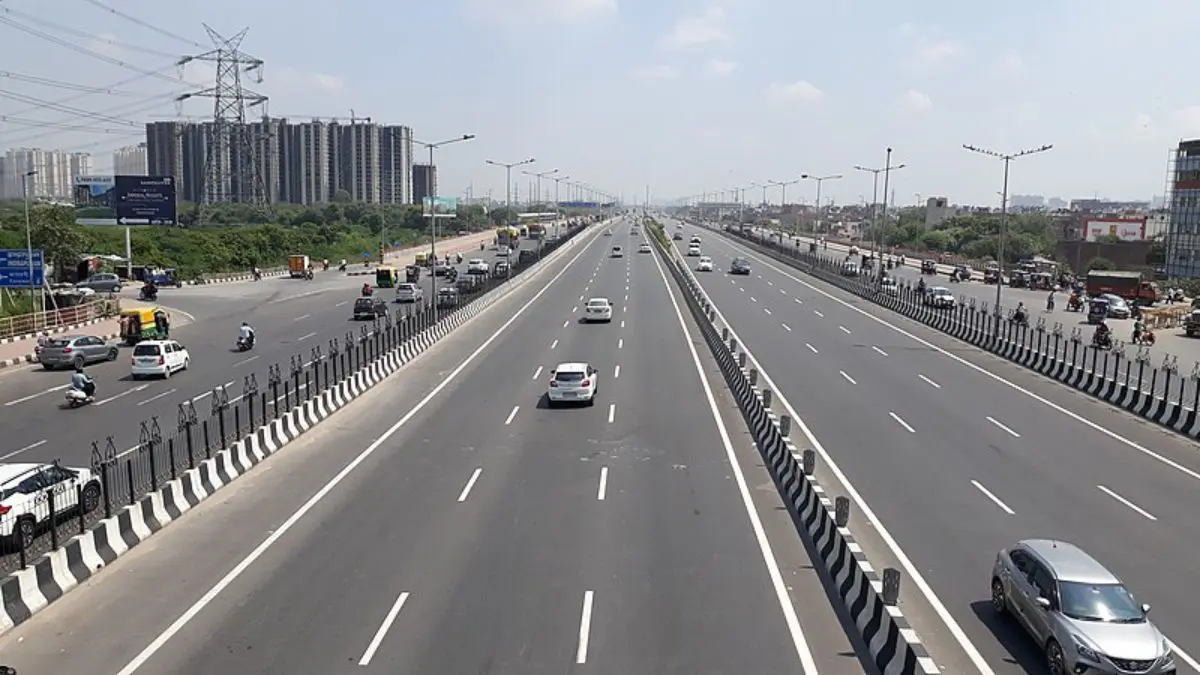
A major mobility upgrade is taking shape in the National Capital Region, with plans underway for a new six-lane elevated expressway to connect Delhi, Noida, and Greater Noida through a strategic green corridor.
The road project, stretching from the Okhla Barrage near Kalindi Kunj to the Yamuna Expressway, is expected to significantly reduce congestion along existing arteries and improve last-mile connectivity to the upcoming Noida International Airport in Jewar. The proposed infrastructure, spearheaded by the Uttar Pradesh Expressways Industrial Development Authority (UPEIDA), will provide an alternative route bypassing congested parts of Noida and Greater Noida. Running through the Hindon-Yamuna doab region, the expressway promises not only faster travel but also a more sustainable route option that avoids sensitive floodplain zones. According to senior infrastructure officials, the new alignment was finalised after earlier plans for a ground-level eight-lane road were dropped due to risks of unauthorised constructions and ecological disruption near the Yamuna.
The decision to construct an elevated expressway marks a critical shift toward environmentally-conscious urban infrastructure. Elevated alignments are known to preserve ground ecosystems and reduce land acquisition requirements, both vital considerations in densely urbanising regions such as the Delhi-Noida-Greater Noida corridor. Once operational, the expressway is expected to streamline traffic from Delhi and Faridabad towards the Yamuna Expressway, cutting travel time for passengers heading to the Noida airport and easing pressure on the existing 25-km Noida-Greater Noida Expressway. Connectivity will be enhanced especially for commuters from East Delhi and Gurgaon aiming for cities like Agra, Kanpur, and Lucknow.
The new corridor is proposed to span approximately 30 km and connect Sector 168 in Noida with Sectors 149A and 150 via a 75-metre-wide road. Officials involved in the planning process confirmed that design changes may still occur as environmental clearances and technical assessments progress. The alignment aims to offer seamless transition to the Yamuna Expressway at Zero Point, facilitating longer intercity travel. Authorities had initially hoped the project would be classified as a national highway under the National Highways Authority of India (NHAI). However, after the proposal was not approved, a consensus emerged during a tri-agency board meeting held on March 28. It was agreed that Noida Authority would take the lead in implementing the project, in collaboration with the Greater Noida and Yamuna Expressway authorities.
UPEIDA, which has executed hallmark projects like the Agra-Lucknow and Purvanchal Expressways, will undertake the expressway’s execution after obtaining a no-objection certificate from the state’s irrigation department. The total cost of the project will be shared among the three development authorities, with Noida Authority likely to shoulder the largest portion, given the majority of the alignment lies within its jurisdiction. A joint planning session is expected to finalise the funding structure. As Noida evolves into a prominent residential and commercial hub with smart city ambitions, this expressway is seen as critical infrastructure to absorb the growing vehicle load. Experts have noted that rapid urbanisation in and around the Yamuna Expressway region—driven by real estate expansion, logistics parks, and the upcoming international airport—necessitates robust multi-modal transport infrastructure.
In a related development, Noida Authority has proposed a cloverleaf interchange near the Mahamaya Flyover to integrate the new expressway with the under-construction Chilla Elevated Road. Inspired by Delhi’s AIIMS interchange, this four-loop structure will allow uninterrupted movement between arterial routes. The 5.9-km Chilla Elevated Road, another six-lane stretch, is being developed to facilitate direct connectivity between Mayur Vihar in East Delhi and the Noida Expressway. When both the new expressway and Chilla Road become operational, commuters across Delhi, Noida, and Faridabad will benefit from smoother, signal-free journeys. The twin corridors are also expected to substantially lower emissions from idling vehicles stuck in traffic, contributing to Delhi-NCR’s clean air goals.
Urban mobility experts view this initiative as a potential benchmark in sustainable transit infrastructure—minimising urban sprawl, safeguarding ecological zones, and providing inclusive access to key economic hubs like the airport. However, the success of the project will depend on timely land clearance, inter-agency coordination, and community engagement to ensure equitable outcomes for all stakeholders, including residents living along the route. If delivered as envisioned, the expressway will stand as a model of how large-scale infrastructure in India can be reimagined to promote sustainable, efficient, and equitable city-building.
New Noida Expressway to Ease Delhi Travel