


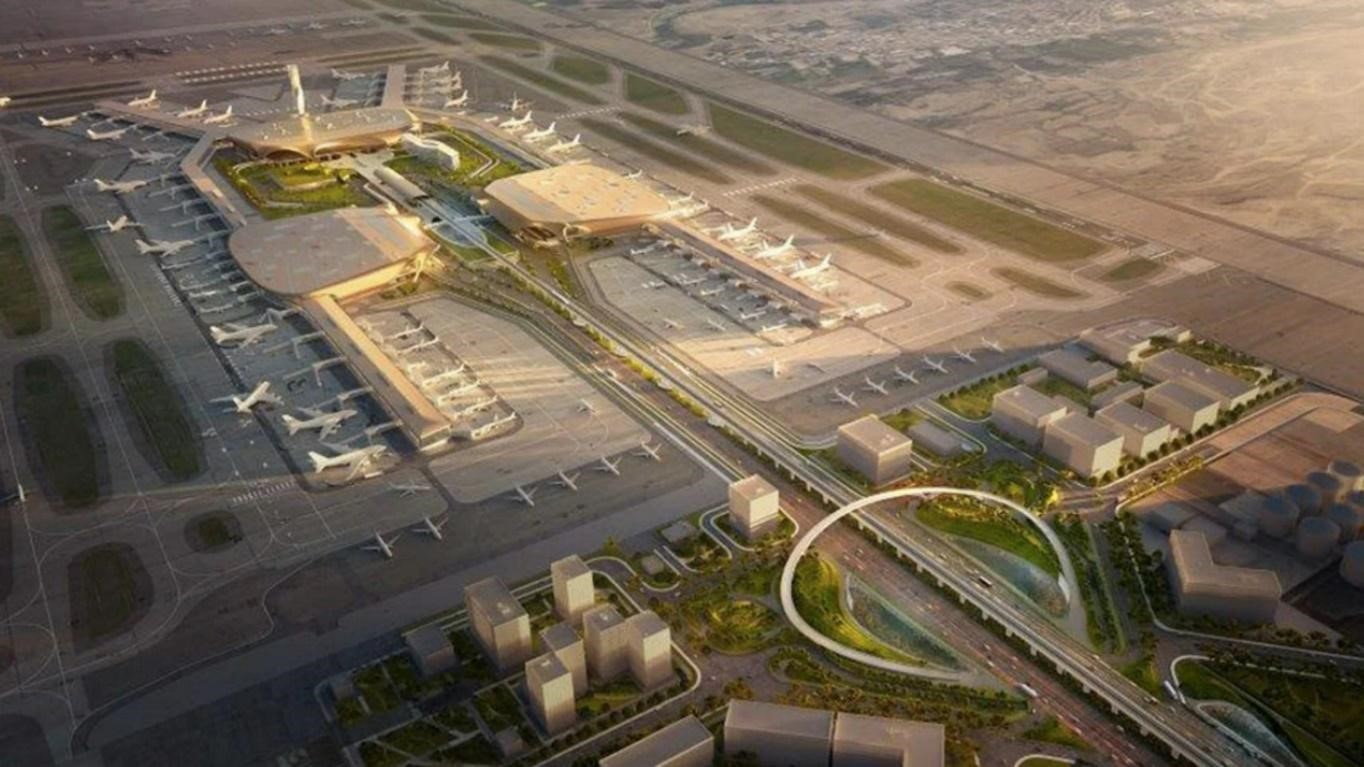
The Navi Mumbai International Airport (NMIA) prepares to commence operations by the end of September 2025. This long-anticipated infrastructural marvel, poised to become the nation’s second-largest airport, promises to significantly alleviate the escalating air traffic burden on Mumbai’s Chhatrapati Shivaji Maharaj International Airport. Beyond merely expanding capacity, NMIA is set to usher in a new era of regional development, foster sustainable urban planning, and strengthen India’s position as a global logistics powerhouse, embodying the aspirations for eco-friendly and equitable urban centres.
Maharashtra’s Industries Minister, Uday Samant, recently confirmed the September 2025 operational timeline for NMIA’s first phase during a Legislative Assembly session. This ambitious project, decades in the conceptualisation and planning stages, is rapidly nearing completion of its initial phase. Spanning an expansive 1,160 hectares, NMIA is meticulously designed to cater to future passenger and cargo demands with cutting-edge infrastructure. At its core lies a 3.7-kilometre-long runway, capable of accommodating 350 aircraft simultaneously, with plans to expand to four phases, ultimately handling over 90 million passengers annually by 2036.
The airport’s strategic blueprint extends beyond passenger traffic to include India’s largest air cargo system. This crucial component is designed to bolster the nation’s ambitions in global logistics, facilitating seamless trade and enhancing supply chain efficiencies. From its inception, NMIA will manage 18 daily flights to over 15 cities, translating to 36 air traffic movements. This volume is projected to surge to 79 daily flights (158 ATMs) by November 2025, including 14 international flights, thereby significantly amplifying both regional and international connectivity, which is vital for economic integration and cultural exchange.
Critical to NMIA’s success is its comprehensive multimodal connectivity. CIDCO, the project’s primary development authority, is ensuring seamless integration with key roadways, metro lines, and other public transport systems. Direct linkages via Metro Line 8 and Navi Mumbai Metro Line 1 are set to ease access for travellers from across Mumbai and its burgeoning satellite cities, reducing travel times and promoting the use of public transport over private vehicles, thus contributing to lower carbon emissions and reduced urban congestion. Authorities are even exploring water taxi services, potentially reducing the Mumbai-Navi Mumbai commute to a mere 17 minutes, offering an innovative, eco-conscious transport solution.
The ripple effect of NMIA’s launch is expected to be transformative for the regional economy. It is envisioned as a major catalyst for growth across diverse sectors, including logistics, hospitality, trading, BPO, and aviation services, creating substantial employment opportunities. For residents of Pune, NMIA offers a distinct advantage, with a travel time of approximately 2 hours and 20 minutes, nearly an hour shorter than commuting to Mumbai’s primary airport. This improved accessibility is particularly significant for Pune, given its current limited international connectivity, positioning NMIA as its primary international gateway. The airport’s phased expansion, with an initial capacity of 2-3 million passengers growing to 50 million by 2029, aligns with India’s projected air traffic increase to 100 million passengers annually by 2034, underscoring its timely and strategic importance.
Beyond direct aviation benefits, the real estate market in surrounding areas such as Panvel, Ulwe, Kharghar, Kamothe, and Taloja is already witnessing a surge, with property values expected to increase by 10-15%. This growth, driven by improved infrastructure and enhanced employment prospects, must be managed with an eye towards sustainable and equitable urbanisation, ensuring that development benefits all segments of society without compromising environmental integrity. The Navi Mumbai International Airport is more than just an infrastructure upgrade; it represents a forward-thinking response to India’s evolving aviation demands and urban expansion, poised to become a vital economic engine for Maharashtra while paving the way for connected, sustainable, and inclusive urban centres.
Also Read: Chennai Fintech Revolution Empowers Farmers Boosts Agri‑Sustainability
