


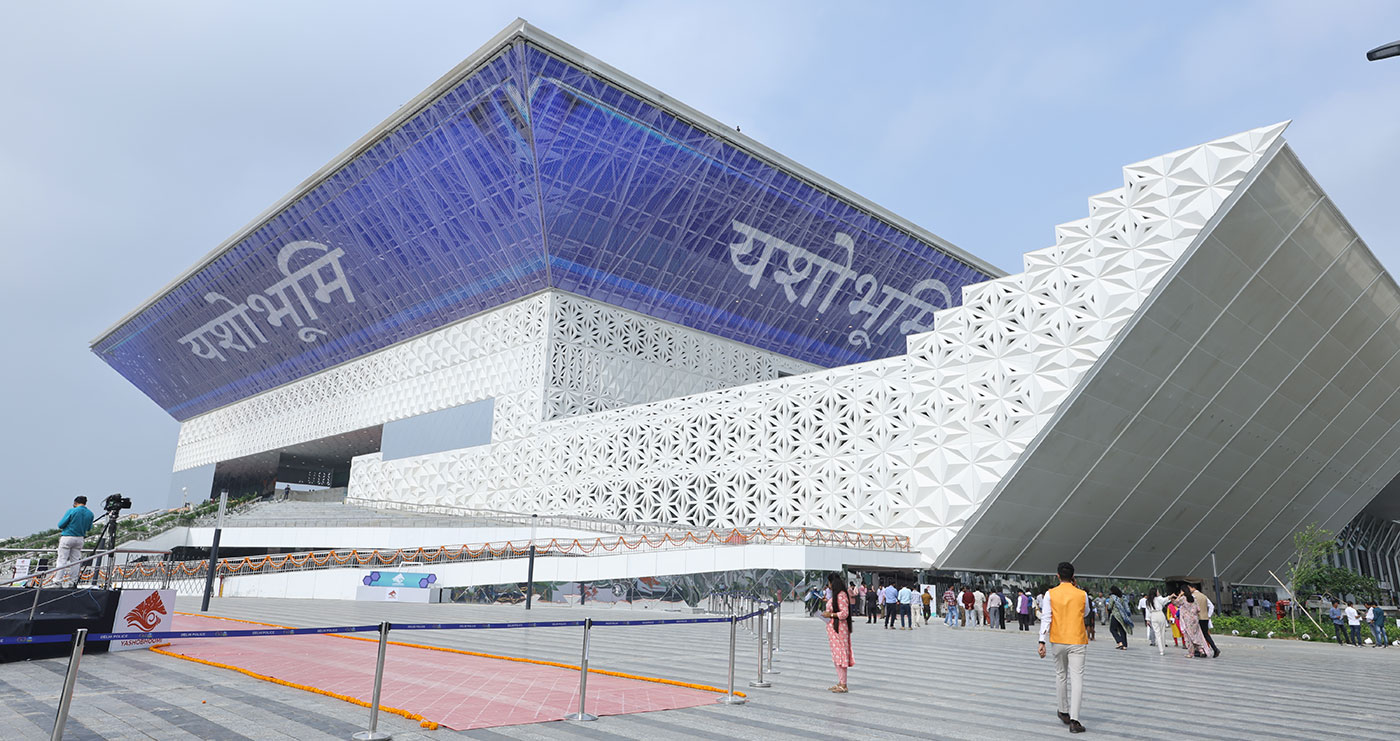
New Delhi’s emerging convention district at Dwarka has taken a significant step towards becoming a full-scale global meetings destination, with a long-term land allotment made for a new five-star hotel at Yashobhoomi. The move strengthens the capital’s hospitality and events ecosystem at a time when India is positioning itself as a competitive hub for international conferences, exhibitions, and large-format business gatherings.
According to regulatory disclosures, land measuring nearly 3,650 square metres has been leased for over nine decades within the Yashobhoomi precinct to facilitate the development of a premium hotel with integrated banqueting infrastructure. The project involves a lease premium exceeding Rs 326 crore, signalling both the commercial potential of the location and growing confidence in Delhi’s meetings, incentives, conferences and exhibitions (MICE) economy. Urban planners see the Yashobhoomi hotel development as a critical missing link in the capital’s convention-led growth strategy. While the exhibition and convention centre has already hosted multiple national and international events, the absence of large, proximate hospitality capacity has been a constraint. The addition of a high-end hotel within walking distance of the venue is expected to reduce logistical pressures, cut travel-related emissions, and enhance delegate experience. Industry experts note that convention districts worldwide increasingly rely on integrated planning, where hotels, transit infrastructure, and public spaces evolve together. Dwarka’s location, with metro connectivity and proximity to the airport, positions it as a decentralised alternative to traditional central business districts, easing pressure on older parts of the city while distributing economic activity more evenly.
Beyond business tourism, the project is also expected to generate sustained employment across construction, hospitality operations, food services, and facility management. Analysts point out that such developments have a multiplier effect, supporting local vendors, transport operators, and ancillary services, while contributing to municipal revenues over the long term. The proposed hotel is expected to include contemporary event spaces and diverse culinary offerings, aligning with the needs of international delegates and domestic exhibitors alike. Urban development specialists stress that new hospitality assets in large public precincts must also respond to climate resilience goals, through energy-efficient design, water management systems, and low-carbon operations an increasingly important factor for global event organisers. Delhi-NCR already hosts one of the country’s largest hotel inventories, yet demand linked to large conventions has historically spilled over into distant locations. By strengthening on-site accommodation, Yashobhoomi hotel development could help retain economic value within the district and encourage longer visitor stays.
As India accelerates investments in convention infrastructure across major cities, the focus is shifting from building standalone venues to creating integrated urban districts that balance commerce, mobility, and sustainability. The success of Yashobhoomi’s next phase will depend not only on new buildings, but on how effectively they are woven into the city’s broader urban fabric.
Also Read: Delhi NCR Housing Launches Accelerate On Infrastructure Expansion
