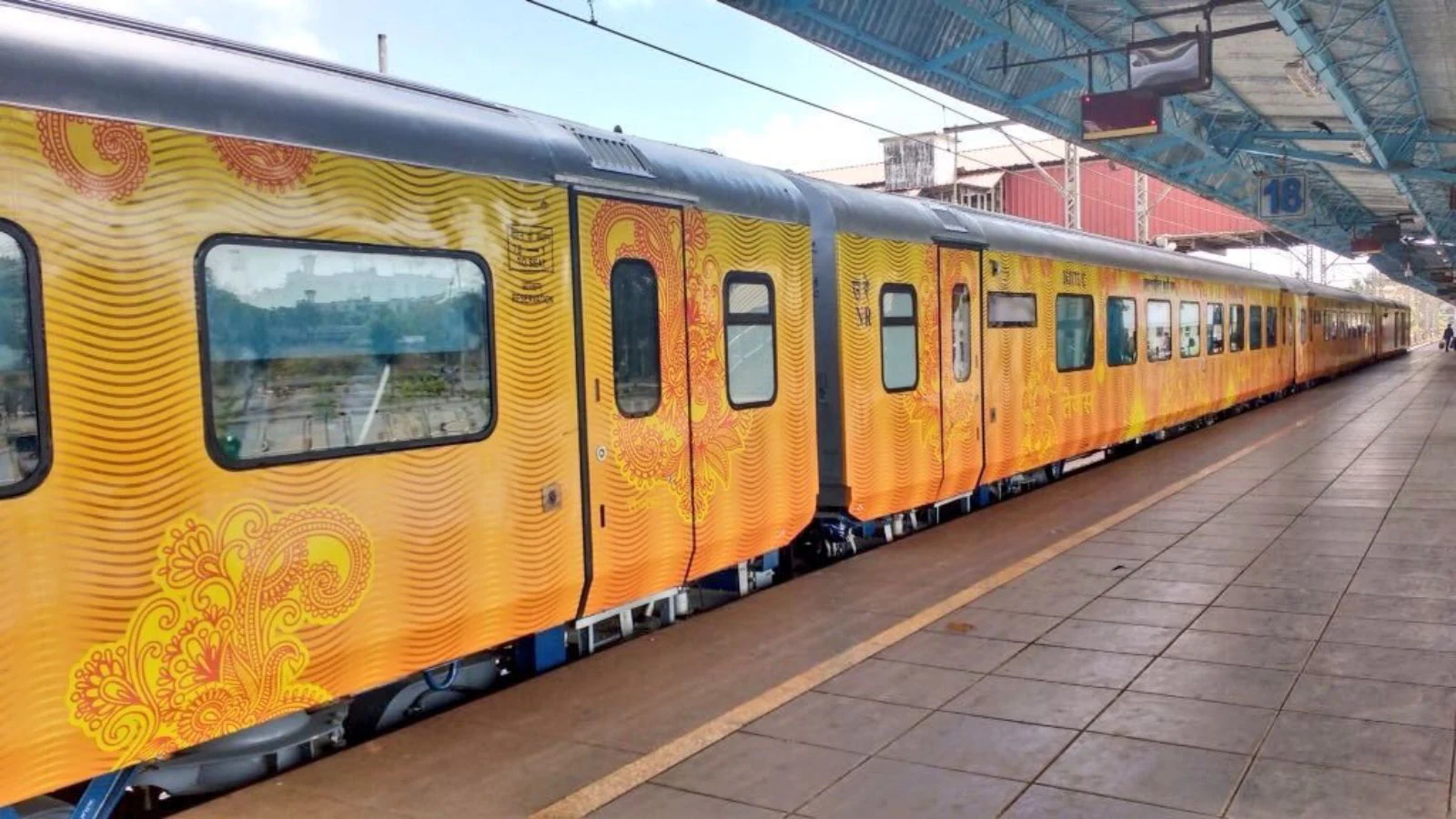
India’s first privately operated passenger train, the Tejas Express, continues to reshape the nation’s rail narrative with its emphasis on efficiency, comfort, and technological innovation. Launched in 2019 and operated by the Indian Railway Catering and Tourism Corporation (IRCTC), the train connects New Delhi and Lucknow two of North India’s busiest cities while offering a glimpse into the future of semi-private mobility under the Indian Railways framework.
The Tejas Express was introduced as a flagship experiment in modern, customer-centric rail travel, featuring digital ticketing, real-time passenger information, and flight-like onboard amenities. Within its first month, the train reported operational earnings of around ₹7.73 lakh, underscoring the growing appetite among Indian passengers for premium rail experiences. However, this comfort comes at a higher price point than other marquee trains such as the Rajdhani, Shatabdi, and Vande Bharat Express.
A fare analysis on the New Delhi–Lucknow route reveals that the Tejas Express charges ₹1,679 for an AC Chair Car and ₹2,457 for an Executive Chair Car roughly 20–30 per cent higher than its government-operated counterparts. While the Shatabdi and Vande Bharat Express offer similar comfort levels at around ₹1,255 (Chair Car) and ₹1,955–₹2,415 (Executive), the Tejas justifies its premium through enhanced punctuality, personalised catering, and private-sector service efficiency.
Railway officials maintain that dynamic pricing, demand-based seat allocation, and real-time operational control distinguish the Tejas model from traditional state-run services. Built at the Rail Coach Factory in Kapurthala, its coaches can reach speeds of up to 200 km/h, though they currently operate at 160 km/h due to track limitations. The safety framework includes electro-pneumatic braking systems, automatic doors, and continuous CCTV surveillance features previously limited to metro-grade infrastructure.Experts believe that the Tejas Express reflects India’s gradual shift towards sustainable and economically viable mobility models, with an emphasis on reduced congestion and lower per-capita emissions compared with short-haul aviation. By improving travel reliability and efficiency, the train also reduces dependence on personal vehicles for inter-city movement an important step towards the government’s long-term carbon-neutral transportation targets.
While passenger feedback has generally been positive, transport economists suggest that the next stage of evolution should focus on broader affordability and network integration. Future collaborations between the private sector and Indian Railways could further expand semi-private operations, particularly on high-demand corridors like Delhi–Chandigarh and Mumbai–Pune, enhancing competition and service quality.The Tejas Express thus represents more than a luxury train; it is a symbol of India’s willingness to reimagine its mobility ecosystem. Balancing premium service with sustainability and inclusivity will determine how effectively this model can support the nation’s journey towards equitable, zero-carbon, and commuter-friendly transport infrastructure.