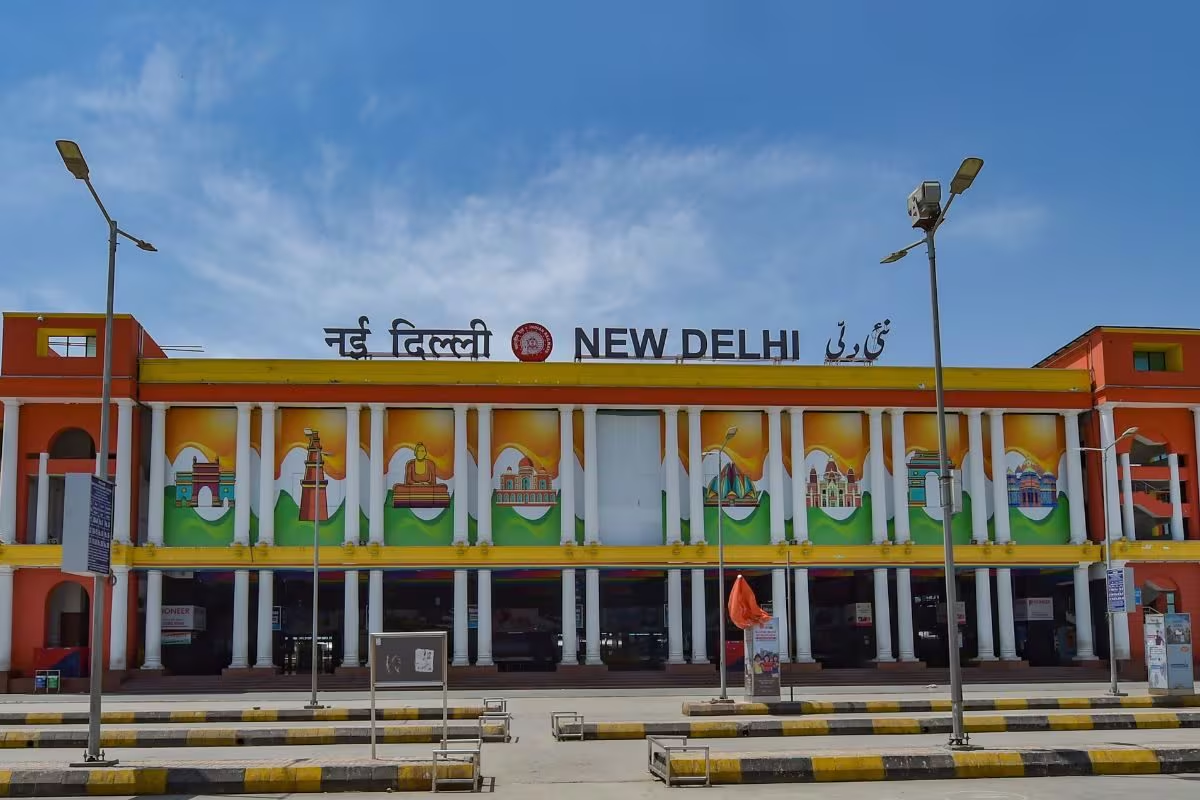
New Delhi Railway Station Earned Rs 3337 Crore in FY 2023 24
In the fiscal year 2023–24, New Delhi Railway Station (NDLS) has solidified its position as the highest-earning railway station in India, generating an impressive ₹3,337 crore in revenue.
This achievement underscores the station’s pivotal role in the nation’s transportation infrastructure. NDLS not only leads in financial performance but also ranks among the busiest stations, accommodating over 39 million passengers annually. Following NDLS, Howrah Junction in West Bengal secured the second spot with a revenue of ₹1,692 crore and a passenger count exceeding 61 million. Chennai’s MGR Central Railway Station ranked third, earning ₹1,299 crore from approximately 30.6 million passengers. These figures highlight the significant contribution of these stations to Indian Railways’ overall performance.
Other notable stations include Secunderabad, which generated ₹1,276 crore from 27.8 million passengers, and Hazrat Nizamuddin, earning ₹1,227 crore with 14.5 million passengers. Mumbai’s Lokmanya Tilak Terminal and Ahmedabad also featured prominently, with revenues of ₹1,036 crore and ₹1,010 crore, respectively. Despite having a higher passenger volume, Mumbai CST reported a revenue of ₹982 crore, indicating the complex dynamics of revenue generation in relation to passenger numbers. The substantial earnings of these stations are attributed to various factors, including strategic locations, high-frequency train operations, and diversified revenue streams such as retail outlets, advertisements, and platform tickets. For instance, NDLS’s central location in the capital city and its connectivity to multiple regions make it a hub for both long-distance and suburban travel. Similarly, Howrah Junction’s historical significance and its role as a gateway to eastern India contribute to its high passenger footfall and revenue generation.
Indian Railways operates an extensive network, running over 13,000 trains daily across more than 7,300 stations. In the fiscal year 2023–24, the system transported approximately 6.9 billion passengers, highlighting its crucial role in the daily commute and long-distance travel for millions of Indians. The revenue generated by these stations plays a vital role in sustaining and expanding the railway network, enabling investments in infrastructure development and modernization projects. Looking ahead, Indian Railways is focusing on modernization efforts to enhance passenger experience and operational efficiency. The introduction of high-speed trains like the Vande Bharat Express and the electrification of railway lines are part of the broader strategy to achieve net-zero carbon emissions by 2030. These initiatives aim to provide faster, safer, and more sustainable travel options for passengers, ensuring that Indian Railways continues to meet the evolving needs of the nation.