


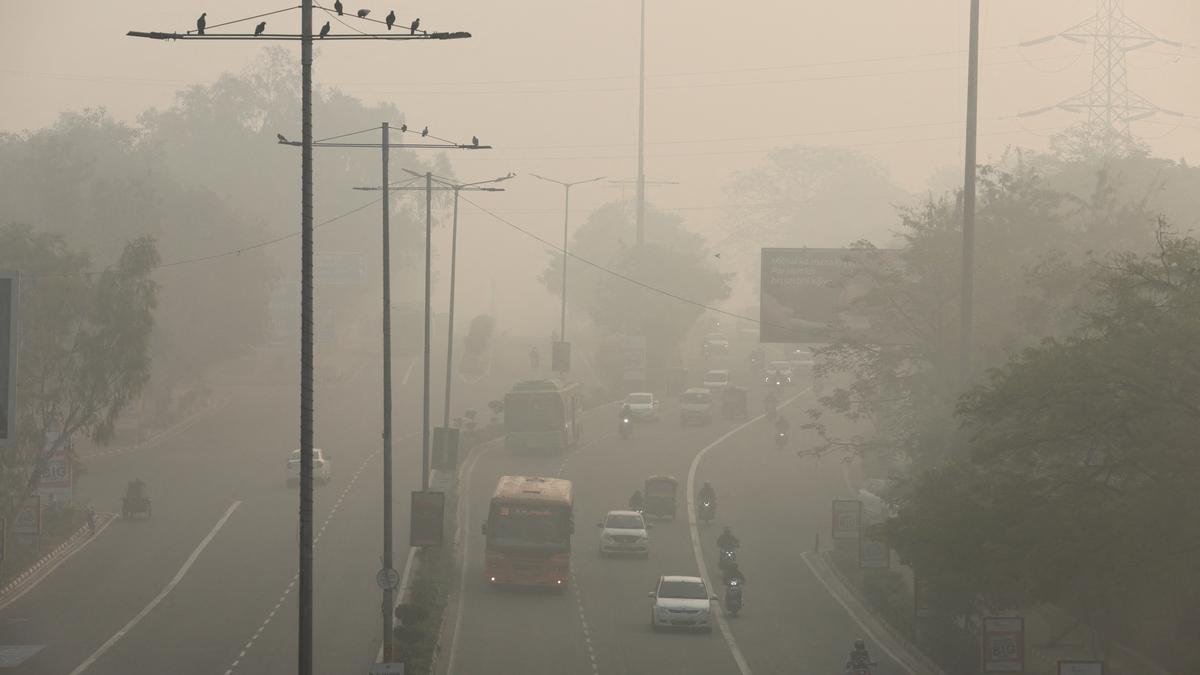
Delhi’s fight against hazardous winter air pollution is set to intensify, with the New Delhi Municipal Council (NDMC) proposing a large-scale misting drive across 24 arterial roads. The project, estimated to cost ₹15 crore, aims to curb rising levels of dust pollution, a major contributor to the city’s worsening air quality. The plan will be placed before the council in its upcoming meeting for approval.
The initiative builds on the success of earlier pilots, including the mist sprayers installed along Lodhi Road, which officials claim significantly reduced visible dust levels. Encouraged by these results, NDMC has proposed a phased expansion. Ten roads covering nearly 12 kilometres were treated under the first phase, while the second phase identifies 14 more stretches, adding 12.7 kilometres to the coverage. Prominent roads such as Shahjahan Road, Aurobindo Marg, Baba Kharak Singh Marg, and Dr APJ Abdul Kalam Road are among those earmarked for misting. According to NDMC officials, the misting system will be automated and operate during peak pollution hours. The technology, which releases fine water droplets into the air, helps settle dust particles, enhances ambient humidity, and temporarily improves atmospheric comfort. The plan also includes a one-year operation and maintenance component to ensure continuity.
Officials explained that the system was first tested by another civic authority in Dwarka, where it was inaugurated as a dust-control experiment. Following its apparent success, NDMC replicated the model at Lodhi Road, where it reportedly performed “excellently” in reducing visible particulate matter. However, the new expansion will be a more ambitious rollout, covering wider stretches of the capital’s central roads. Yet, experts remain cautious about the long-term impact. Environmental researchers point out that water-based misting provides only short-term relief, as dust particles can resuspend once surfaces dry. Analysts also stress that misting has little effect on PM2.5 – the fine, lung-penetrating particles that pose the greatest health hazards. Without robust data from pilot tests on air quality index (AQI) reductions, environmental groups argue, scaling up such projects may not deliver meaningful improvements.
Activists further caution that while misting may reduce dust along heavy traffic corridors, it risks being seen as a standalone solution in a city where construction activity, vehicular emissions, and biomass burning collectively choke the atmosphere each winter. They urge a more comprehensive approach, integrating greener urban design, dust-free construction practices, and stricter emissions controls alongside short-term measures such as mist sprayers. For now, NDMC’s plan reflects a growing urgency to deploy visible, on-ground measures before the city’s notorious smog season begins. Whether misting proves to be a transformative solution or merely a temporary relief will depend on rigorous monitoring and integration with broader air-quality management strategies.
Also Read: IndiGo Surat-Dubai Flight Diverts To Ahmedabad After Mid-Air Technical Glitch
