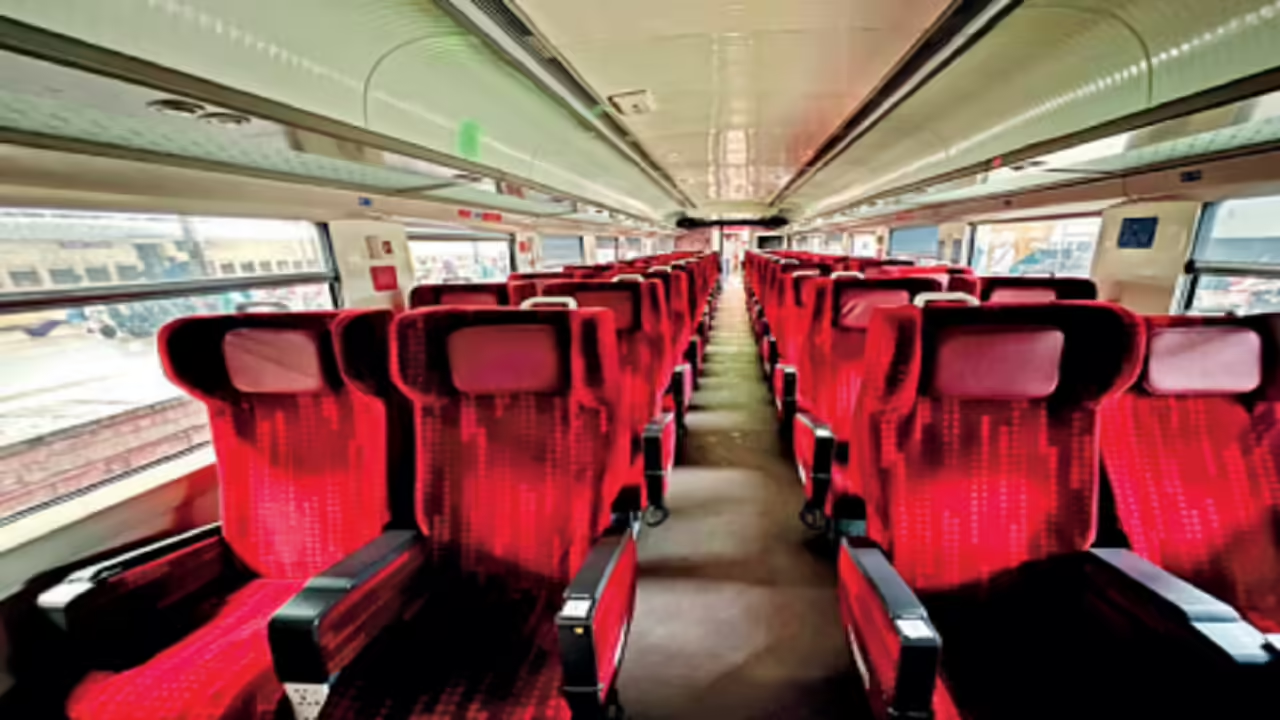
Punjab’s long-standing demand for improved long-distance rail connectivity gained renewed attention this week as a senior parliamentarian met the Union Railways leadership in New Delhi, urging the inclusion of Barnala in the recently launched Vande Bharat service from Ferozepur and calling for the restoration of the Bathinda–Delhi Shatabdi. The discussion reflects the wider public sentiment across southern Punjab, where residents and local industry have repeatedly sought faster, more reliable mobility options to strengthen regional economic links.
According to officials aware of the meeting, the parliamentarian emphasised that a halt at Barnala would not only serve a large commuter base but also support the district’s manufacturing clusters, which rely heavily on efficient rail connections to Delhi and northern markets. He noted that multiple public representations, including from local business associations, have highlighted how faster trains could reduce road dependency and carbon emissions a critical component of strengthening sustainable mobility in tier-II and tier-III cities.Sources in the Railways Ministry indicated that the request for a Barnala halt is already under consideration, with another Union Minister having raised a similar proposal earlier. While operational feasibility assessments are underway, officials stressed that any additional stoppage on Vande Bharat routes must balance passenger convenience with journey-time efficiency. However, they acknowledged that emerging industrial centres such as Barnala need stronger integration with national transport networks to support equitable regional development.
The parliamentarian also urged the reinstatement of the Bathinda–New Delhi Shatabdi via Sangrur, a service that previously played a vital role in connecting western Punjab to the capital. Several civil society groups, including student organisations and healthcare advocates, have appealed for its restoration, citing the need for affordable, predictable rail transport in a region that depends heavily on intercity movement for education, medical services, and trade. An official noted that the Railways is reviewing passenger demand, route load, and rolling stock allocation before deciding on reintroduction.
Urban mobility experts point out that these demands align with a broader shift in public transport priorities, where smaller cities are pushing for faster, cleaner, and more comfortable travel options. They argue that expanding high-speed rail access in districts beyond metropolitan centres is essential for building inclusive and low-carbon mobility ecosystems. “Improved rail connectivity reduces vehicular congestion and lowers emissions, while ensuring smaller cities are not left out of national growth corridors,” a transport planner said.
As the Railways works through the proposals, officials assured that community needs and regional balance remain central to decision-making. For Punjab’s districts, which continue to advocate for stronger transport links, the outcome will influence not just travel efficiency but also long-term urban development. Enhancing connectivity, they argue, is a key step towards ensuring more equitable mobility across India’s expanding urban landscape.
New Delhi Leaders Discuss Vande Bharat Halt And Bathinda Delhi Shatabdi Restoration